
10 Best Compost Bags for 2026 That Keep Your Kitchen Fresh
 Save
Save
You’ve probably heard that compostable bags all perform the same, but that’s far from the truth. The reality is that thickness, certification type, and material composition create dramatic differences in odor control, tear resistance, and actual breakdown time. Some bags will fail you within days, while others maintain integrity for weeks while keeping your kitchen remarkably fresh. Before you stock up on just any eco-friendly option, you’ll want to understand what separates the mediocre from the exceptional.
UNNI leads with 4.5 stars from 46,175 reviews, while SUPERBIO scores 4.7 stars, offering certified compostable options across multiple sizes.
Bags range from 1.2 to 3 gallons; 2.6-gallon size fits most kitchen bins, with proper dimensions preventing tears and leaks.
BPI and ASTM D6400 certifications ensure bags decompose in 180 days industrially; OK Compost HOME allows backyard composting within 12 months.
Plant-based materials like corn starch, PLA, and PBAT provide 0.67-0.71 mil thickness with star-sealed bottoms for strength and durability.
Store bags in cool, dry places for 6-12 months shelf life; replace every 3-5 days to minimize odor and moisture buildup.
Our Top Compost Bag Picks
UNNI Compostable Trash Bags 2.6 Gallon (100 Count)

SUPERBIO Compostable Food Scrap Bags (50 Count)

GreFusion Compostable Bags for Kitchen (125 Count)

ANECO Compostable Waste Bags 2.6 Gallon (110 Count)

SUPERBIO 2.6 Gallon Compostable Bags (100 Count)
UNNI Compostable Trash Bags 2.6 Gallon (200 Count)

SUPERBIO 3 Gallon Compostable Food Waste Bags (80 Count)

3 Gallon Compostable Trash Bags (100 Count)

BioBag 2.6 Gallon Compostable Food Scrap Bags

BioBag 3 Gallon Compostable Food Scrap Bags
Compare the Picks
Swipe to see all specs · full write-ups below
More Details on Our Top Picks
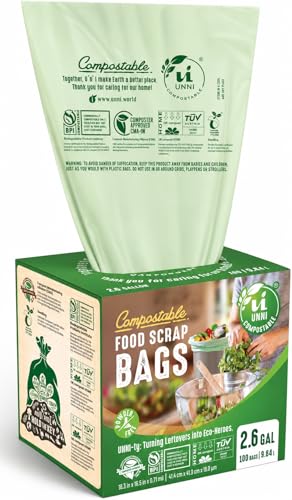
UNNI Compostable Trash Bags 2.6 Gallon (100 Count)
The UNNI Compostable Trash Bags are #1 for a reason—backed by triple certification from BPI, CMA, and OK Compost HOME by TÜV AUSTRIA. Made from plant-based materials, these 0.71 mil thick bags meet ASTM D6400 standards and are safe for both home and commercial composting systems. Sized at 2.6 gallons (16.3 x 16.5 inches), they’re ideal for kitchen countertop bins and tough enough to handle daily food scraps without tearing.
Each pack contains 100 durable, eco-friendly bags designed for reliable performance. For best results, store in a cool, dry place and use within nine months. With a 4.5-star rating from 46,175 reviewers, they’re a top choice for sustainable waste disposal.
- Capacity
- 2.6 gallon
- Count
- 100 bags
- BPI Certified
- Yes
- ASTM D6400
- Meets standard
- Material Source
- Plant-based
- Thickness
- 0.71 mil
- Additional Feature
- OK compost HOME certified
- Additional Feature
- 9 month shelf life
- Additional Feature
- #1 in Disposable Compost
SUPERBIO Compostable Food Scrap Bags (50 Count)
SUPERBIO’s 1.6 Gallon Handle Tie Compostable Food Scrap Bags are ideal for apartment dwellers and small households seeking a compact, countertop-friendly solution for daily food waste. Each pack includes 50 plant-based bioplastic bags (16.1 x 19.3 inches) certified by BPI, OK Compost INDUSTRIAL, and SEEDLING, meeting ASTM D6400 and EN 13432 standards.
The handle-tie design and star-sealed bottom provide strength for transporting heavier loads without tearing. Store in a cool, dry place and dispose of filled bags within three days, especially with acidic or alkaline contents. Check local availability of commercial composting facilities before use.
- Capacity
- 1.6 gallon
- Count
- 50 bags
- BPI Certified
- Yes
- ASTM D6400
- Meets standard
- Material Source
- Plant-based bioplastic
- Thickness
- 0.63 mil
- Additional Feature
- Handle tie closure
- Additional Feature
- Star-sealed reinforced bottom
- Additional Feature
- Tear-proof when directed
GreFusion Compostable Bags for Kitchen (125 Count)
GreFusion’s 125-count kitchen bags are BPI Compostable certified and meet ASTM D6400 and EU EN13432 standards, making them ideal for eco-conscious households. Made from corn starch, they break down in compost bins, worm farms, and soil while supporting beneficial microorganisms. With a 1.2-gallon capacity, they fit most countertop bins up to 1.5 gallons and work with standard dog bag dispensers.
Designed for durability, these high-density bags feature sealed bottoms for leak-proof, tear-resistant performance. Built-in odor control keeps bins fresh across multiple rooms, and the generous count supports a long-term zero-waste lifestyle.
- Capacity
- 1.2 gallon
- Count
- 125 bags
- BPI Certified
- Yes
- ASTM D6400
- Meets standard
- Material Source
- Corn starch
- Thickness
- Not specified
- Additional Feature
- Odor-controlling properties
- Additional Feature
- Fits dog bag dispensers
- Additional Feature
- High-density blend construction
ANECO Compostable Waste Bags 2.6 Gallon (110 Count)
ANECO’s 110-count compostable bags offer reliable performance and eco-conscious value. Each pack includes 100 standard bags plus 10 bonus, sized at 16.5 x 16.3 inches with a 2.6-gallon capacity. Made from corn starch and plant-based materials, they fully decompose in 6–12 months with no plastic residue, and are certified by BPI, OK Compost Home, and Seedling while meeting ASTM D6400 standards.
At 0.67 mils thick, these durable bags resist tears and leaks, even with wet food waste. They fit most countertop compost bins and work well in kitchens, gardens, or on camping trips. With a 4.5-star rating from 4,795 reviews, they’re a top choice—ranked #3 in disposable compost bags.
- Capacity
- 2.6 gallon
- Count
- 110 bags (100 + 10 bonus)
- BPI Certified
- Yes
- ASTM D6400
- Meets standard
- Material Source
- Corn starch and plant-based
- Thickness
- 0.67 mil
- Additional Feature
- 110 bags with bonus
- Additional Feature
- Plastic-free materials
- Additional Feature
- 6-12 month decomposition
SUPERBIO 2.6 Gallon Compostable Bags (100 Count)
With 100 compostable bags per pack, these 2.6-gallon kitchen bags feature a sturdy handle tie and star-sealed reinforced bottom to prevent leaks and handle heavy, wet waste. Sized at 16.3 x 22.0 inches, they’re made from PLA+PBAT materials, unscented, and ideal for daily use with small to moderate waste volumes.
Certified by BPI and TÜV to meet ASTM D6400 and EN 13432 standards, these bags are suitable for commercial composting. Store in a cool, dry place and dispose of contents within three days for best results. Backed by 7,761 customer reviews with a 4.7-star average, they’re ranked #2 in disposable compost bags.
- Capacity
- 2.6 gallon
- Count
- 100 bags
- BPI Certified
- Yes
- ASTM D6400
- Meets standard
- Material Source
- PLA+PBAT
- Thickness
- 0.67 mil
- Additional Feature
- Handle tie design
- Additional Feature
- Patented processing technology
- Additional Feature
- Star sealed bottom
UNNI Compostable Trash Bags 2.6 Gallon (200 Count)
The UNNI Compostable Trash Bags offer a reliable 2.6-gallon solution for countertop compost bins, with 200 bags per pack—ideal for long-term use. Their 0.71-mil thickness provides durable performance, safely containing heavy food waste without tearing.
Certified by BPI, CMA, and OK Compost HOME, these bags meet ASTM D6400 standards for composting in both home and industrial facilities. The green, unscented liners load easily and separate cleanly. For best results with wet scraps, line the bin with paper first and change bags regularly.
- Capacity
- 2.6 gallon
- Count
- 200 bags
- BPI Certified
- Yes
- ASTM D6400
- Meets standard
- Material Source
- Compostable material
- Thickness
- 0.71 mil
- Additional Feature
- 200 count pack
- Additional Feature
- CMA certified
- Additional Feature
- San Francisco brand
SUPERBIO 3 Gallon Compostable Food Waste Bags (80 Count)
SUPERBIO 3 Gallon Compostable Food Waste Bags offer a reliable, eco-friendly solution for managing kitchen scraps. Certified by BPI and compliant with ASTM D6400, these bags are designed to break down in commercial composting facilities. Made from PLA+PBAT materials, they hold up to 11.35 liters and feature a star-sealed bottom and built-in handles for leak resistance and easy disposal.
Each pack includes 80 bags ideal for countertop bins. For best results, store in a cool, dry place and compost within three days of filling. Trusted by over 7,700 customers with a 4.7-star average, they combine convenience with real environmental responsibility.
- Capacity
- 3 gallon
- Count
- 80 bags
- BPI Certified
- Yes
- ASTM D6400
- Meets standard
- Material Source
- PLA+PBAT
- Thickness
- 0.67 mil
- Additional Feature
- Bags with handles
- Additional Feature
- Box dispenser included
- Additional Feature
- 11.35 liter capacity
3 Gallon Compostable Trash Bags (100 Count)
Compact kitchens and busy households benefit from these 3-gallon compostable trash bags, designed to fit seamlessly into small spaces without compromising eco-friendly values. Each roll includes 100 bags (16.9″ x 17.7″), ideal for countertop bins and everyday food waste.
BPI-certified and made from plant-based PLA and PBAT, these bags meet ASTM D6400 standards, breaking down into water, CO₂, and biomass within 180 days at industrial composting facilities. They handle fruit peels, coffee grounds, and garden trimmings with strength and sustainability. For best results, store in a cool, dark place and use within one year.
- Capacity
- 3 gallon
- Count
- 100 bags
- BPI Certified
- Yes
- ASTM D6400
- Meets standard
- Material Source
- PLA and PBAT blend
- Thickness
- Not specified
- Additional Feature
- TERRACOR brand
- Additional Feature
- 180 day breakdown
- Additional Feature
- PLA and PBAT blend
BioBag 2.6 Gallon Compostable Food Scrap Bags
BioBag’s 2.6 Gallon Compostable Food Scrap Bags are perfect for households using municipal composting programs. Each pack includes 100 bags (16×17 inches), made in the USA from plant starches and Italian resin. They’re BPI-certified and meet ASTM D6400 standards, ensuring they’re accepted in most green cart composting systems.
The breathable material helps reduce moisture and odor in your compost bin. These bags decompose completely through soil micro-organisms, leaving no harmful residues. Designed for daily use, they’re durable yet should be used within one year and stored in cool, dry conditions for best results.
- Capacity
- 2.6 gallon
- Count
- 100 bags
- BPI Certified
- Yes
- ASTM D6400
- Meets standard
- Material Source
- Plant starches, vegetable oils, compostable polymers
- Thickness
- 0.64 mil
- Additional Feature
- Frustration-Free Packaging
- Additional Feature
- Italian imported resin
- Additional Feature
- Breathable material reduces odor
BioBag 3 Gallon Compostable Food Scrap Bags
BioBag 3 Gallon Compostable Food Scrap Bags are perfect for eco-conscious households committed to zero-waste living. Each pack includes 100 bags (16.9 x 17.7 inches) made from plant starches, vegetable oils, and Italian resin, certified compostable under ASTM D6400 standards and BPI listed. Designed to fit most countertop compost bins, they offer durability and convenience without sacrificing sustainability.
The breathable material helps reduce moisture and odors, especially when used with a 3–5 day bag replacement cycle. Trusted by 5,071 customers with a 4.4-star rating and ranked #6 in its category, these bags combine performance and planet-friendly design for reliable daily composting.
- Capacity
- 3 gallon
- Count
- 100 bags
- BPI Certified
- Yes
- ASTM D6400
- Meets standard
- Material Source
- Plant starches, vegetable oils, compostable polymers
- Thickness
- 0.64 mil
- Additional Feature
- Flat bottom seal
- Additional Feature
- Manufactured in USA
- Additional Feature
- Change every 3-5 days
Factors to Consider When Choosing Compost Bags
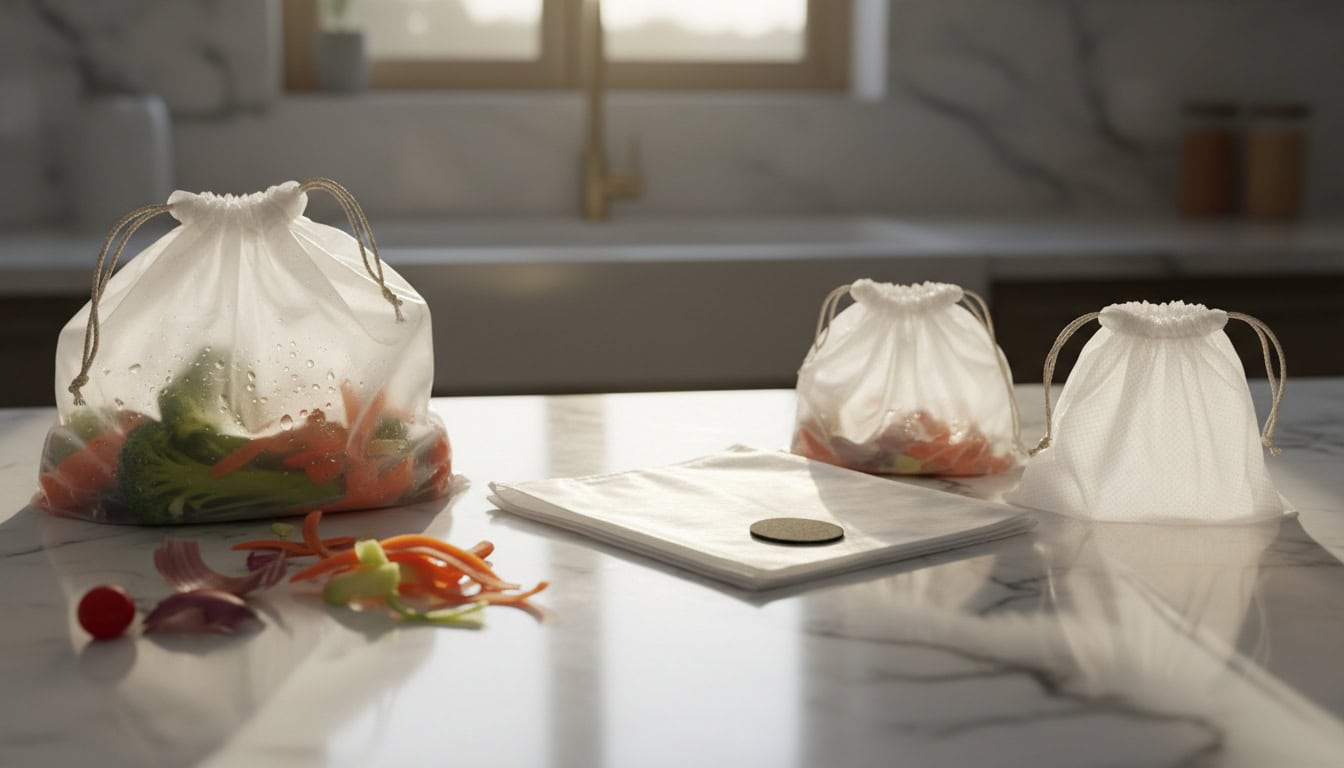
When you’re shopping for compost bags, you’ll need to evaluate several key specifications to verify they match your composting setup. Size capacity, certification standards, and material durability directly impact how well these bags perform in your kitchen and compost bin. You’ll also want to take into account whether you’re composting at home or commercially, as this determines which certifications and degradation rates you should prioritize.
Choose a compost bag size that matches your bin capacity and household waste output. For bins up to 1.5 gallons, use 1.6-gallon bags; their 16.1 by 19.3-inch dimensions fit narrow or deep containers securely. Standard 2.6-gallon bags work well for most countertop bins, offering a balance of capacity and ease of use.
Larger households should opt for 3-gallon bags or bigger, typically measuring 16.9 by 17.7 inches or more. These handle greater food waste volumes and reduce how often you need to empty the bin. Always check the bag’s width and depth to ensure a proper fit and prevent tearing.
Certifications ensure compost bags break down as claimed. Look for labels like BPI Compostable, OK Compost INDUSTRIAL, OK Compost HOME, or the Seedling logo, which verify compliance with standards such as ASTM D6400 or EN 13432. These guarantee the bags turn into water, carbon dioxide, and organic matter within 180 days under proper conditions, leaving no toxic residues.
Check whether a bag is certified for home or industrial composting. OK Compost HOME breaks down in backyard bins, while OK Compost INDUSTRIAL requires high-temperature commercial facilities. Avoid unverified terms like “biodegradable” or “eco-friendly”—without recognized certification, they don’t ensure compostability.
Material thickness plays a key role in a compost bag’s durability, with 0.64 to 0.71 mil offering reliable resistance to tearing and leaking—especially important for wet or heavy waste. For frequent use with dense materials, choose bags of at least 0.67 mil, which often include reinforced bottom seals and high-density blends for greater strength.
However, thickness alone isn’t enough. Star-sealed bottoms enhance burst resistance, while material composition significantly affects performance. Look for blends of PLA and PBAT, which balance flexibility and toughness to resist punctures. Avoid bags under 0.64 mil, as they’re more prone to rupture when handling sharp or abrasive waste.
Where your compost bags end up determines the right choice. For industrial composting, select bags certified to ASTM D6400 or EN 13432 standards, ensuring breakdown in high-heat, controlled facilities. However, with only around 200 U.S. facilities accepting residential compostable waste, verify local availability before choosing this option.
For backyard composting, choose bags with OK Compost HOME certification—they decompose within 12 months under cooler, natural conditions. Some bags carry dual certifications, meeting requirements for both home and industrial systems, offering reliable breakdown and disposal flexibility.
Compost bags have a shelf life of 6 to 12 months from manufacture and should be stored in a cool, dry, and dark place to prevent premature degradation. Exposure to heat, humidity, or sunlight can weaken the material, leading to brittleness and tearing over time.
Once filled, use the bags within 3 days—especially with acidic or alkaline waste that can compromise their strength. Designed to break down within 180 days under industrial composting conditions, timely use is essential for optimal performance.
When choosing compost bags, prioritize odor control by selecting breathable, compostable materials that reduce moisture buildup and minimize unpleasant smells. Many bags now come with engineered odor-controlling features to keep kitchen and bathroom bins fresher between disposals.
Replace bags every 3 to 5 days, especially when holding wet or acidic food waste. For high-acidity or high-alkalinity materials, dispose of contents within 3 days to prevent odor and bag degradation. Store unused bags in a cool, dry place to maintain strength and prevent premature breakdown.
Larger compost bag packs generally offer a lower price per bag, making them cost-effective for regular composting. While 3-gallon bags are more expensive per unit than 1.6-gallon ones, they reduce change frequency. Thickness also affects value—0.71 to 1.0 mil bags cost more but resist tearing, enhancing durability.
Certifications like BPI or OK Compost Home raise per-bag prices but ensure true compostability. For bulk buyers, choosing bags with a shelf life of up to one year reduces waste and improves long-term cost efficiency.
Frequently Asked Questions
Compostable bags typically take 3-6 months to fully decompose in your home compost bin. You’ll need to maintain proper moisture, temperature, and turning frequency. Some bags may take longer depending on your compost pile’s conditions and activity.
Yes, you’ll find compostable bags fit standard kitchen trash cans perfectly. The theory that they’re oddly sized is false—they’re manufactured in typical dimensions like 13-gallon. You can seamlessly swap them for regular plastic bags without buying new containers.
No, compostable bags don’t attract more fruit flies than regular plastic bags. Fruit flies are drawn to decomposing organic matter inside the bag, not the bag material itself. You’ll prevent flies by emptying bags frequently and keeping them sealed.
Don’t put the cart before the horse—compostable bags aren’t designed for food storage. They’re engineered to break down quickly, potentially transferring materials into your food. You’ll want proper food-safe containers or bags specifically labeled for direct food contact instead.
You’ll need temperatures between 140-160°F (60-71°C) for compostable bags to break down properly in industrial composting facilities. They won’t decompose in your home compost pile or landfills, which don’t reach these sustained high temperatures.
Found Your Match?
Whichever pick suits your space best, check the current price above — availability and deals change often.
Back to the Picks