
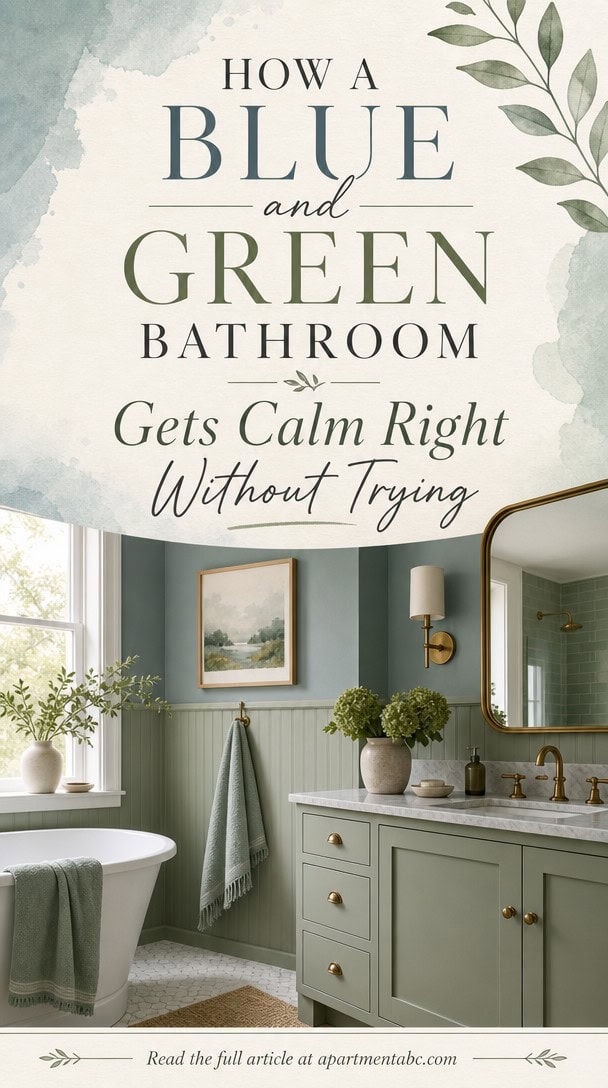
How a Blue and Green Bathroom Gets Calm Right Without Trying
Most people assume blue and green clash because they sit so close on the color wheel. Yet in a bathroom, that closeness is exactly what makes the pairing work.
You’re not mixing opposites, you’re blending relatives. The trick isn’t picking pretty shades; it’s matching their undertones so nothing fights for attention.
Get that alignment wrong, though, and calm turns into chaos fast.
Why Blue and Green Feel So Naturally Calming
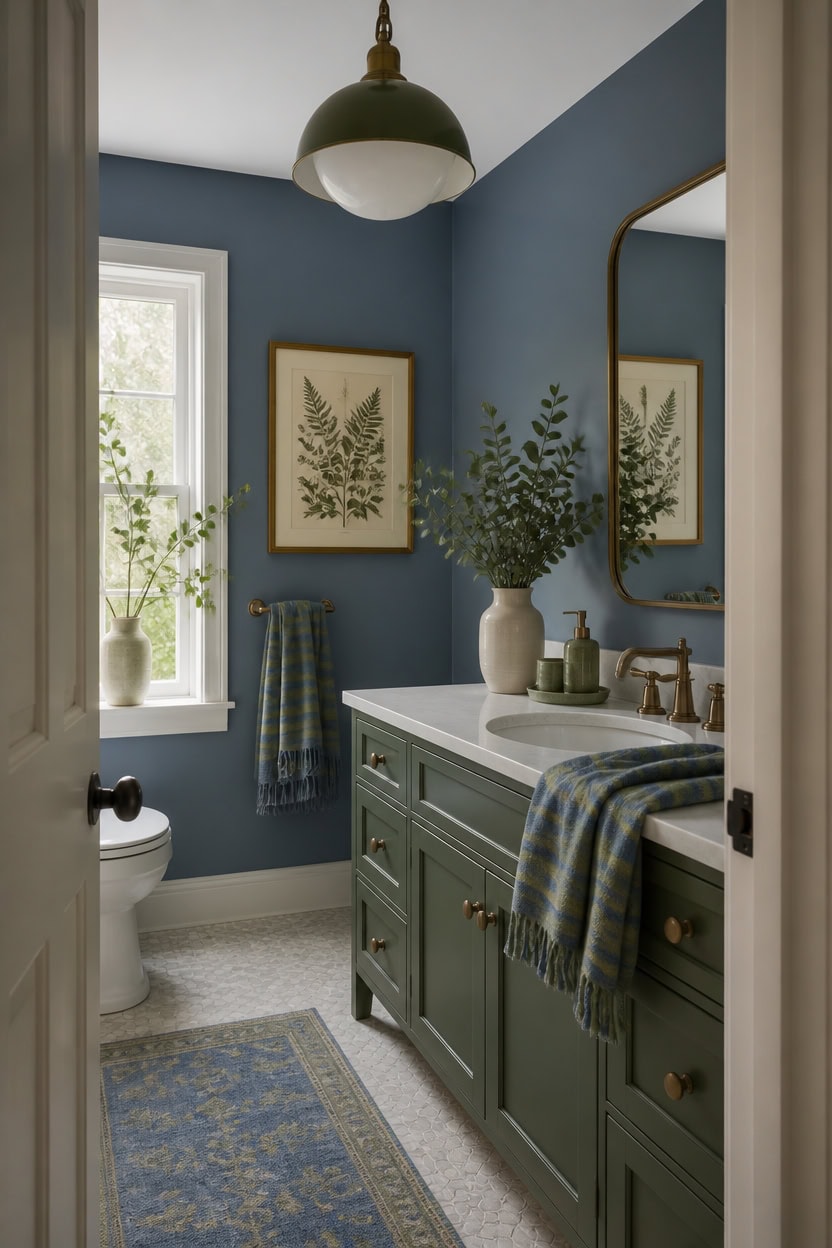
Mid-tone blue Vermont Slate on the walls and mid-tone green Rosepine on the vanity share the same undertone, so neither shade competes for attention. This shared base lets the eye move smoothly across the room instead of snapping between two competing hues. Set a small eucalyptus bundle in a vase on the vanity edge to echo the green tone without adding another paint color.
Match undertones: Choose blues and greens with the same warm or cool base so they read as one family.
Layer in nature: Add plants or wood textures so the palette feels grounded instead of staged.
Balance mid-tones with light: Pair a mid-tone wall color with lighter fixtures to keep the space feeling open.
Repeat the accent: Echo the green in one small object elsewhere in the room for cohesion.
creates a steady backdrop that shifts between blue and gray depending on the light. [mid-tone]
grounds the room with an earthy green that pairs naturally with the wall color. [mid-tone]
 Tobilu Eucalyptus Stems in Vase, 19 Inch Greenery Vase Arrangement
View Price
Tobilu Eucalyptus Stems in Vase, 19 Inch Greenery Vase Arrangement
View Price
 8 Pcs Blue Green Cabana Stripe Large Bath Towel Set - Oversize Bath Sheet, 2 Bathroom Towels, 2 Hand Towels, 4 Washcloths - Soft, Jumbo, Absorbent Shower Towel - Quick Dry, Beach, Spa, Gym Towel
View Price
8 Pcs Blue Green Cabana Stripe Large Bath Towel Set - Oversize Bath Sheet, 2 Bathroom Towels, 2 Hand Towels, 4 Washcloths - Soft, Jumbo, Absorbent Shower Towel - Quick Dry, Beach, Spa, Gym Towel
View Price
 Yaheetech 30 Inch White Shaker Bathroom Vanity Cabinet with Sink Countertop
View Price
Yaheetech 30 Inch White Shaker Bathroom Vanity Cabinet with Sink Countertop
View Price
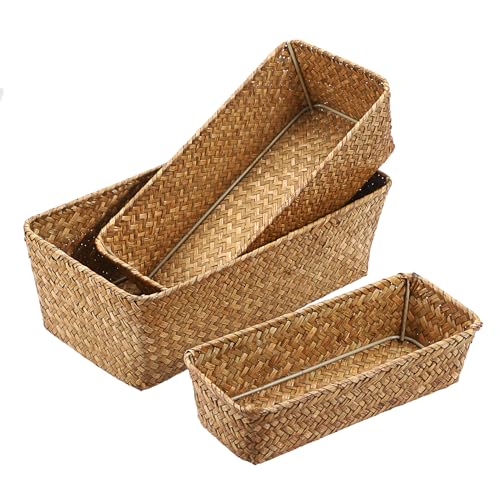 3 Natural Wicker Basket Set Rectangular Seagrass Basket, Caramel
View Price
3 Natural Wicker Basket Set Rectangular Seagrass Basket, Caramel
View Price
 2 Pack Kitchen Soap Dispenser Set - 16oz Green Glass Dish and Hand Soap Dispenser with Stainless Steel Pump, Instant Dry Tray, Dish Brush & Holder, Refillable Countertop Sink Decor for Kitchen & Bath
View Price
2 Pack Kitchen Soap Dispenser Set - 16oz Green Glass Dish and Hand Soap Dispenser with Stainless Steel Pump, Instant Dry Tray, Dish Brush & Holder, Refillable Countertop Sink Decor for Kitchen & Bath
View Price
 Blue Bathroom Accessories 5 Pcs, Glass Bathroom Accessory Set, Vintage Blue Bathroom Set, Royal Soap Dispenser and Toothbrush Holder Set, Qtip Holder, Small Flower Vase, Modern Bathroom Decor
View Price
Blue Bathroom Accessories 5 Pcs, Glass Bathroom Accessory Set, Vintage Blue Bathroom Set, Royal Soap Dispenser and Toothbrush Holder Set, Qtip Holder, Small Flower Vase, Modern Bathroom Decor
View Price
 Tide and Tales 3d Framed Wall Art, Set of 4, Floral Boho Wall Decor
View Price
Tide and Tales 3d Framed Wall Art, Set of 4, Floral Boho Wall Decor
View Price
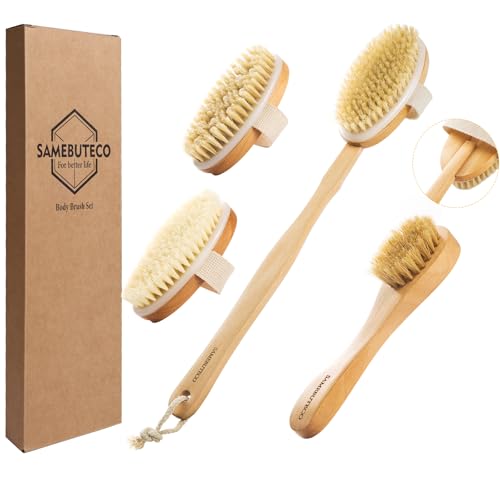 SAMEBUTECO Dry Brushing Body Brush Set with Slide-in Long Handle, 4-in-1 Wooden Bath Scrubber with Face Brush & 3 Interchangeable Heads (Boar Bristle, Soft Washer, Nodal Massager) for Exfoliating
View Price
SAMEBUTECO Dry Brushing Body Brush Set with Slide-in Long Handle, 4-in-1 Wooden Bath Scrubber with Face Brush & 3 Interchangeable Heads (Boar Bristle, Soft Washer, Nodal Massager) for Exfoliating
View Price
How to Balance Blue and Green in Your Bathroom
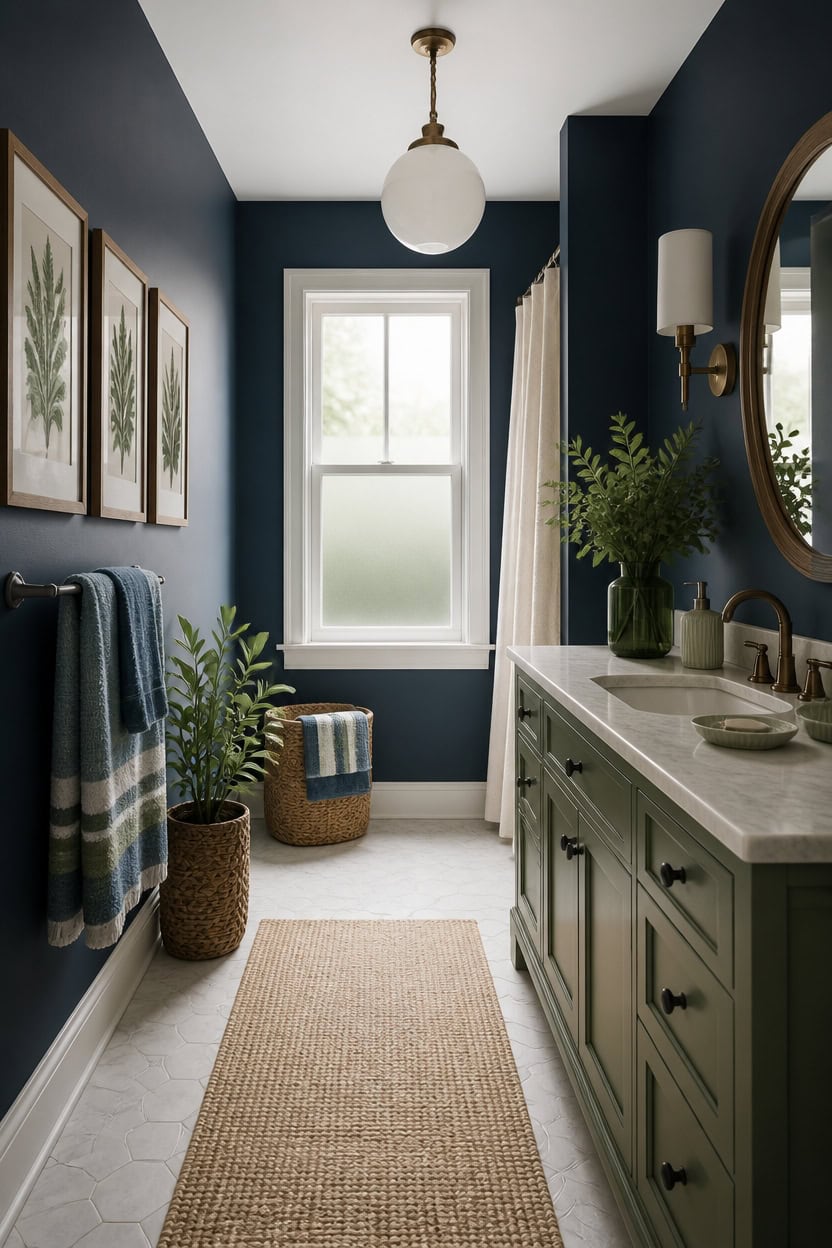
A 60/40 split balances this bathroom: deep blue Stonecutter leads on the accent wall, while mid-tone green Backwoods grounds the vanity cabinet. This ratio keeps one color dominant and the other secondary, so the room feels calm rather than busy. Set the ceramic soap dispenser and dish set on the counter to echo both hues.
Follow a 60/40 split: Let blue cover about 60 percent of the surfaces and green fill the rest.
Anchor with neutral trim: Keep trim white or off-white so the blue-green contrast stays crisp, not heavy.
Layer in metal accents: Brushed nickel or brass fixtures add warmth between the two cool tones.
Repeat the secondary color: Echo the green in at least two small items so the pairing feels planned.
creates a deep focal point that leads the color story. [dark]
adds an earthy mid-tone counterweight to the deep blue wall. [mid-tone]
 ALPIRIRAL Dish Soap Dispenser for Kitchen, Ceramic Dish Soap Dispenser with Sponge Holder, White Dispenser Set with Tray, 3 in 1 Countertop Sink Organizer, Farmhouse Modern Kitchen Decor
View Price
ALPIRIRAL Dish Soap Dispenser for Kitchen, Ceramic Dish Soap Dispenser with Sponge Holder, White Dispenser Set with Tray, 3 in 1 Countertop Sink Organizer, Farmhouse Modern Kitchen Decor
View Price
 18 Pcs Green Stripe Bath Towel Set with Hanging Loop-6 Bath Towels,6 Hand Towels,6 Washcloths Soft Family Towels Set Bathroom Towel Highly Absorbent Quick Dry Shower Towel for Beach Spa Gym Hotel
View Price
18 Pcs Green Stripe Bath Towel Set with Hanging Loop-6 Bath Towels,6 Hand Towels,6 Washcloths Soft Family Towels Set Bathroom Towel Highly Absorbent Quick Dry Shower Towel for Beach Spa Gym Hotel
View Price
 Design House Brookings Bathroom Vanity, 24", White
View Price
Design House Brookings Bathroom Vanity, 24", White
View Price
 BTP Brushed Nickel Pendant Lights Kitchen Island, Milk Glass Pendant Light Fixture with Frosted Globe Shade, Adjustable Height Modern Hanging Light, E26, Sloped Ceiling Compatible for Dining Room
View Price
BTP Brushed Nickel Pendant Lights Kitchen Island, Milk Glass Pendant Light Fixture with Frosted Globe Shade, Adjustable Height Modern Hanging Light, E26, Sloped Ceiling Compatible for Dining Room
View Price
 JoyJolt Hue Stemless Wine Glass Set, Large 15 oz Stemless Wine Glasses Set of 6 for White Red or Water, Short Glass Tumblers, No Stem Margarita Glasses, Colored Tumbler
View Price
JoyJolt Hue Stemless Wine Glass Set, Large 15 oz Stemless Wine Glasses Set of 6 for White Red or Water, Short Glass Tumblers, No Stem Margarita Glasses, Colored Tumbler
View Price
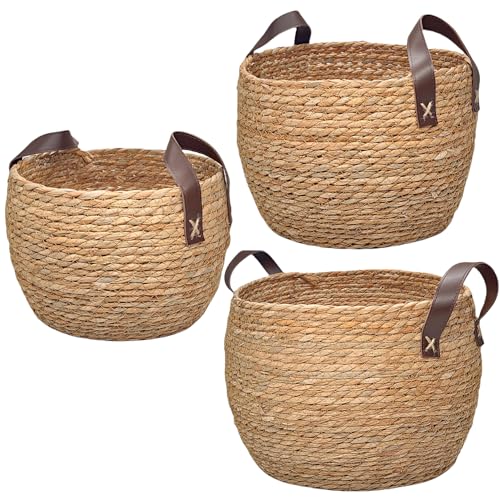 GIB Round Seagrass Storage Baskets Woven Wicker Planter Baskets for Decor
View Price
GIB Round Seagrass Storage Baskets Woven Wicker Planter Baskets for Decor
View Price
 Utopia Towels Cotton Bath Mat, 21x34 in, 2 Pack, Navy Blue
View Price
Utopia Towels Cotton Bath Mat, 21x34 in, 2 Pack, Navy Blue
View Price
Where Blue Works Best as the Main Color
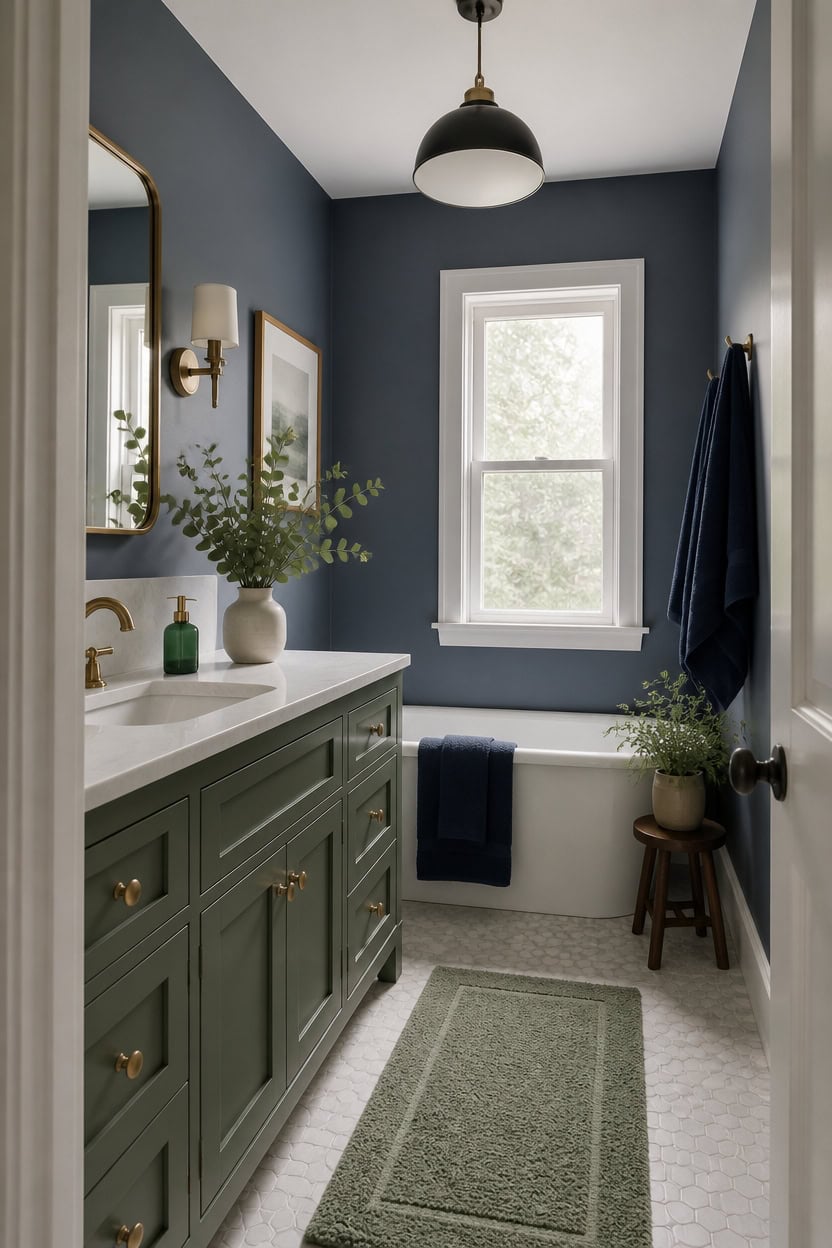
Blue leads this bathroom at about seventy percent, starting with the main walls in mid-tone blue Vermont Slate. That ratio sets a cool, steady tone while mid-tone green Rosepine stays secondary on the vanity cabinet. Set a small eucalyptus bundle in a vase on the counter to soften the pairing.
Lead with wall color: Cover the largest surfaces in blue to set the room’s temperature.
Keep fixtures light: Choose white or chrome fixtures so the blue does not feel heavy.
Add green in small doses: Limit green to one cabinet or a few accessories.
Balance with natural light: Place mirrors near windows to keep deep blue areas from feeling dim.
creates a calm, cool backdrop that lets blue lead the room. [mid-tone]
adds a quiet green accent that keeps the palette from feeling one-note. [mid-tone]
 Oning Dried Eucalyptus Stems Shower Bundle, 30 Pcs,Real Eucalyptus Plant
View Price
Oning Dried Eucalyptus Stems Shower Bundle, 30 Pcs,Real Eucalyptus Plant
View Price
 Cotton Paradise 100% Cotton Turkish Towel Set, Soft Absorbent Quick Dry, 6 Piece Towel Set, Navy Blue
View Price
Cotton Paradise 100% Cotton Turkish Towel Set, Soft Absorbent Quick Dry, 6 Piece Towel Set, Navy Blue
View Price
 36" White Shaker Bathroom Vanity Base – Ready-to-Assemble Sink Cabinet, Freestanding Bathroom Vanity Base Only, No Top or Sink
View Price
36" White Shaker Bathroom Vanity Base – Ready-to-Assemble Sink Cabinet, Freestanding Bathroom Vanity Base Only, No Top or Sink
View Price
 Ceramic Soap Dispenser Green with Gold Pump,Simple Design Cylindrical Lotion Dispenser Bottle,Refillable Liquid Hand Soap Dispenser for Kitchen,Bathroom,Washroom
View Price
Ceramic Soap Dispenser Green with Gold Pump,Simple Design Cylindrical Lotion Dispenser Bottle,Refillable Liquid Hand Soap Dispenser for Kitchen,Bathroom,Washroom
View Price
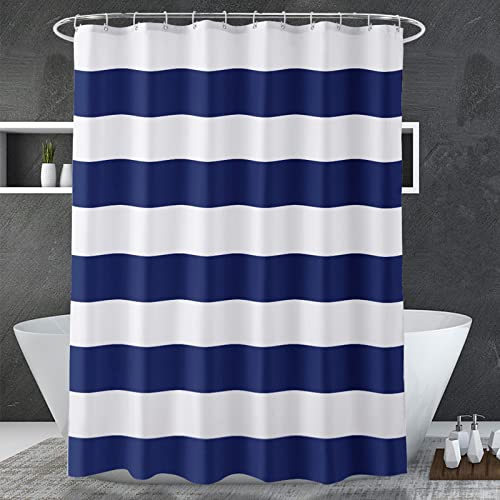 AmazerBath Navy Blue Shower Curtain Stripes, 72" W x 72" H Blue and White Shower Curtain, Fabric Shower Curtains for Bathroom with 2 Heavy Stones, Water Repellent
View Price
AmazerBath Navy Blue Shower Curtain Stripes, 72" W x 72" H Blue and White Shower Curtain, Fabric Shower Curtains for Bathroom with 2 Heavy Stones, Water Repellent
View Price
 SESIMENT Farmhouse Pendant Lighting for Kitchen Island,Black and Gold Dome Pendant Light Fixtures, Industrial Hanging Ceiling Light for Dining Room Foyer Cafe Kitchen Sink,2 Pack
View Price
SESIMENT Farmhouse Pendant Lighting for Kitchen Island,Black and Gold Dome Pendant Light Fixtures, Industrial Hanging Ceiling Light for Dining Room Foyer Cafe Kitchen Sink,2 Pack
View Price
 H.VERSAILTEX Bath Rugs for Bathroom Non Slip Bath Mats Extra Thick Chenille Striped Rug 20" x 32" Absorbent Non Skid Fluffy Soft Shaggy Washable Dry Fast Plush Mat for Indoor, Bath Room, Tub - Sage
View Price
H.VERSAILTEX Bath Rugs for Bathroom Non Slip Bath Mats Extra Thick Chenille Striped Rug 20" x 32" Absorbent Non Skid Fluffy Soft Shaggy Washable Dry Fast Plush Mat for Indoor, Bath Room, Tub - Sage
View Price
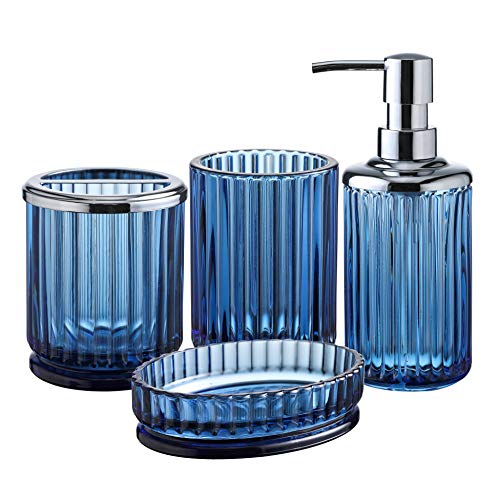 4PCs Heavy Weight Decent Blue Glass Bathroom Accessories Set with Decorative Pressed Pattern - Includes Hand Soap Dispenser & Tumbler & Soap Dish & Toothbrush Holder (Cobalt Blue)
View Price
4PCs Heavy Weight Decent Blue Glass Bathroom Accessories Set with Decorative Pressed Pattern - Includes Hand Soap Dispenser & Tumbler & Soap Dish & Toothbrush Holder (Cobalt Blue)
View Price
Where Green Works Best as the Supporting Color
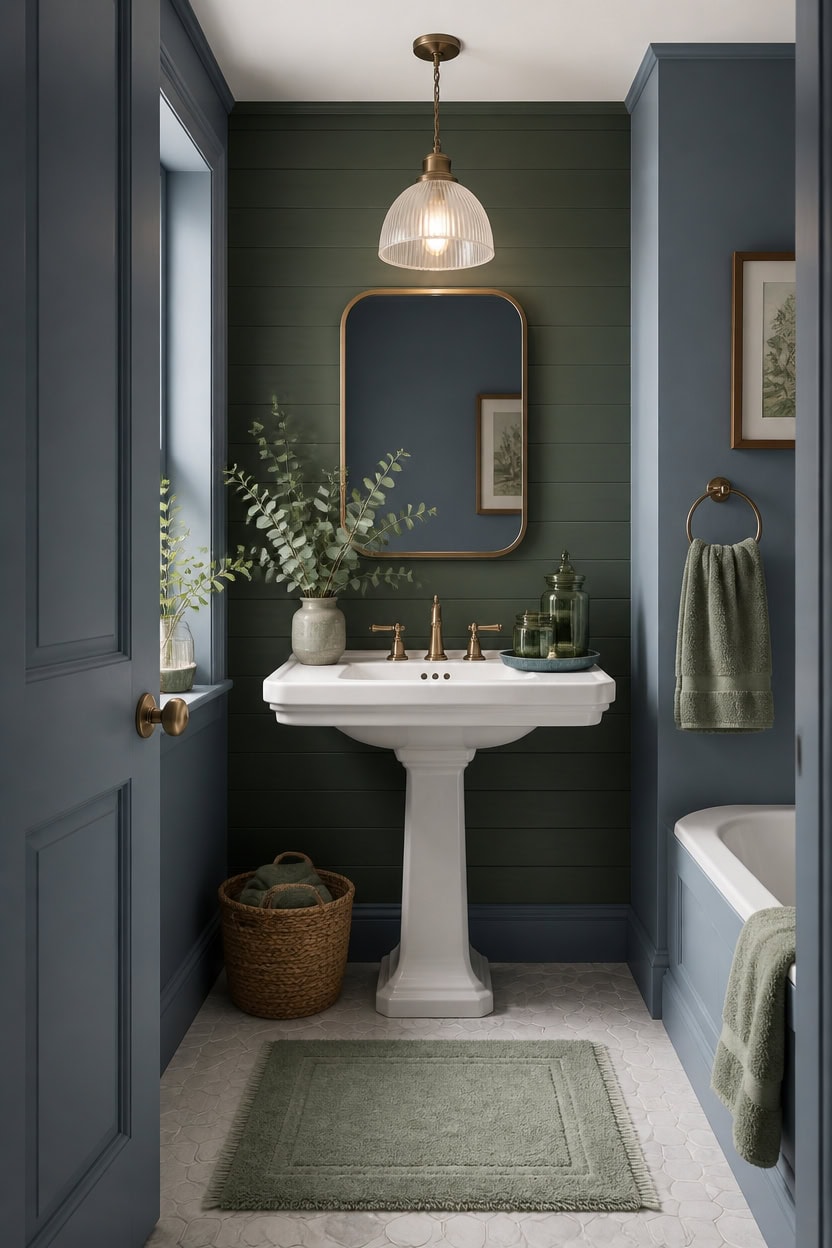
Green earns its place at roughly thirty percent by wrapping a single accent wall in mid-tone Rosepine, while mid-tone blue Vermont Slate still governs the main walls at the far end of the room. This ratio keeps green from competing with the blue backdrop, so the two tones read as a planned pair rather than a clash. Rest a small eucalyptus bundle in a vase on the vanity edge to echo the green wall without adding another painted surface.
Limit the green surface: One accent wall or a single panel keeps green in a supporting role.
Repeat green in small objects: Soap dishes, jars, or a small plant tie the accent wall to the rest of the room.
Keep hardware neutral: Chrome or matte black fixtures let the blue and green share attention evenly.
Angle the mirror toward the accent wall: This bounces light onto the green without washing it out.
gives the room its steady blue base before green enters. [mid-tone]
adds a contained pop of green that supports rather than competes. [mid-tone]
 Muhanjia Artificial Eucalyptus Stems in Glass Vase with Faux Water,7Pcs Fake Plant for Centerpiece Bathroom Farmhouse Room Home Decor (Sage Green Eucalyptus)
View Price
Muhanjia Artificial Eucalyptus Stems in Glass Vase with Faux Water,7Pcs Fake Plant for Centerpiece Bathroom Farmhouse Room Home Decor (Sage Green Eucalyptus)
View Price
 COZYART Luxury Bath Towel Set 6 Pcs, Sage Green 100% Turkish Cotton 650 GSM
View Price
COZYART Luxury Bath Towel Set 6 Pcs, Sage Green 100% Turkish Cotton 650 GSM
View Price
 Renovators Supply Manufacturing Ondine Space Saving 16" W x 33" H x 14.5" Proj. Small Bathroom Pedestal Sink, Vitreous China, with Overflow, Compatible with 4 in. Centerset Faucets
View Price
Renovators Supply Manufacturing Ondine Space Saving 16" W x 33" H x 14.5" Proj. Small Bathroom Pedestal Sink, Vitreous China, with Overflow, Compatible with 4 in. Centerset Faucets
View Price
 Luxury Microfiber Bathroom Rugs, White Bath Rug with Blue Scalloped Piping Cute Aesthetic Preppy Bath Mat for Bathroom, Tub, Floor Carpet, Sink, Shower, Anti Slip, Absorbent, 32x20
View Price
Luxury Microfiber Bathroom Rugs, White Bath Rug with Blue Scalloped Piping Cute Aesthetic Preppy Bath Mat for Bathroom, Tub, Floor Carpet, Sink, Shower, Anti Slip, Absorbent, 32x20
View Price
 CAFULAM Modern Black Farmhouse Pendant Light with Glass Shade,Industrial Pendant Lighting, Adjustable Hanging Light Fixtures, Farmhouse Pendant Lighting
View Price
CAFULAM Modern Black Farmhouse Pendant Light with Glass Shade,Industrial Pendant Lighting, Adjustable Hanging Light Fixtures, Farmhouse Pendant Lighting
View Price
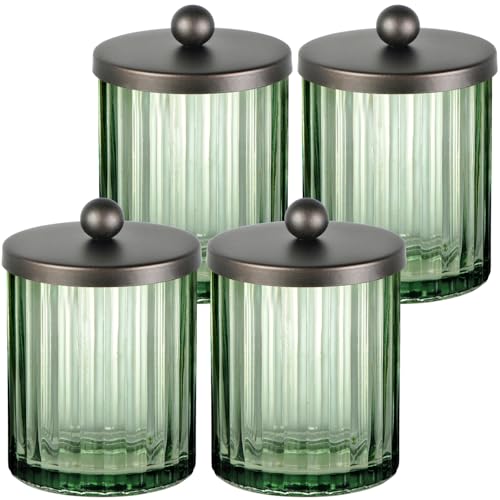 Amolliar Green Glass Qtip Holder Apothecary Jar Metal Lid (Bronze 4 Pack)
View Price
Amolliar Green Glass Qtip Holder Apothecary Jar Metal Lid (Bronze 4 Pack)
View Price
 WZKALY Polish Chrome Towel Bar Wall Mounted 24", 304 Stainless Steel
View Price
WZKALY Polish Chrome Towel Bar Wall Mounted 24", 304 Stainless Steel
View Price
 10"×6"×1" Bathroom Vanity Tray for Countertop- Ceramic Decorative Organizer Tray for Dresser Tops, Toilet, Perfume, Sponge Holder Soap Dish Dispenser for Kitchen Counter- Kiln-Transformed Blue
View Price
10"×6"×1" Bathroom Vanity Tray for Countertop- Ceramic Decorative Organizer Tray for Dresser Tops, Toilet, Perfume, Sponge Holder Soap Dish Dispenser for Kitchen Counter- Kiln-Transformed Blue
View Price
How Natural Light Affects Blue and Green Tones
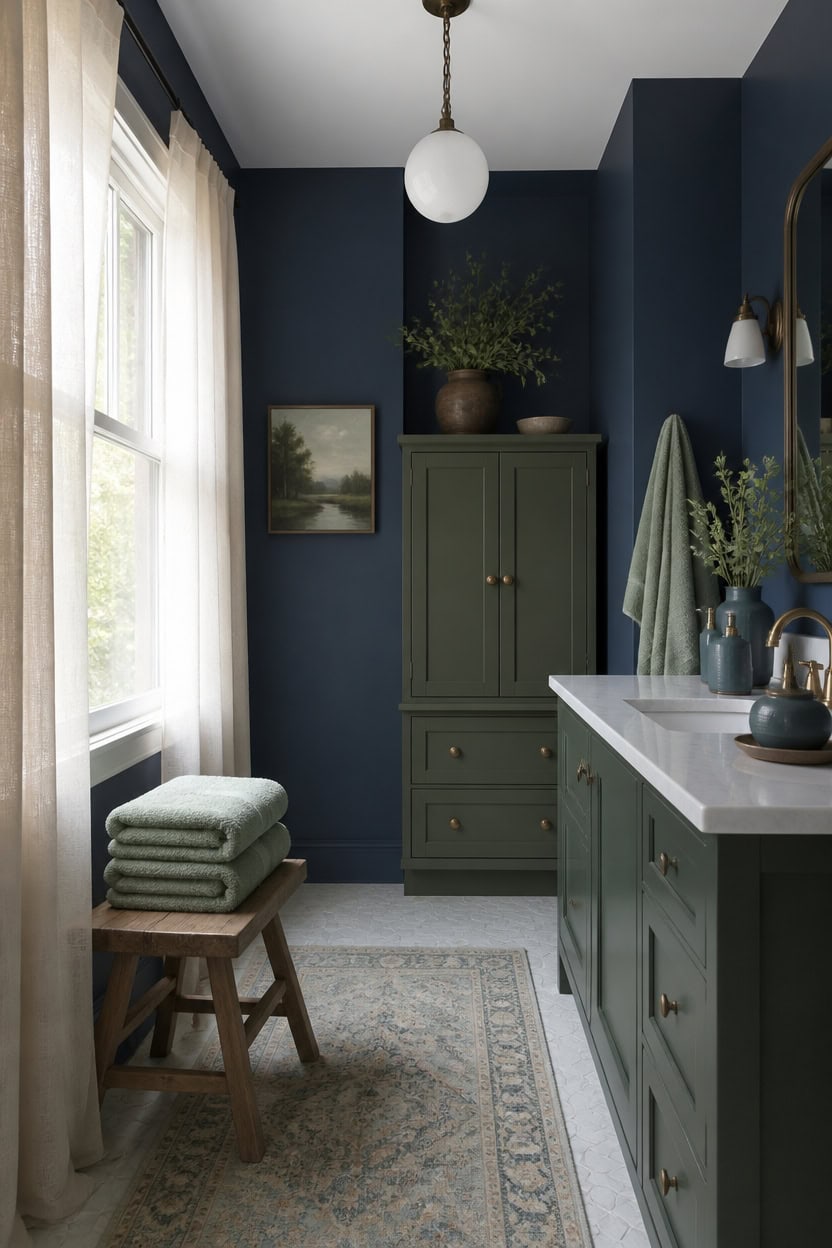
Natural light shifts blue and green tones throughout the day, so deep pigments like Admiral Blue and Tarrytown Green hold their color instead of washing out. Dark paint absorbs light rather than bouncing it back, which keeps the hue steady from morning brightness to evening dimness. Paint deep blue Admiral Blue on the main walls and deep green Tarrytown Green on the vanity cabinet, then rest a stack of hand towels on a stool near the window to catch the shifting light.
Test swatches by time of day: Tape samples near the window and check them at morning, noon, and evening light.
Match undertones to exposure: North-facing bathrooms handle these deep tones better than pale ones, which can look flat.
Use light fixtures to fill gaps: A globe pendant softens shadows on darker walls once the sun moves.
Keep mirrors near the light source: Positioning a mirror across from the window bounces daylight onto both painted surfaces.
holds a steady, true tone as daylight shifts through the room. [dark]
grounds the space with a rich green that reads consistent in both morning and evening light. [dark]
 Hoimpro Hand Towel Holder Free Standing Towel Bar Oil Rubbed Bronze
View Price
Hoimpro Hand Towel Holder Free Standing Towel Bar Oil Rubbed Bronze
View Price
 Dwersty Frosted Glass Window Privacy Film Decorative, 23.6" x 78.74"
View Price
Dwersty Frosted Glass Window Privacy Film Decorative, 23.6" x 78.74"
View Price
 Winnker Round Mirror 30 inch Gold, Circle Mirror, Brushed Gold Metal Frame
View Price
Winnker Round Mirror 30 inch Gold, Circle Mirror, Brushed Gold Metal Frame
View Price
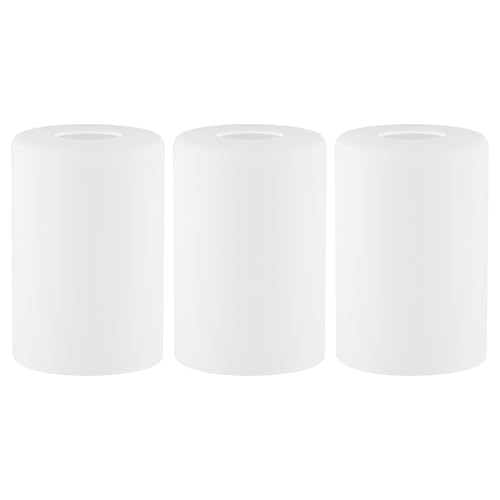 Golhom 3 Pack Frosted Opal White Glass Lamp Shade, Lip-less Cylinder Glass Light Fixture Cover, Replacement Globe for Chandelier, Pendant, Vanity Light
View Price
Golhom 3 Pack Frosted Opal White Glass Lamp Shade, Lip-less Cylinder Glass Light Fixture Cover, Replacement Globe for Chandelier, Pendant, Vanity Light
View Price
 ANTIS'S HOME Soap Dispenser Liquid 11.84OZ | Ceramic Refillable Hand Dish Soap Dispenser for Kitchen Bathroom Light Green
View Price
ANTIS'S HOME Soap Dispenser Liquid 11.84OZ | Ceramic Refillable Hand Dish Soap Dispenser for Kitchen Bathroom Light Green
View Price
 Marvione Bath Towels Set 6 Piece, 100% Turkish Cotton Luxury Towels
View Price
Marvione Bath Towels Set 6 Piece, 100% Turkish Cotton Luxury Towels
View Price
 HOMEIDEAS Non-See-Through White Privacy Sheer Curtains 52 X 84 Inches Long 2 Panels Sheer Curtains Light Filtering Window Curtains Drapes for Bedroom Living Room
View Price
HOMEIDEAS Non-See-Through White Privacy Sheer Curtains 52 X 84 Inches Long 2 Panels Sheer Curtains Light Filtering Window Curtains Drapes for Bedroom Living Room
View Price
Tile Choices That Let Blue and Green Shine
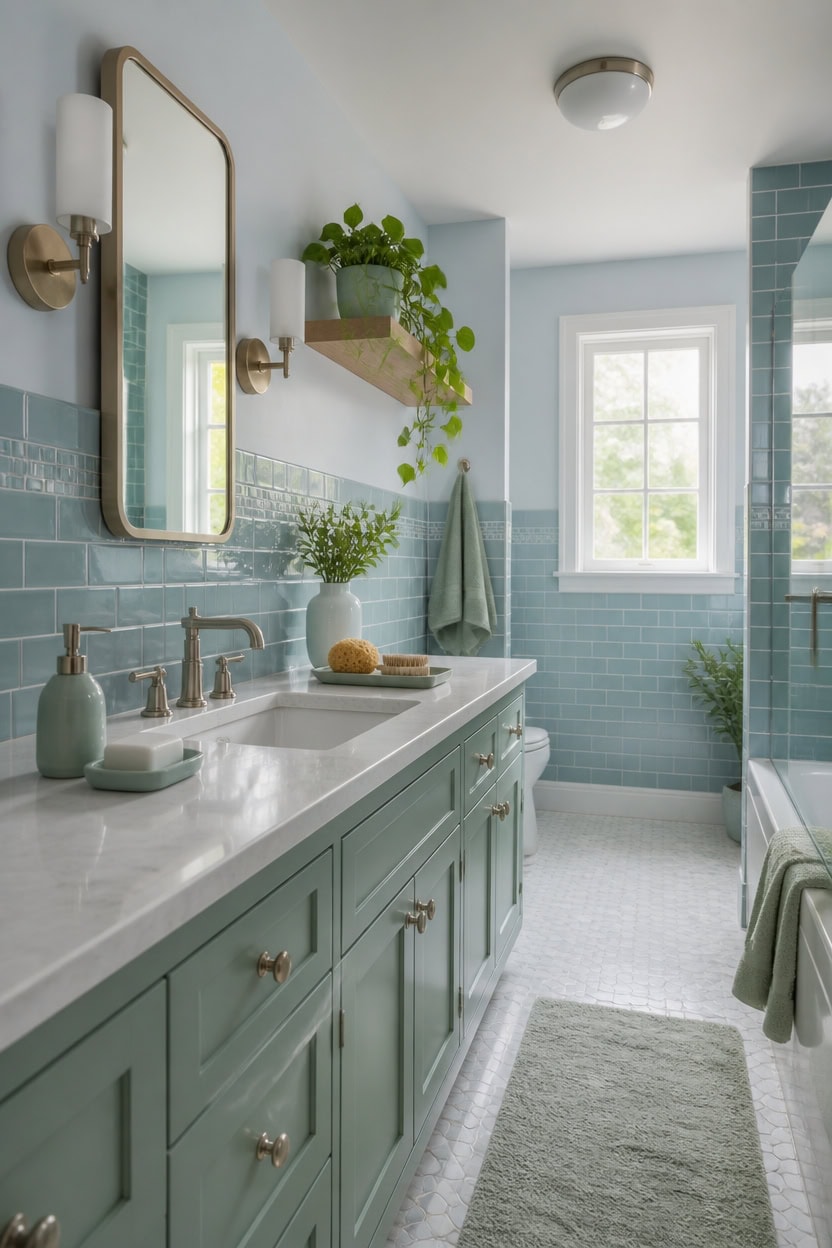
Glossy subway tile with cool white grout lets blue and green tones read true without pattern competition. Very light blue Soft Sky on the main walls and very light green Aberdeen Green on the vanity keep the palette calm. Rest a trailing plant on a floating shelf to add a soft green note near the tile.
Choose matte over glossy in small spaces: Matte tile diffuses light instead of bouncing harsh glare across blue and green surfaces.
Pick one accent tile row: A single row of patterned tile keeps the blue-green pairing from feeling busy.
Match grout to the lighter tone: Light grout ties floor tile to pale wall paint for a seamless look.
Test tile against paint swatches: Hold tile samples next to Soft Sky and Aberdeen Green swatches before ordering.
a barely-there blue that lets pale tile patterns lead the room. [very light]
a soft green that echoes tile tones without adding weight. [very light]
 MY ROVALA Silk Plants for Home Decor Indoor in Pot Realistic Artificial Plants Hanging Faux Plants Indoor Fake Potted Plants for Shelves Bedroom Bathroom Trailing Plant, Fake Pothos Ivy (Dark Green)
View Price
MY ROVALA Silk Plants for Home Decor Indoor in Pot Realistic Artificial Plants Hanging Faux Plants Indoor Fake Potted Plants for Shelves Bedroom Bathroom Trailing Plant, Fake Pothos Ivy (Dark Green)
View Price
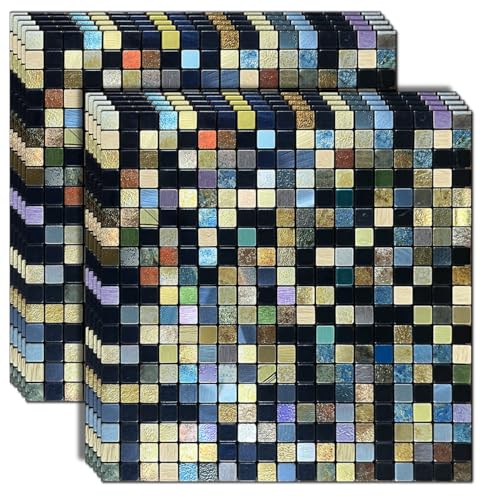 sanyeskkiy 10 Sheets Peel and Stick Backsplash Tile, Self-Adhesive Mosaic Tile, Stick on Kitchen, Bathroom Vanities, Fireplace Décor, Laundry Table (10, Mixed Green and Blue)
View Price
sanyeskkiy 10 Sheets Peel and Stick Backsplash Tile, Self-Adhesive Mosaic Tile, Stick on Kitchen, Bathroom Vanities, Fireplace Décor, Laundry Table (10, Mixed Green and Blue)
View Price
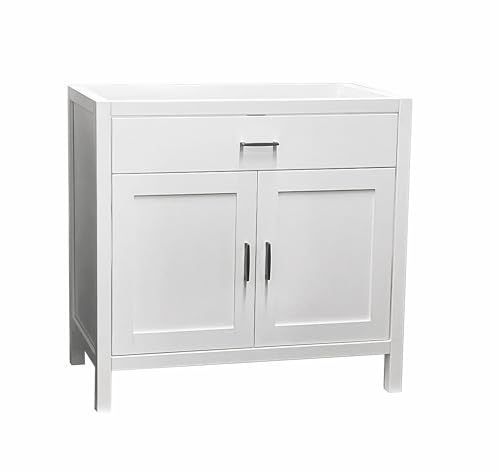 24" White Bathroom Vanity Base Only – Freestanding Solid Wood Sink Cabinet with Tip-Out Drawer, Shaker Style Storage, No Top or Sink, 36" W x 21" D x 34.5" H
View Price
24" White Bathroom Vanity Base Only – Freestanding Solid Wood Sink Cabinet with Tip-Out Drawer, Shaker Style Storage, No Top or Sink, 36" W x 21" D x 34.5" H
View Price
 COHOSEGE Glass Soap Dispenser Set 2 Pack,16 Oz Dish Soap Dispenser for Kitchen Sink,Blue Kitchen Accessories and Kitchen Decor,Blue Decorations and Kitchen Utensils for Kitchen
View Price
COHOSEGE Glass Soap Dispenser Set 2 Pack,16 Oz Dish Soap Dispenser for Kitchen Sink,Blue Kitchen Accessories and Kitchen Decor,Blue Decorations and Kitchen Utensils for Kitchen
View Price
 Modern Threads 6 Piece Bath Towel Set – Bathroom Set with 2 Bath Towels, 2 Hand Towels, and 2 Wash Cloths – 100% Cotton, Super Absorbent & Extra Soft – Reversible Botanical Vine (Sage Green)
View Price
Modern Threads 6 Piece Bath Towel Set – Bathroom Set with 2 Bath Towels, 2 Hand Towels, and 2 Wash Cloths – 100% Cotton, Super Absorbent & Extra Soft – Reversible Botanical Vine (Sage Green)
View Price
 hykolity 13 inch Flush Mount LED Ceiling Light Fixture,5CCT
View Price
hykolity 13 inch Flush Mount LED Ceiling Light Fixture,5CCT
View Price
 ArtbyHannah Framed Bathroom Wall Art Decor, 12x16'' Botanical Leaf Prints
View Price
ArtbyHannah Framed Bathroom Wall Art Decor, 12x16'' Botanical Leaf Prints
View Price
 DEBETOOL 6-Piece Bamboo Dish Brush Set with Coconut Sponge
View Price
DEBETOOL 6-Piece Bamboo Dish Brush Set with Coconut Sponge
View Price
Best Paint Colors for a Blue and Green Bathroom
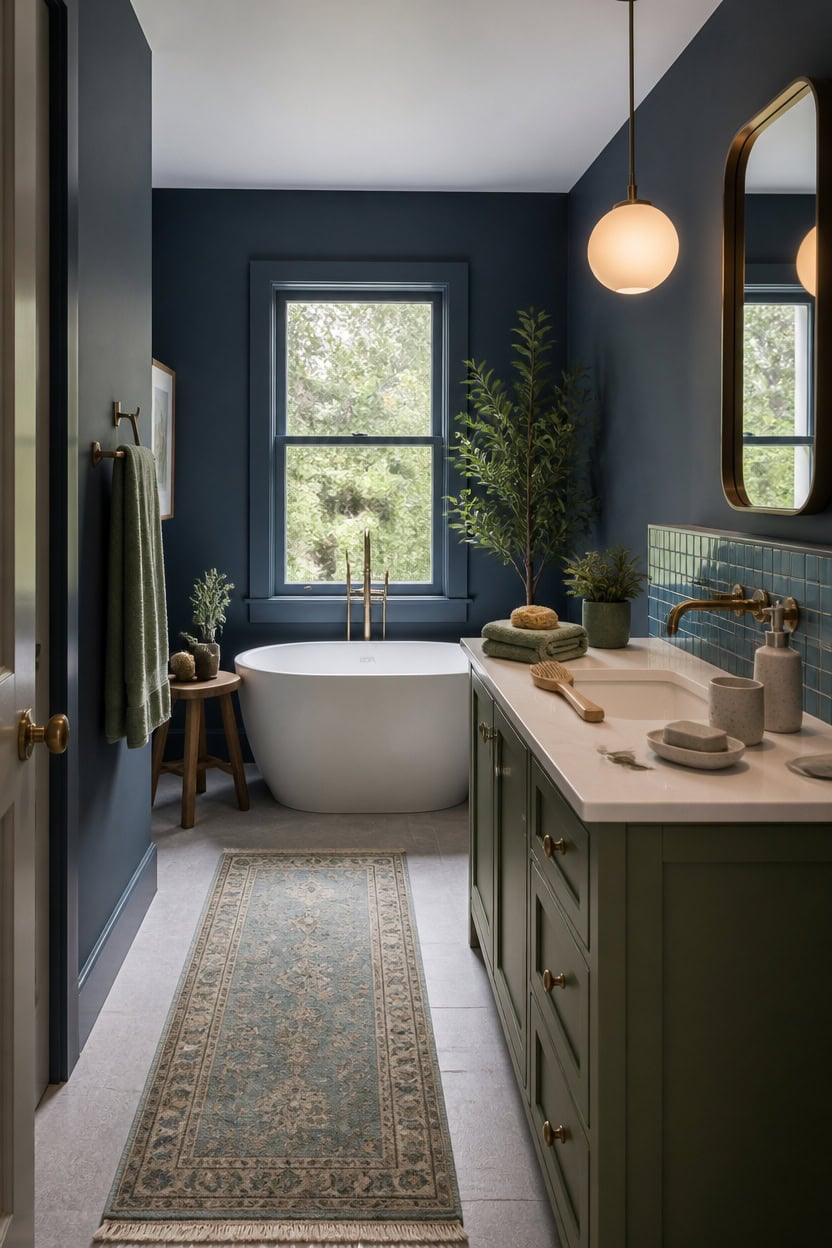
Deep blue Stonecutter on the main walls anchors the room, while mid-tone green Backwoods on the vanity keeps the palette warm. The two shades share enough gray undertone to read as a cohesive family instead of clashing accents. Set a ceramic soap dispenser and dish set on the counter to echo both hues in one small piece.
Test in real light: Sample colors on the wall and view them morning and night before committing.
Balance warm and cool: Pair a cool blue with a green that carries warm undertones to avoid a cold room.
Limit to two dominant colors: Keep blue and green as the main tones, then add neutrals for trim and floor.
Consider sheen level: Use eggshell on walls and semi-gloss on the vanity for durability and contrast.
a deep blue that grounds the room without making it feel closed in. [dark]
a mid-tone green that pairs naturally with the wall’s cool undertone. [mid-tone]
 Janxin Glass Kitchen Soap Dispenser Set with Ceramic Tray
View Price
Janxin Glass Kitchen Soap Dispenser Set with Ceramic Tray
View Price
 Skelang Clear Lip-less Glass Lamp Shade, Cylindrical Light Cover with Fitter Opening, Replacement for Chandelier, Bathroom Vanity Light, Pendant, 4 Pcs
View Price
Skelang Clear Lip-less Glass Lamp Shade, Cylindrical Light Cover with Fitter Opening, Replacement for Chandelier, Bathroom Vanity Light, Pendant, 4 Pcs
View Price
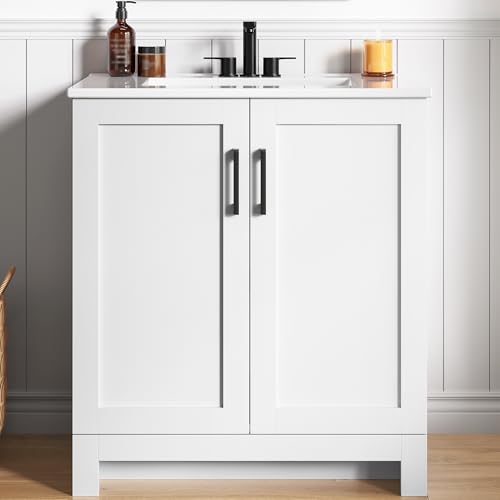 LIKIMIO 30" Bathroom Vanity with Sink, 2 Soft-Close Doors, White
View Price
LIKIMIO 30" Bathroom Vanity with Sink, 2 Soft-Close Doors, White
View Price
 Utopia Towels 8 Piece Majestic Plush Luxury Towel Set, Cotton, Sage Green
View Price
Utopia Towels 8 Piece Majestic Plush Luxury Towel Set, Cotton, Sage Green
View Price
 Natural Sea Sponge 5pk Spa Gift Set Bath Shower & Facial Care, Premium Bag
View Price
Natural Sea Sponge 5pk Spa Gift Set Bath Shower & Facial Care, Premium Bag
View Price
 CEWOR Fake Plants Artificial Plants Indoor Faux Plant for Home Decor Silk Realistic Hanging Plants Potted Aesthetic Fake Pothos for Shelves Office Bedroom Bathroom Decor (Green)
View Price
CEWOR Fake Plants Artificial Plants Indoor Faux Plant for Home Decor Silk Realistic Hanging Plants Potted Aesthetic Fake Pothos for Shelves Office Bedroom Bathroom Decor (Green)
View Price
 Sanyeskkiy 10 Sheets Peel and Stick Backsplash, Waterproof Mosaic Tile Self-Adhesive - Easy Cut to Size for Kitchen, Bathroom, Fireplace DIY Installation (10, Green+Blue Brushed)
View Price
Sanyeskkiy 10 Sheets Peel and Stick Backsplash, Waterproof Mosaic Tile Self-Adhesive - Easy Cut to Size for Kitchen, Bathroom, Fireplace DIY Installation (10, Green+Blue Brushed)
View Price
Countertops and Vanities That Complement Blue and Green
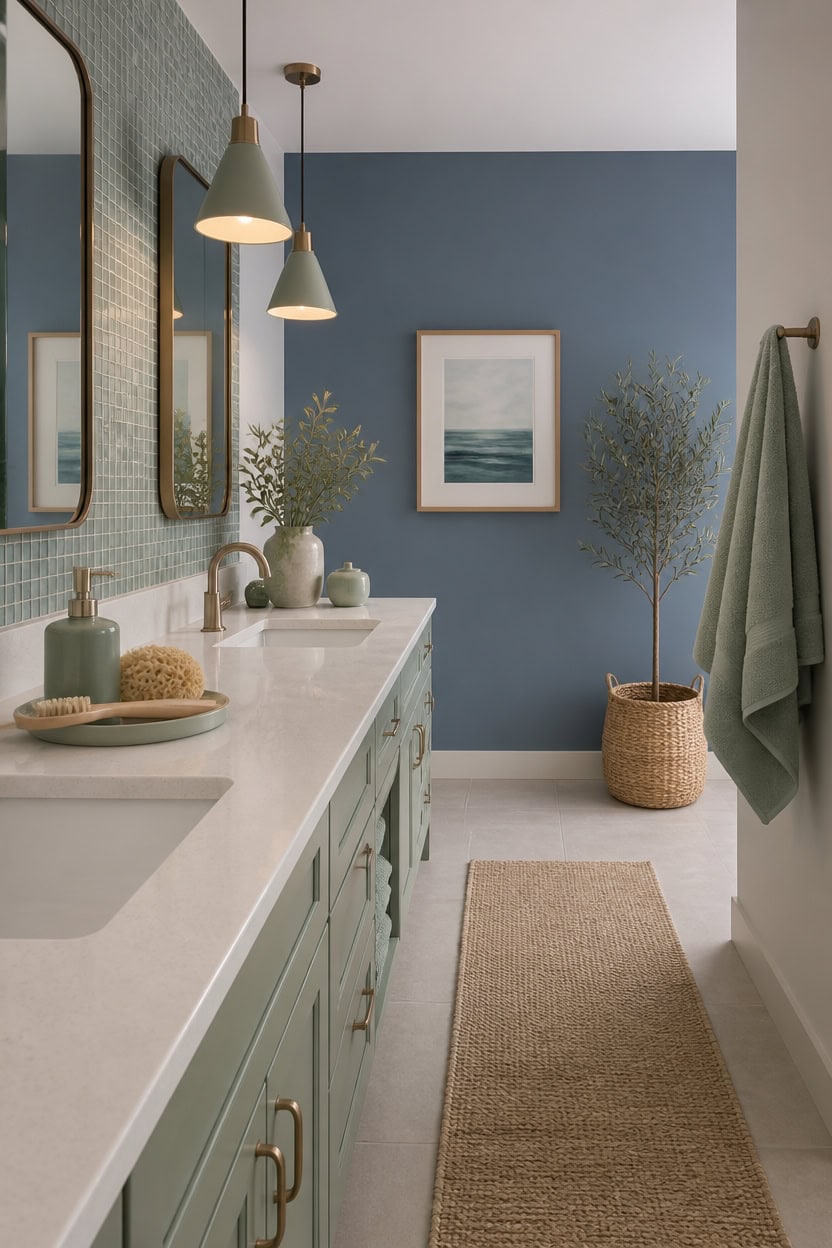
Mid-tone blue Philipsburg Blue on the accent wall behind the vanity sets a calm backdrop, while light green Jojoba on the vanity cabinet keeps the base feeling open. The lighter cabinet tone balances the deeper wall color so the room doesn’t feel closed in around the sink. Rest a sea sponge and wood-handled bath brush set on the counter to tie both hues into one small, functional piece.
Pick a light countertop: A pale quartz or solid-surface top keeps the blue accent wall as the room’s focal point.
Keep hardware simple: Brushed nickel or brass pulls read clean against a light green vanity front.
Balance warm and cool: A warm-toned countertop offsets the cool blue wall so the room feels grounded.
Sample before you buy: Hold paint swatches against the actual countertop material in daylight and at night.
a mid-tone blue that frames the countertop without taking over the room. [mid-tone]
a light green that keeps the base airy and pairs easily with a pale countertop. [light]
 30" White Shaker Bathroom Vanity Base with Drawers – Ready-to-Assemble Sink Cabinet, 2 Drawers and 1 Door, 30" W x 21" D x 34.5" H, Base Only
View Price
30" White Shaker Bathroom Vanity Base with Drawers – Ready-to-Assemble Sink Cabinet, 2 Drawers and 1 Door, 30" W x 21" D x 34.5" H, Base Only
View Price
 18'' Shower Body Brush Sea Sponge Long Wooden Handle Back Scrubber Bath Brush Gentle Exfoliating Lotion Applicator
View Price
18'' Shower Body Brush Sea Sponge Long Wooden Handle Back Scrubber Bath Brush Gentle Exfoliating Lotion Applicator
View Price
 INGOFIN 3 Pcs Ceramic Bathroom Accessory Set - Liquid Soap Dispenser, Toothbrush Holder & Tray, Bathroom Counter Set, Countertop Essentials for Home, Guest Bathroom, or Office Use, Matte Green
View Price
INGOFIN 3 Pcs Ceramic Bathroom Accessory Set - Liquid Soap Dispenser, Toothbrush Holder & Tray, Bathroom Counter Set, Countertop Essentials for Home, Guest Bathroom, or Office Use, Matte Green
View Price
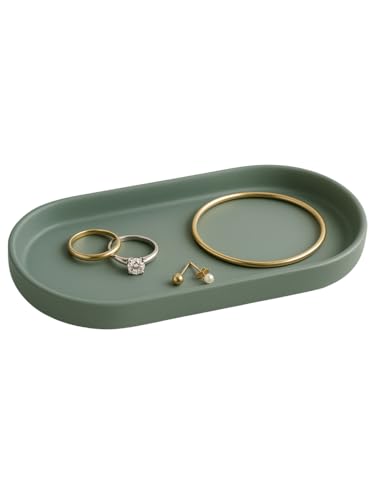 Sikkis Ceramic Jewelry Tray Oval Vanity Dish for Rings Earrings Bracelets
View Price
Sikkis Ceramic Jewelry Tray Oval Vanity Dish for Rings Earrings Bracelets
View Price
 Ascher Bathroom Light Fixtures, 2-Light Vanity Light Over Mirror, Brushed Nickel Wall Sconces with Milky White Frosted Glass Shades, Wall Lamp for Living Room Bedroom, E26 Base(Bulbs Not Included)
View Price
Ascher Bathroom Light Fixtures, 2-Light Vanity Light Over Mirror, Brushed Nickel Wall Sconces with Milky White Frosted Glass Shades, Wall Lamp for Living Room Bedroom, E26 Base(Bulbs Not Included)
View Price
 Winlyn Set of 2 Small Artificial Potted Plants Faux Eucalyptus Plant in White Geometric Ceramic Pots Small Desk Potted Plants 7.1" Tall for Home Office Room Decorations Wedding Greenery Centerpiece
View Price
Winlyn Set of 2 Small Artificial Potted Plants Faux Eucalyptus Plant in White Geometric Ceramic Pots Small Desk Potted Plants 7.1" Tall for Home Office Room Decorations Wedding Greenery Centerpiece
View Price
 KASARO Peel and Stick Backsplash Shell Tiles, Mother of Pearl Mosaic Self Adhesive Tiles for Kitchen Wall Bathroom Bedroom Decor, Blue, 10-Sheet
View Price
KASARO Peel and Stick Backsplash Shell Tiles, Mother of Pearl Mosaic Self Adhesive Tiles for Kitchen Wall Bathroom Bedroom Decor, Blue, 10-Sheet
View Price
Metal Fixtures That Pair Well With Blue and Green
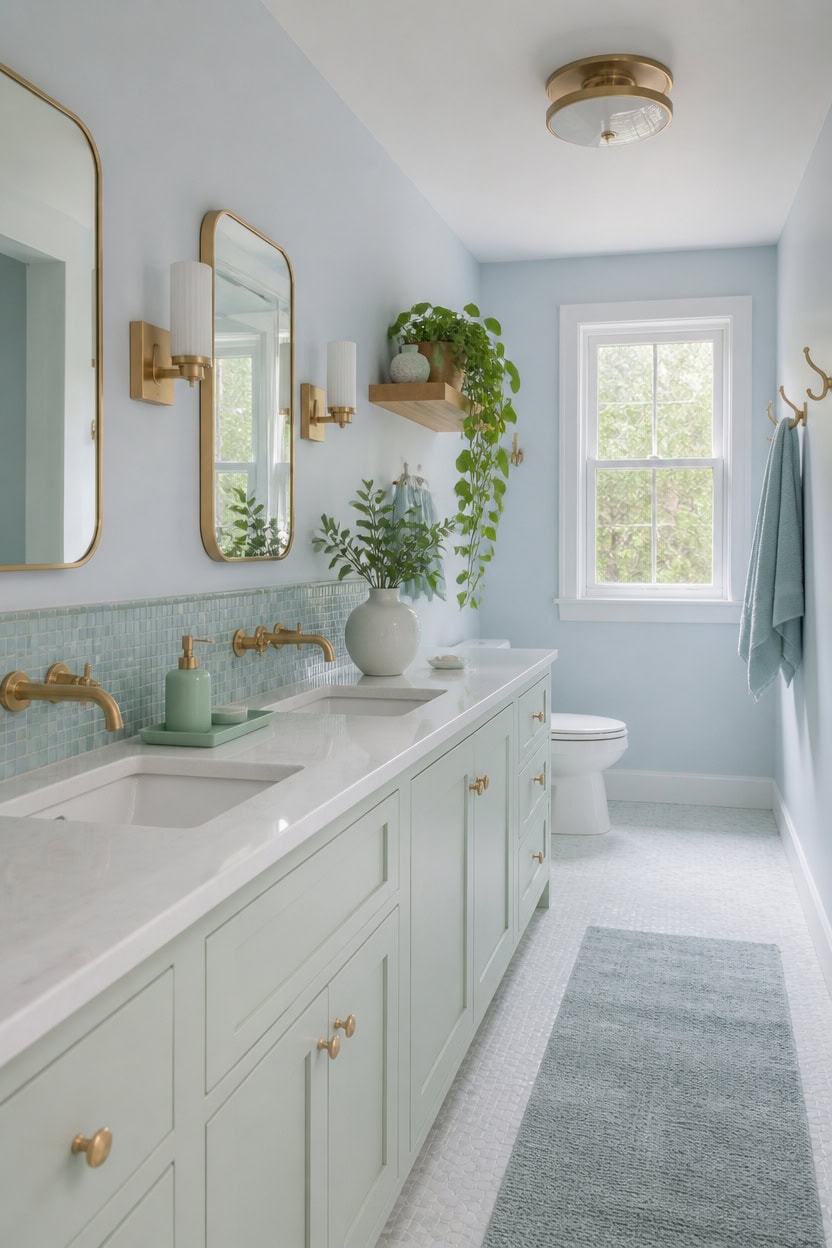
Brushed brass fixtures pair well with cool backdrops because warm metal reads clearly against blue and green paint. Very light blue Bashful Blue on the walls and very light green Antiguan Sky on the vanity keep the room bright and let the metal stand out. Add a trailing plant on a floating shelf near the mirror to soften the fixture lines.
Choose warm metals: Brass or brushed gold read warmer against cool blue and green tones.
Limit finishes: Stick to one metal finish throughout the room for a cohesive look.
Balance shine: Pair polished fixtures with matte paint finishes to avoid glare.
Layer accents: Use small metal trays or hooks to echo the faucet finish.
a very light blue that lets brushed brass fixtures stand out without competing for attention. [very light]
a very light green that keeps the base airy under warm metal hardware. [very light]
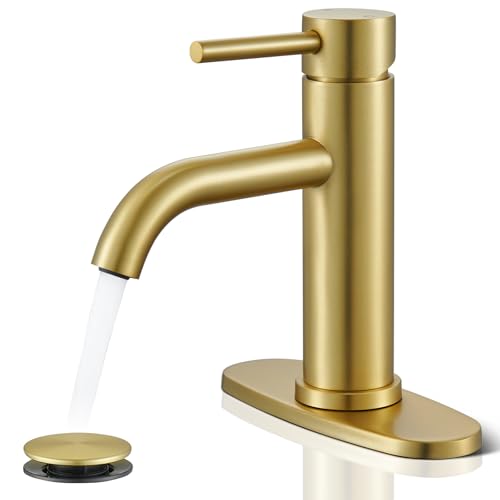 WINKEAR Brushed Gold Bathroom Faucet, Single Hole Bathroom Sink Faucet
View Price
WINKEAR Brushed Gold Bathroom Faucet, Single Hole Bathroom Sink Faucet
View Price
 Der Rose 34" Fake Hanging Plant Artificial Pothos Vines Office Shelf Decor
View Price
Der Rose 34" Fake Hanging Plant Artificial Pothos Vines Office Shelf Decor
View Price
 Bubxo Brushed Gold Towel Bar, 24 Inch Bathroom Towel Rack
View Price
Winnker Gold Circle Mirror 22 inch, Round Mirror, Brushed Gold Metal Frame
View Price
Bubxo Brushed Gold Towel Bar, 24 Inch Bathroom Towel Rack
View Price
Winnker Gold Circle Mirror 22 inch, Round Mirror, Brushed Gold Metal Frame
View Price
 KWQKEM 2 Pcs Pack Antique Brass Towel Hook Vintage Coat Hook with 2 Hooks Wall Mounted Robe Hooks for Bathrooms and Kitchen Bronze Hand Towel Hook Hanger with Brushed Gold Finish
View Price
KWQKEM 2 Pcs Pack Antique Brass Towel Hook Vintage Coat Hook with 2 Hooks Wall Mounted Robe Hooks for Bathrooms and Kitchen Bronze Hand Towel Hook Hanger with Brushed Gold Finish
View Price
 Cargifak Flush Mount Light Fixture, 12 inch 2-Light Modern Ceiling Light with Brass Gold Finish for Hallway Kitchen Laundry Bedroom, 4822-BB
View Price
Cargifak Flush Mount Light Fixture, 12 inch 2-Light Modern Ceiling Light with Brass Gold Finish for Hallway Kitchen Laundry Bedroom, 4822-BB
View Price
Blue and Green Bathroom Ideas by Design Style
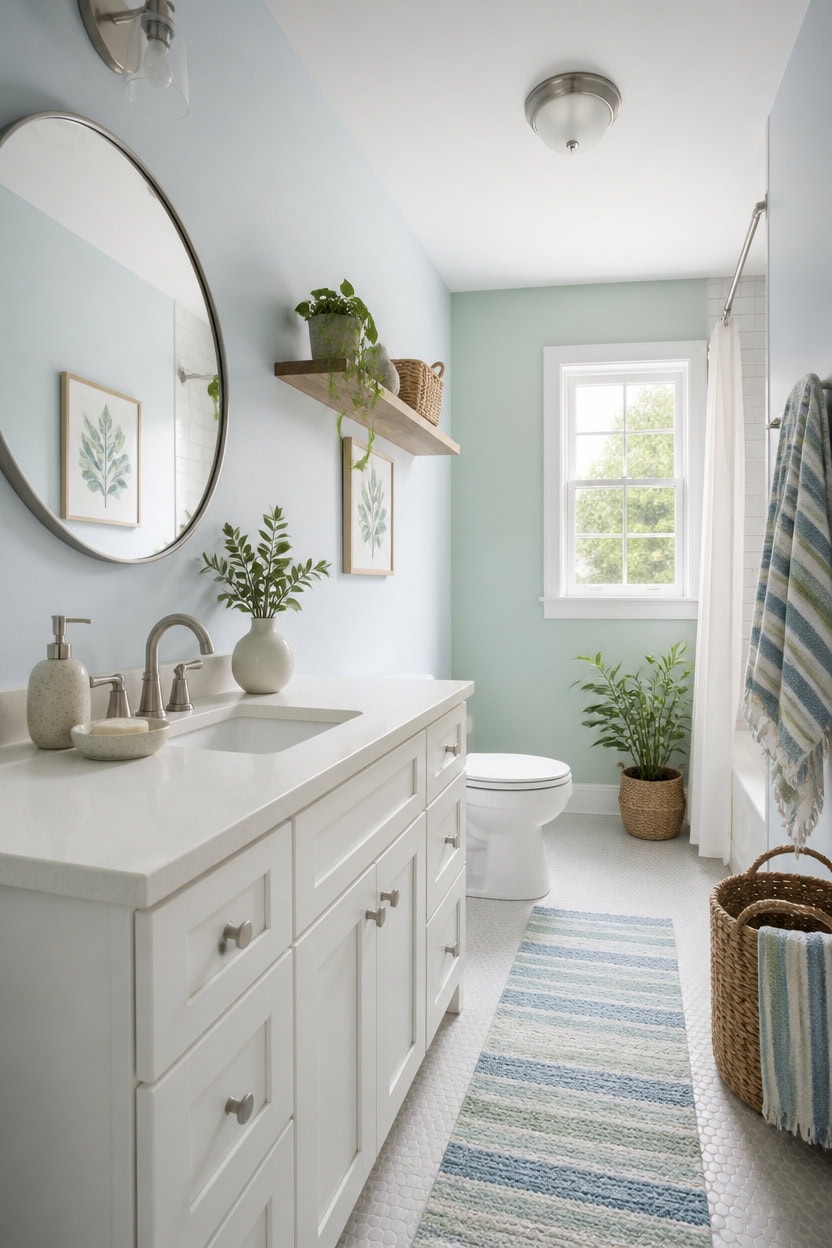
Design style sets how bold blue and green can be, from crisp modern to relaxed coastal. Very light blue Bashful Blue on the main walls keeps a coastal look airy, while very light green Antiguan Sky on the accent wall adds a soft traditional note. A trailing plant on a floating shelf pulls both styles together no matter the direction chosen.
Coastal restraint: Keep blue and green to two shades so the coastal look stays calm, not busy.
Modern contrast: Pair matte blue walls with glossy white fixtures for a sharper, modern edge.
Traditional layering: Add green through tile trim or wallpaper for a classic, layered feel.
Transitional balance: Mix brushed nickel fixtures with both colors to bridge modern and traditional styles.
a very light blue that adapts easily across coastal, modern, and transitional styles. [very light]
a very light green that adds a soft traditional note without darkening the room. [very light]
 Kurrajong Farmhouse Dark Green Fake pothos | Fake Plant for Shelf Decor | Artificial Trailing Ivy Plant with 5" Wide Ceramic Pot | Faux pothos | Feaux Pothos | Bathroom and Kitchen Decor
View Price
Kurrajong Farmhouse Dark Green Fake pothos | Fake Plant for Shelf Decor | Artificial Trailing Ivy Plant with 5" Wide Ceramic Pot | Faux pothos | Feaux Pothos | Bathroom and Kitchen Decor
View Price
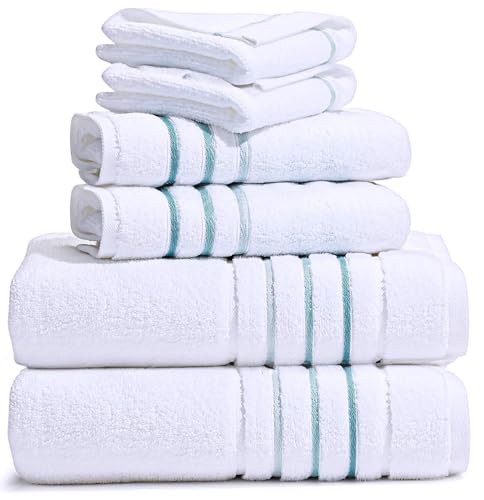 Le fil blanc Bath Towels Set for Bathroom – Luxury 6-Piece Cotton Towels, Soft Absorbent & Quick Dry, 600 GSM Bath Towels for Bathroom, Hotel Spa Quality (White/Aqua Green, 6- Bath Towel Set)
View Price
Le fil blanc Bath Towels Set for Bathroom – Luxury 6-Piece Cotton Towels, Soft Absorbent & Quick Dry, 600 GSM Bath Towels for Bathroom, Hotel Spa Quality (White/Aqua Green, 6- Bath Towel Set)
View Price
 Mfring Round Silver Mirror 30 Inch, Brushed Nickel Large Circle Mirror
View Price
Mfring Round Silver Mirror 30 Inch, Brushed Nickel Large Circle Mirror
View Price
 Beautiful Storage Basket Set of 4 - Natural Jute Rope Baskets for Shelves
View Price
Beautiful Storage Basket Set of 4 - Natural Jute Rope Baskets for Shelves
View Price
 Hand and Dish Soap Dispenser Set, Farmhouse Ceramic Soap Dispenser for Kitchen Sink, 15 OZ Vintage Hand Wash Liquid Dispenser for Bathroom Farmhouse Modern Kitchen Decor Accessories
View Price
Hand and Dish Soap Dispenser Set, Farmhouse Ceramic Soap Dispenser for Kitchen Sink, 15 OZ Vintage Hand Wash Liquid Dispenser for Bathroom Farmhouse Modern Kitchen Decor Accessories
View Price
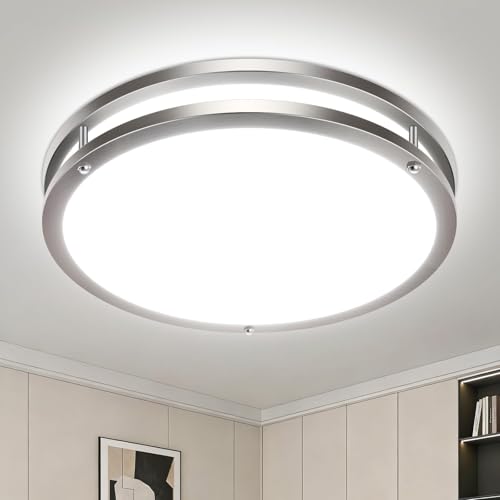 libtit 13-Inch Flush Mount Ceiling Lights, Dimmable 3000K-6500K Adjustable LED Ceiling Light, 24W Round Slim Light Fixture, Brushed Nickel for Kitchen, Bedroom, Bathroom, Hallway-ETL Listed
View Price
libtit 13-Inch Flush Mount Ceiling Lights, Dimmable 3000K-6500K Adjustable LED Ceiling Light, 24W Round Slim Light Fixture, Brushed Nickel for Kitchen, Bedroom, Bathroom, Hallway-ETL Listed
View Price
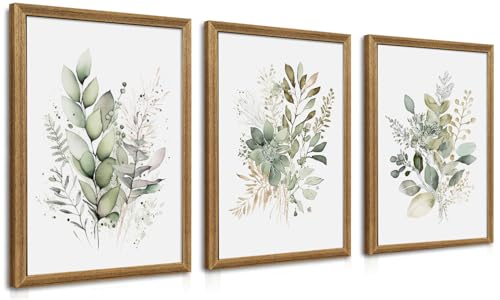 WRFON Framed Sage Green Botanical Wall Art Set of 3, Watercolor Eucalyptus & Wild Plant Canvas Prints, Minimalist Green Wall Decor for Living Room Bedroom Bathroom, 12x16 Inches
View Price
WRFON Framed Sage Green Botanical Wall Art Set of 3, Watercolor Eucalyptus & Wild Plant Canvas Prints, Minimalist Green Wall Decor for Living Room Bedroom Bathroom, 12x16 Inches
View Price
Small Bathroom Tricks for Blue and Green Schemes
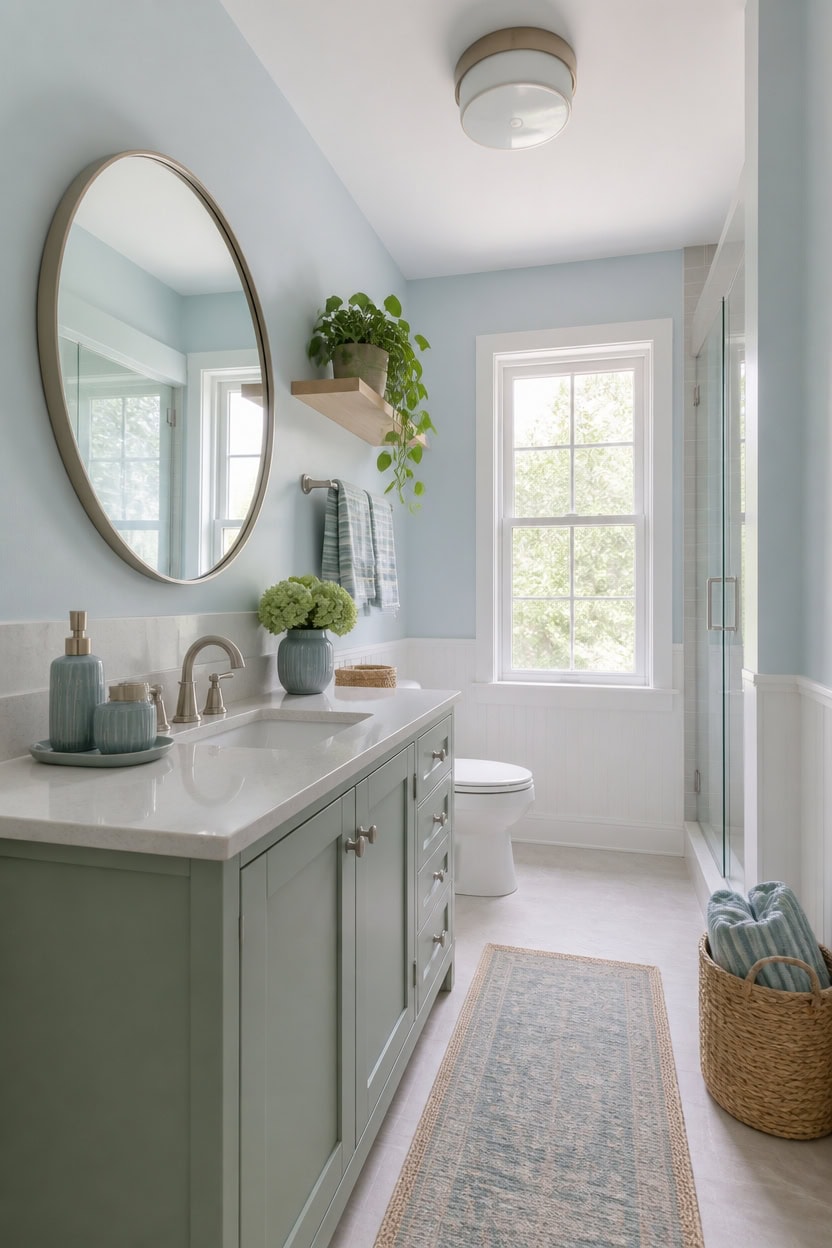
Small bathrooms feel larger when both colors stay pale and only one surface carries weight. Very light blue Soft Sky covers the main walls to bounce light, while very light green Aberdeen Green wraps the vanity cabinet for grounded contrast. A trailing plant on a floating shelf adds height without crowding the floor.
Mirror doubling: Place a large mirror opposite the window to double the light bouncing between both colors.
Vertical color break: Stop the blue at chair-rail height and let green take over below to elongate the walls.
Single accent rule: Limit the deeper color to one small surface, like the vanity, to avoid a boxed-in feel.
Glossy finish trick: Use a semi-gloss sheen on trim so both colors reflect more light in a tight space.
a very light blue that keeps a small bathroom feeling open and airy. [very light]
a very light green that grounds the room without adding visual weight. [very light]
 BACAMA Decorative Hanging Plants for Shelf, Faux Ivy Eucalyptus Vine, Fake Greenery in White Bigger Pot (Light Green, 1PCS)
View Price
BACAMA Decorative Hanging Plants for Shelf, Faux Ivy Eucalyptus Vine, Fake Greenery in White Bigger Pot (Light Green, 1PCS)
View Price
 Yaheetech 24" Bathroom Vanity with Sink, 2 Doors & 1 Drawer Cabinet, White
View Price
Yaheetech 24" Bathroom Vanity with Sink, 2 Doors & 1 Drawer Cabinet, White
View Price
 Sunniry Black Round Mirror, Round Mirror 24 inch, Matte Black Metal Frame
View Price
Sunniry Black Round Mirror, Round Mirror 24 inch, Matte Black Metal Frame
View Price
 GMISUN Kitchen Soap Dispenser, 16 Oz Kitchen Dish Soap Dispenser Set with Ceramic Tray & Bamboo Brush, 2Pcs Farmhouse Dish Soap Dispenser for Kitchen, Modern White Glass Liquid Hand Soap Dispenser
View Price
GMISUN Kitchen Soap Dispenser, 16 Oz Kitchen Dish Soap Dispenser Set with Ceramic Tray & Bamboo Brush, 2Pcs Farmhouse Dish Soap Dispenser for Kitchen, Modern White Glass Liquid Hand Soap Dispenser
View Price
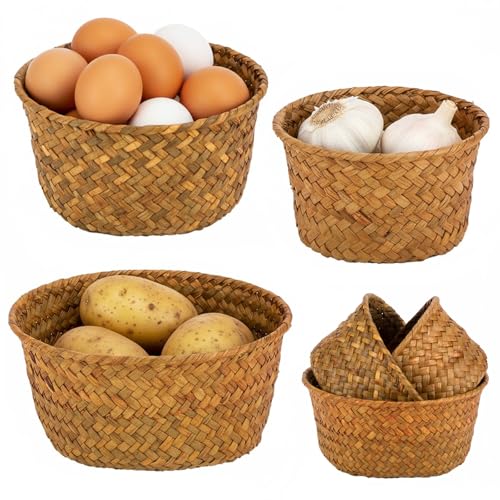 3 Set Small Seagrass Storage Baskets, Natural Woven for Farmhouse Kitchen
View Price
3 Set Small Seagrass Storage Baskets, Natural Woven for Farmhouse Kitchen
View Price
 VICNIE 2-Light Flush Mount Ceiling Light, 12 Inch Modern Light Fixtures
View Price
VICNIE 2-Light Flush Mount Ceiling Light, 12 Inch Modern Light Fixtures
View Price
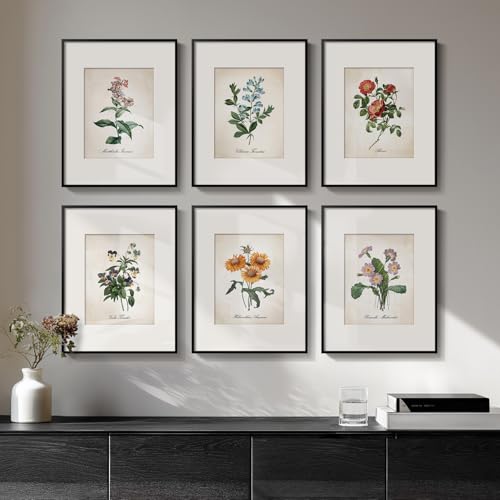 Framed Vintage Botanical Floral Wall Art, Rustic Flower Prints, 11x14 In
View Price
Framed Vintage Botanical Floral Wall Art, Rustic Flower Prints, 11x14 In
View Price
Common Blue and Green Bathroom Mistakes to Avoid
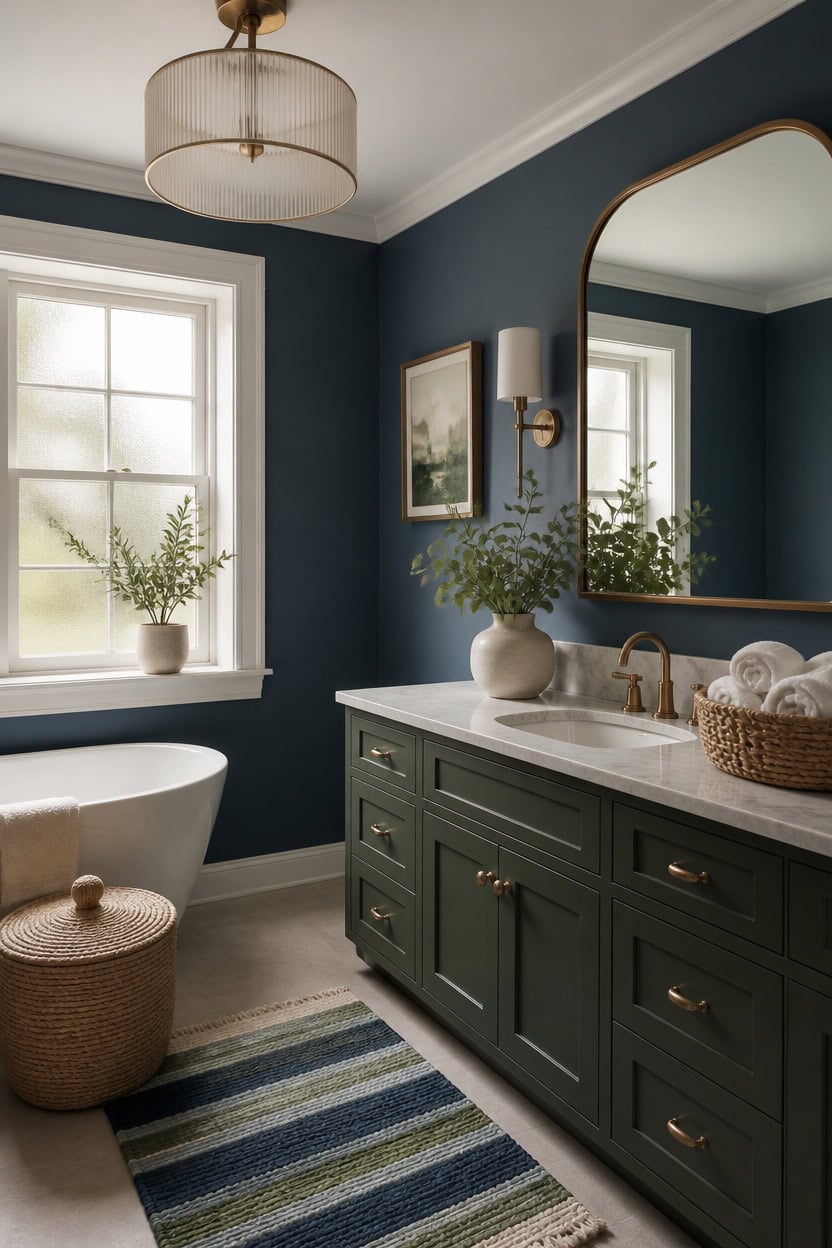
The most common mistake is skipping a value check before combining two saturated colors in a small footprint. Deep blue Winding Waterway on the main walls and deep green Essex Green on the vanity cabinet can pull light from the room if nothing lighter interrupts them. Add rolled towels in a woven basket to break up the dark planes with a soft neutral texture.
Skipping the value check: Pair one deep tone with a lighter partner instead of two dark colors together.
Ignoring natural light: Test swatches under the bathroom’s actual light before committing to full walls.
Uneven color balance: Keep blue and green in a clear ratio, not an even fifty-fifty split.
Forgetting the neutral break: Add white or cream trim between the blue and green zones to rest the eye.
a deep blue that anchors the room without overwhelming a smaller footprint. [dark]
a deep green that grounds the vanity while echoing the wall’s depth. [dark]
 Boho Toilet Paper Storage Baskets, Cotton Rope Woven Bathroom Basket Set of 2, Standing Toilet Paper Holder for 6 Mega Rolls,Storage Bins for Toilet Tank Top, Bathroom Organizer Decor (Brown 2 Pack)
View Price
Boho Toilet Paper Storage Baskets, Cotton Rope Woven Bathroom Basket Set of 2, Standing Toilet Paper Holder for 6 Mega Rolls,Storage Bins for Toilet Tank Top, Bathroom Organizer Decor (Brown 2 Pack)
View Price
 ALBAD 16-Inch Modern Bathroom Vanity with Sink, Compact Bathroom Vanity Set with Storage, Freestanding Small Space Bath Cabinet, Single Sink Cabinet with Adjustable Shelf (White, 16 Inch)
View Price
ALBAD 16-Inch Modern Bathroom Vanity with Sink, Compact Bathroom Vanity Set with Storage, Freestanding Small Space Bath Cabinet, Single Sink Cabinet with Adjustable Shelf (White, 16 Inch)
View Price
 Breling Blue and Green Striped Bathroom Rug 16 x 24 Inch Summer Flocked Bath Mat Non Slip TPR Backing Absorbent Bath Rug Minimalist Shower Floor Mat for Bathroom Sink Tub Entryway Decor
View Price
Breling Blue and Green Striped Bathroom Rug 16 x 24 Inch Summer Flocked Bath Mat Non Slip TPR Backing Absorbent Bath Rug Minimalist Shower Floor Mat for Bathroom Sink Tub Entryway Decor
View Price
 DARENYI 12 inch Glass Round Wall Mirror, Decorative Circle Mirror for Wall
View Price
DARENYI 12 inch Glass Round Wall Mirror, Decorative Circle Mirror for Wall
View Price
 Kukikan Ceramic Bathroom Accessories Set, 4 Pcs-Includes Lotion Soap Dispenser, Toothbrush Holder, Vanity Tray, and Tumbler, Modern Bathroom Decor Organizer with Soap Dish, Apothecary Jar, Beige Color
View Price
Kukikan Ceramic Bathroom Accessories Set, 4 Pcs-Includes Lotion Soap Dispenser, Toothbrush Holder, Vanity Tray, and Tumbler, Modern Bathroom Decor Organizer with Soap Dish, Apothecary Jar, Beige Color
View Price
 VUAHAUL 2 Pack Artificial Hanging Plants with White Pots 23.6''
View Price
VUAHAUL 2 Pack Artificial Hanging Plants with White Pots 23.6''
View Price
 Kira Home Ellie 8" Modern Mini Pendant Light for Kitchen Island
View Price
Kira Home Ellie 8" Modern Mini Pendant Light for Kitchen Island
View Price
 Wicker Storage Basket with Lid, Seagrass Storage Baskets for Organizing
View Price
Wicker Storage Basket with Lid, Seagrass Storage Baskets for Organizing
View Price
Plants That Strengthen the Nature Connection in Bathrooms
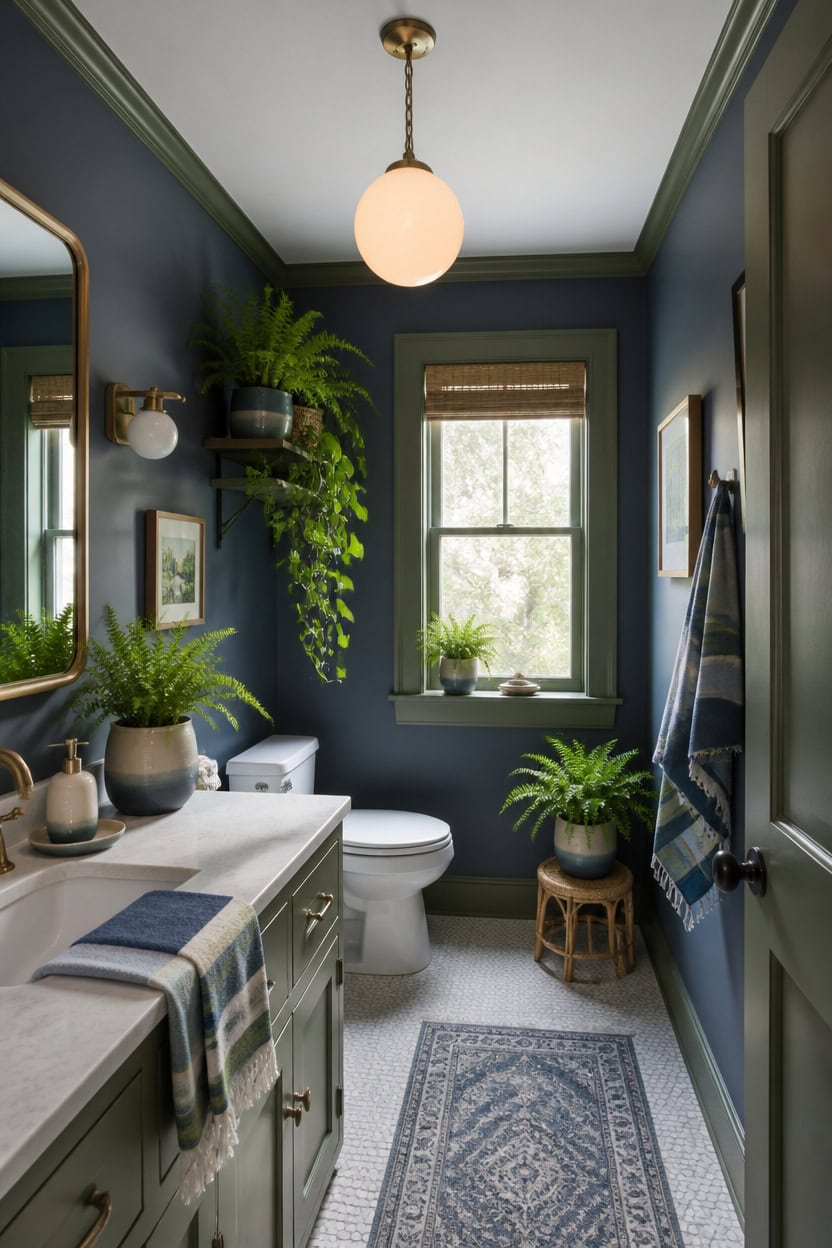
A deep blue accent wall paired with a mid-tone green trim gives potted greenery a backdrop that reads calm rather than busy. Stonecutter on the wall behind the plant shelf lets leaf color stand out instead of blending into pale paint. Backwoods on the trim ties the woodwork to the greenery, and a ceramic soap dispenser and dish set nearby keeps the vanity edge clear for a small pot to sit beside it.
Choose humidity-tolerant plants: Ferns and pothos handle bathroom moisture better than succulents.
Group varying heights: Pair a trailing plant with a taller potted variety for layered depth.
Match leaf tone to the palette: Deep green leaves echo the wall color without matching it exactly.
Rotate for light: Turn pots weekly if the window only offers indirect light.
a deep blue that grounds the greenery with a moody backdrop. [dark]
a mid-tone green that connects the woodwork to the plant palette. [mid-tone]
 GMISUN Kitchen Soap Dispenser Set, 17 fl oz Dish Soap Dispenser with Ceramic Tray & Bamboo Brush for Kitchen, 2Pcs Matte Black Glass Hand and Dish Soap Dispenser Set, Refillable Soap Bottle Set
View Price
GMISUN Kitchen Soap Dispenser Set, 17 fl oz Dish Soap Dispenser with Ceramic Tray & Bamboo Brush for Kitchen, 2Pcs Matte Black Glass Hand and Dish Soap Dispenser Set, Refillable Soap Bottle Set
View Price
 BLEUM CADE Fake Hanging Plants, 2pcs Artificial Pothos Vines Faux Plants Greenery for Wall Home Living Room Office Indoor Outdoor Decor (No Baskets)
View Price
BLEUM CADE Fake Hanging Plants, 2pcs Artificial Pothos Vines Faux Plants Greenery for Wall Home Living Room Office Indoor Outdoor Decor (No Baskets)
View Price
 Velener 2 Pcs Small Fake Plants Eucalyptus, Artificial Plants Indoor for Shelf, Potted Eucalyptus Plants for Home/Bathroom/Pottery Barn/Desk/Farmhouse/Coffee Table Decor (Sage Green)
View Price
Velener 2 Pcs Small Fake Plants Eucalyptus, Artificial Plants Indoor for Shelf, Potted Eucalyptus Plants for Home/Bathroom/Pottery Barn/Desk/Farmhouse/Coffee Table Decor (Sage Green)
View Price
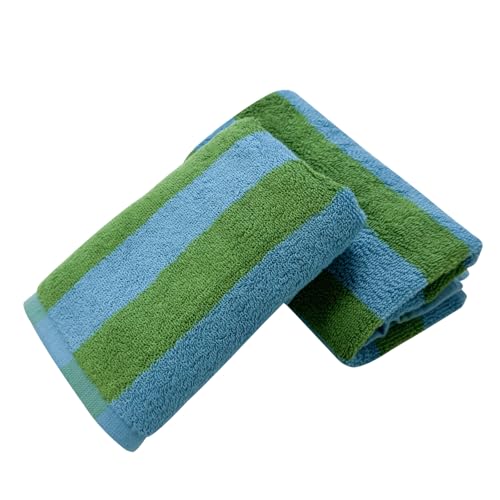 USTIDE Hand Towels for Bathroom 2 Pack, Cotton Face Towels Soft Absorbent for Spa Bath Gym Kitchen Blue Green Stripes Hand Towel Set, 14 x 30 Inch
View Price
USTIDE Hand Towels for Bathroom 2 Pack, Cotton Face Towels Soft Absorbent for Spa Bath Gym Kitchen Blue Green Stripes Hand Towel Set, 14 x 30 Inch
View Price
 Golhom 2 Pack Frosted Opal White Glass Lamp Shade, Lip-less Cylinder Glass Light Fixture Cover, Replacement Globe for Chandelier, Pendant, Vanity Light
View Price
Golhom 2 Pack Frosted Opal White Glass Lamp Shade, Lip-less Cylinder Glass Light Fixture Cover, Replacement Globe for Chandelier, Pendant, Vanity Light
View Price
 WILLITAT Plant Basket with Stand, Indoor Round Wicker Basket Plant with Bamboo Wood Stand, Decorative Woven Rope Flower Indoor Planter with Legs, Boho Bamboo Wood Planter Holder (Jute)
View Price
WILLITAT Plant Basket with Stand, Indoor Round Wicker Basket Plant with Bamboo Wood Stand, Decorative Woven Rope Flower Indoor Planter with Legs, Boho Bamboo Wood Planter Holder (Jute)
View Price
 SURE YUESI Ceramic Plant Pots Set of 3, Indoor Outdoor Planters with Drainage Hole and Saucer, Ceramic Flower Pots for Indoor Plants, 4.3+5.5+6.8 Inch, Home, Garden, Patio and Office, Matte Green
View Price
SURE YUESI Ceramic Plant Pots Set of 3, Indoor Outdoor Planters with Drainage Hole and Saucer, Ceramic Flower Pots for Indoor Plants, 4.3+5.5+6.8 Inch, Home, Garden, Patio and Office, Matte Green
View Price
 JJUUYOU Round Wall Mirror Black Circular Mirror for Bathroom Vanity Mirror Small Wall Circle for Wall Metal Frame Make up Entryway Living Room Bedroom Dorm Decorative
View Price
JJUUYOU Round Wall Mirror Black Circular Mirror for Bathroom Vanity Mirror Small Wall Circle for Wall Metal Frame Make up Entryway Living Room Bedroom Dorm Decorative
View Price
How to Keep a Blue and Green Bathroom From Feeling Cold
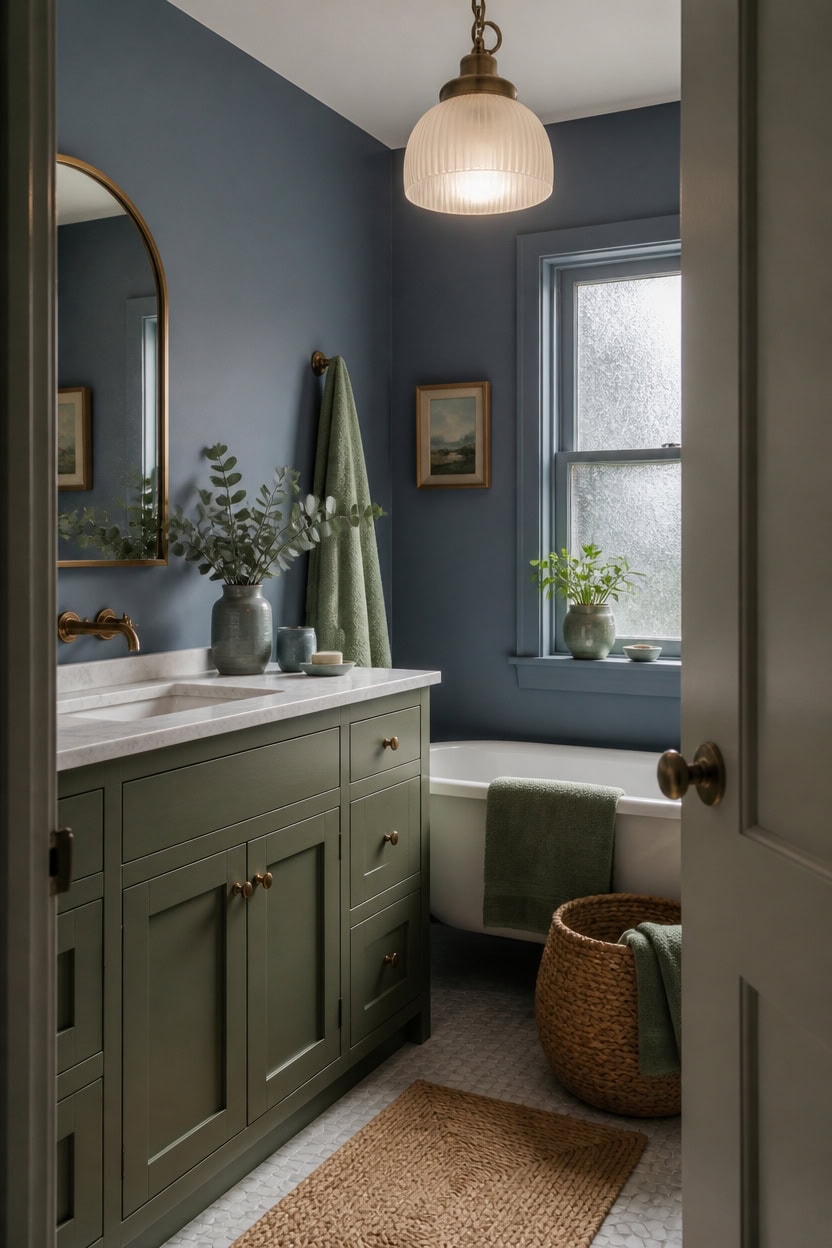
Mid-tone blue Vermont Slate on the main walls and mid-tone green Rosepine on the vanity keep this palette from feeling icy. Matching depths add warmth through balanced saturation instead of extra beige or wood tones. A small eucalyptus bundle in a vase near the sink softens the pairing with organic texture.
Warm metal fixtures: Swap chrome for brushed brass or matte black to counter the cool blue-green mix.
Layer natural wood: A teak stool or oak-frame mirror adds warmth without changing the palette.
Choose warm bulbs: Warm white bulbs avoid the clinical cast that daylight-toned LEDs can add.
Balance the ratio: Keep blue and green each under half the visible surface so neither cool tone dominates.
a mid-tone blue that stays calm rather than cold once warm-toned decor sits against it. [mid-tone]
a mid-tone green that grounds the room and matches the blue’s depth so neither tone reads chilly. [mid-tone]
 PURVONNIE Sage Green Glass Bud Vases Set of 10, Wedding Table Centerpiece
View Price
PURVONNIE Sage Green Glass Bud Vases Set of 10, Wedding Table Centerpiece
View Price
 USHOWER Brushed Gold Towel Bar, 18-Inch Towel Racks for Bathroom
View Price
USHOWER Brushed Gold Towel Bar, 18-Inch Towel Racks for Bathroom
View Price
 VaeFae Teak Shower Mat, Non-Slip Bath Mat, Luxury Spa Mat, Wooden Mat for Bathtub, 20 x 13 in
View Price
VaeFae Teak Shower Mat, Non-Slip Bath Mat, Luxury Spa Mat, Wooden Mat for Bathtub, 20 x 13 in
View Price
 MIAOMEIO Fixture Replacement Frosted Glass Shade, E26 Base with 1-5/8" Fitter, 3-pack Cone Replacement White Shades for Pendant Light, Wall Sconce, Vanity Light, Table Lamp
View Price
MIAOMEIO Fixture Replacement Frosted Glass Shade, E26 Base with 1-5/8" Fitter, 3-pack Cone Replacement White Shades for Pendant Light, Wall Sconce, Vanity Light, Table Lamp
View Price
 Sunco 12 Pack G25 LED Light Bulb, Globe, Vanity Bathroom Mirror, 6W=40W
View Price
Sunco 12 Pack G25 LED Light Bulb, Globe, Vanity Bathroom Mirror, 6W=40W
View Price
 Haturi Glass Bathroom Accessories Set, Sage Green Bathroom Set, 4 Pcs
View Price
Haturi Glass Bathroom Accessories Set, Sage Green Bathroom Set, 4 Pcs
View Price
 Wicker Baskets, Seagrass Baskets for Organizing, Woven Baskets for Storage
View Price
Wicker Baskets, Seagrass Baskets for Organizing, Woven Baskets for Storage
View Price