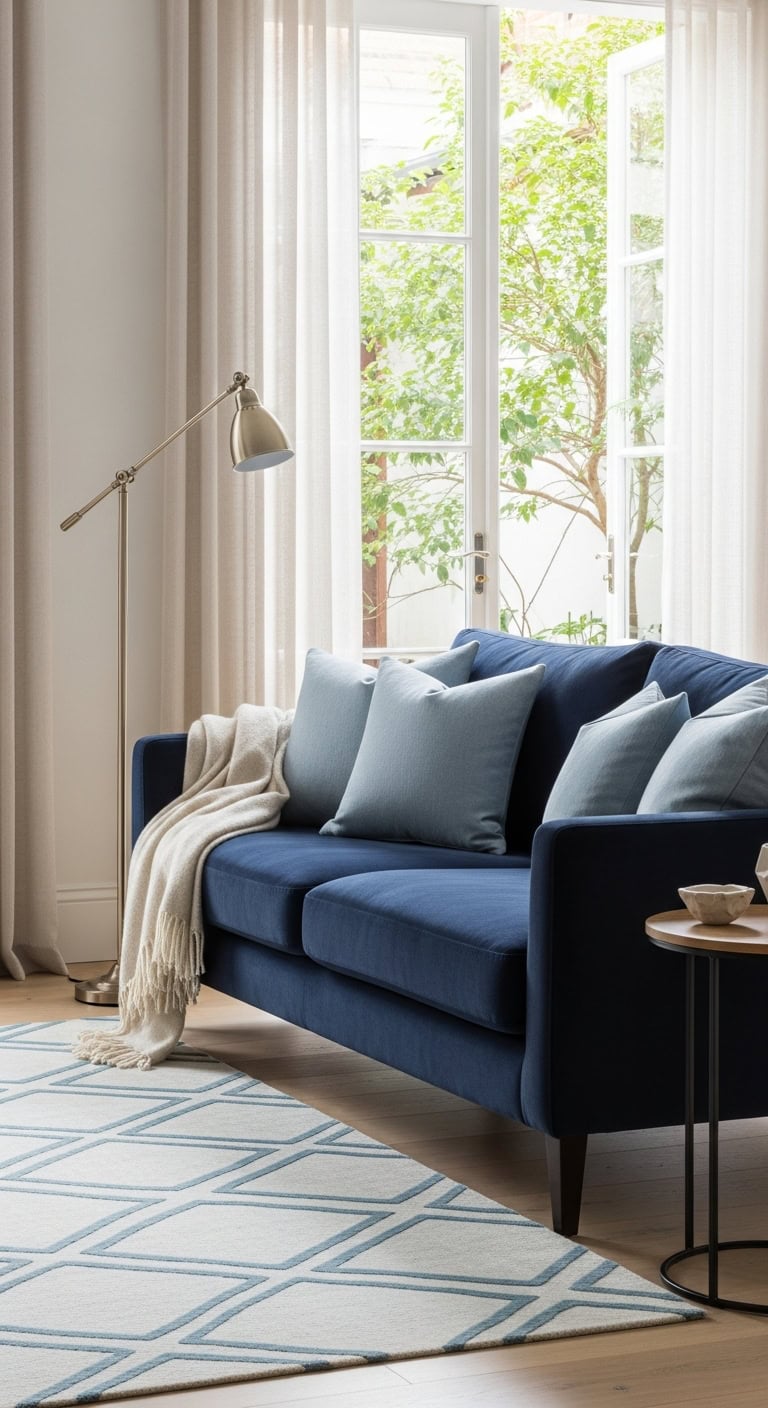

When Soft Blue & Sandy Sand Meets the Kitchen: A Guide for Women Who Wish Every Day Was a Beach Day
If you’ve ever wished you could bottle that calm, sun-kissed feeling of a day at the shore, your kitchen is the perfect place to start.
Pairing soft blue tones with sandy neutrals creates a space that feels relaxed, bright, and effortlessly beautiful.
Let’s explore how to bring that coastal magic home—no ocean view required.
The Soft Blue Shades That Actually Feel Like the Ocean
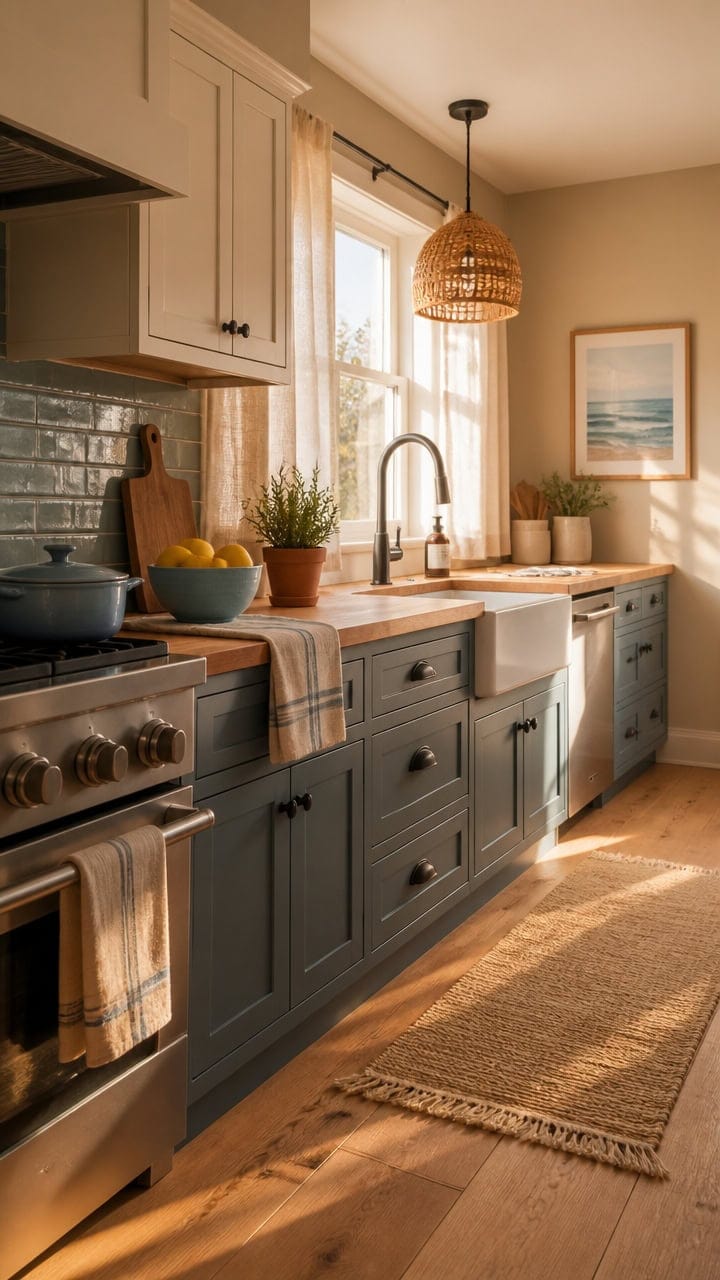
Soft blue reads as oceanic when it leans toward gray rather than toward purple or green. That gray undertone is what gives colors like mist, haze, and dusty slate their calm, watery feeling instead of reading as bold or cartoonish. In a kitchen, those muted blue-grays work best on a single painted surface or a tight cluster of accessories so the tone has room to breathe.
Lean toward gray-blue: Blues with a gray base — not a violet or teal base — hold the ocean reference without competing with food or warm wood tones.
Test in natural light: Ocean blues shift dramatically under artificial lighting, so always check your swatch near a window before committing to cabinets or tile.
Pair with warm sand tones: A blue this soft will disappear against white, but it comes alive when anchored next to warm beige, cream, or natural wood.
Use matte finishes: Glossy soft blue looks dated fast — a matte or eggshell finish keeps the tone looking intentional and coastal rather than clinical.
Paint the lower cabinets in “Silver Crest” (Behr / N510-2) – a gray-washed coastal blue that reads like shallow ocean water in morning light.
 vancasso Bonita Stoneware Dinnerware Sets, 24 Pieces Dishes Set for 6
View Price
vancasso Bonita Stoneware Dinnerware Sets, 24 Pieces Dishes Set for 6
View Price
 Amazon Basics Enameled Cast Iron Dutch Oven Pot with Lid, Round, Dual Handles, Heavy-Duty, Oven Safe for Stews, Roasting, Baking,6-Quart, Matte Navy
View Price
Amazon Basics Enameled Cast Iron Dutch Oven Pot with Lid, Round, Dual Handles, Heavy-Duty, Oven Safe for Stews, Roasting, Baking,6-Quart, Matte Navy
View Price
 Cotton Dish Towels For Kitchen Drying - Highly Absorbent Wide Beige Striped Plaid Tea Towels - 18"X28" Set Of 6 Farmhouse Linen Dishtowels In Bulk - Pano De Prato Para Cozinha - T Towles Towls
View Price
Cotton Dish Towels For Kitchen Drying - Highly Absorbent Wide Beige Striped Plaid Tea Towels - 18"X28" Set Of 6 Farmhouse Linen Dishtowels In Bulk - Pano De Prato Para Cozinha - T Towles Towls
View Price
 Boho Rattan Pendant Light, Hand Woven Hanging Lamp for Kitchen Island
View Price
Boho Rattan Pendant Light, Hand Woven Hanging Lamp for Kitchen Island
View Price
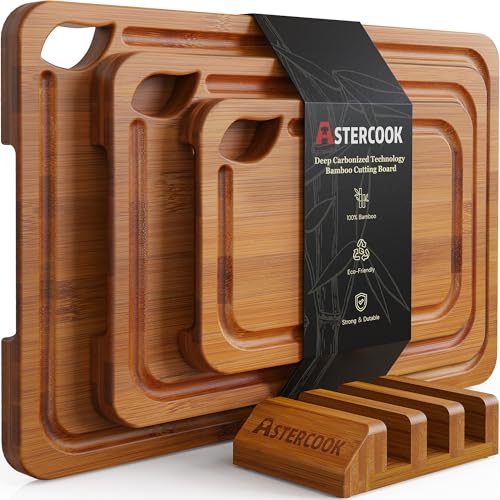 Astercook Deep-Carbonized Bamboo Cutting Boards for Kitchen with Wood Storage Stand, Reversible Charcuterie & Chopping Boards with Juice Grooves and Easy-Grip Handles, Fathers Day Gift for Men
View Price
Astercook Deep-Carbonized Bamboo Cutting Boards for Kitchen with Wood Storage Stand, Reversible Charcuterie & Chopping Boards with Juice Grooves and Easy-Grip Handles, Fathers Day Gift for Men
View Price
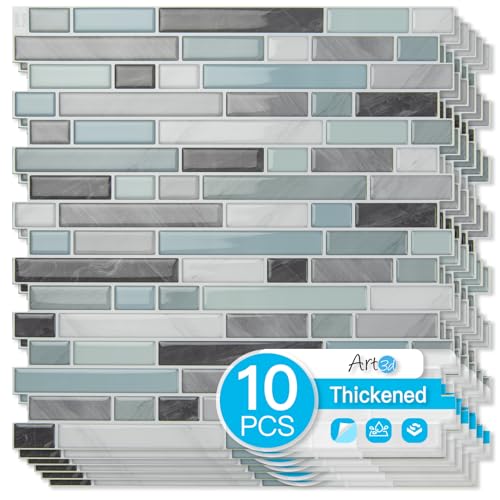 Art3d Linear Design Tile Peel and Stick Backsplash, 10-Sheet, Gray & Blue
View Price
Art3d Linear Design Tile Peel and Stick Backsplash, 10-Sheet, Gray & Blue
View Price
 EARTHALL Woven Runner Rug 2x5 Ft Washable Runners for Hallways Cotton Non Slip Rubber Backed Kitchen Runner Braided Indoor Floor Carpet for Entryway, Hallway, Kitchen, Bedroom, Beige/Ivory
View Price
EARTHALL Woven Runner Rug 2x5 Ft Washable Runners for Hallways Cotton Non Slip Rubber Backed Kitchen Runner Braided Indoor Floor Carpet for Entryway, Hallway, Kitchen, Bedroom, Beige/Ivory
View Price
 3 Piece Framed Coastal Ocean Blue Coral Wall Art for Living Room, 20x30 In
View Price
3 Piece Framed Coastal Ocean Blue Coral Wall Art for Living Room, 20x30 In
View Price
Sandy Neutrals That Feel Warm, Not Boring
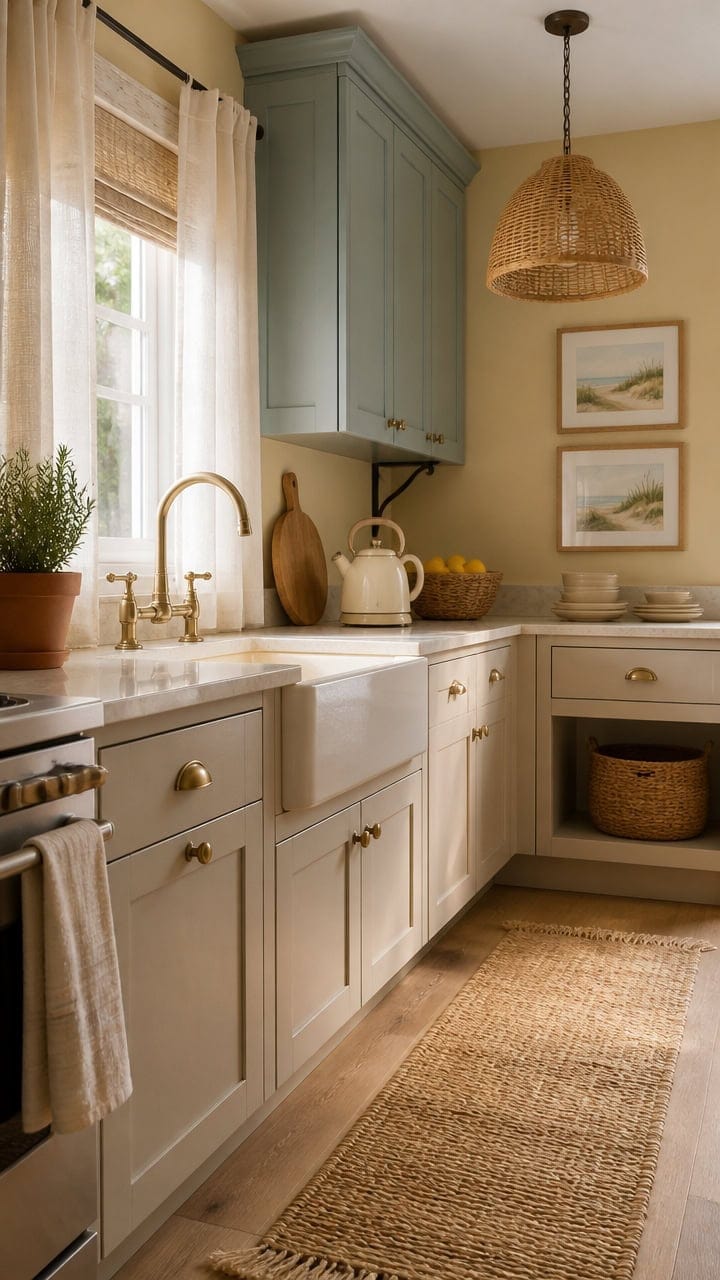
Sandy neutrals anchor a beach kitchen the same way dry sand anchors a shoreline — they give everything else somewhere to land. Warm beige, cream, and natural linen read as neutral without going cold or flat because they carry yellow and red undertones that bounce light rather than absorb it. Use sandy tones on at least two surfaces to let the warmth build instead of reading as a single accident.
Go warm, not cool: True sand colors lean toward yellow and peach, not gray — cooler beiges tip toward clinical and lose the coastal warmth immediately.
Layer similar tones: Stack cream, tan, and natural linen together so the neutrals feel intentional rather than mismatched or unfinished.
Anchor with texture: Woven, wicker, and rough linen surfaces deepen sandy tones and keep them from reading flat under kitchen lighting.
Add one contrast: A single dark element — charcoal, driftwood brown, or deep navy — stops the palette from feeling washed out or one-dimensional.
Paint the kitchen walls in “Pale Honey” (Benjamin Moore / OC-108) – a warm sand tone that fills the whole room with soft, morning-light warmth without feeling yellow.
 E-far 10.5” Ceramic Dinner Plates Set of 6, Large Reactive Glaze Stoneware Dishes, Round Salad Plate for Home Kitchen Restaurant, Microwave & Dishwasher Safe – Sandy Beige
View Price
E-far 10.5” Ceramic Dinner Plates Set of 6, Large Reactive Glaze Stoneware Dishes, Round Salad Plate for Home Kitchen Restaurant, Microwave & Dishwasher Safe – Sandy Beige
View Price
 LANE LINEN Cotton Kitchen Towels Set, 4-Pack – Absorbent, Quick-Drying, Premium Dish Towels, Tea Towels, 18" x 28" - Beige
View Price
LANE LINEN Cotton Kitchen Towels Set, 4-Pack – Absorbent, Quick-Drying, Premium Dish Towels, Tea Towels, 18" x 28" - Beige
View Price
 Nathan James Augustine Modern Farmhouse Rattan Pendant Light, Rattan Chandelier Pendant Lamp Shade for Kitchen or Living Room
View Price
Nathan James Augustine Modern Farmhouse Rattan Pendant Light, Rattan Chandelier Pendant Lamp Shade for Kitchen or Living Room
View Price
 KOZYFLY Runners for Hallways 2x6 ft Washable Kitchen Runner Non Slip Rubber Backed Hall Runners Cotton Entryway Runner Rugs for Indoor Backdoor Bedroom Kitchen, Ivory/Camel/Brown
View Price
KOZYFLY Runners for Hallways 2x6 ft Washable Kitchen Runner Non Slip Rubber Backed Hall Runners Cotton Entryway Runner Rugs for Indoor Backdoor Bedroom Kitchen, Ivory/Camel/Brown
View Price
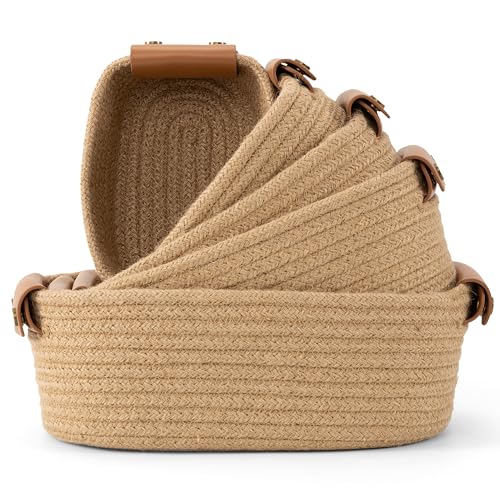 Beautiful Storage Basket Set of 5 - Sturdy Jute Rope Baskets for Shelves
View Price
Beautiful Storage Basket Set of 5 - Sturdy Jute Rope Baskets for Shelves
View Price
 ROYAL CRAFT WOOD Wooden Cutting Boards for Kitchen Appliances - Non Toxic Bamboo Wood Cutting Board Set with Deep Juice Groove, Side Handles, Charcuterie & Butcher Block for Meat, Meal Prep & Serving
View Price
ROYAL CRAFT WOOD Wooden Cutting Boards for Kitchen Appliances - Non Toxic Bamboo Wood Cutting Board Set with Deep Juice Groove, Side Handles, Charcuterie & Butcher Block for Meat, Meal Prep & Serving
View Price
 Haden Dorset 1.7 Liter Stainless Steel Electric Kettle, Hot Water Kettle
View Price
Haden Dorset 1.7 Liter Stainless Steel Electric Kettle, Hot Water Kettle
View Price
 NWT Framed Canvas Print Wall Art Set Watercolor Pastel Misty Sand Dune Landscape Nature Wilderness Illustrations Modern Art Decorative Minimalist Multicolor Moody for Bedroom - 16"x24"x3 NATURAL
View Price
NWT Framed Canvas Print Wall Art Set Watercolor Pastel Misty Sand Dune Landscape Nature Wilderness Illustrations Modern Art Decorative Minimalist Multicolor Moody for Bedroom - 16"x24"x3 NATURAL
View Price
Start With Your Kitchen’s Biggest Surface: The Walls
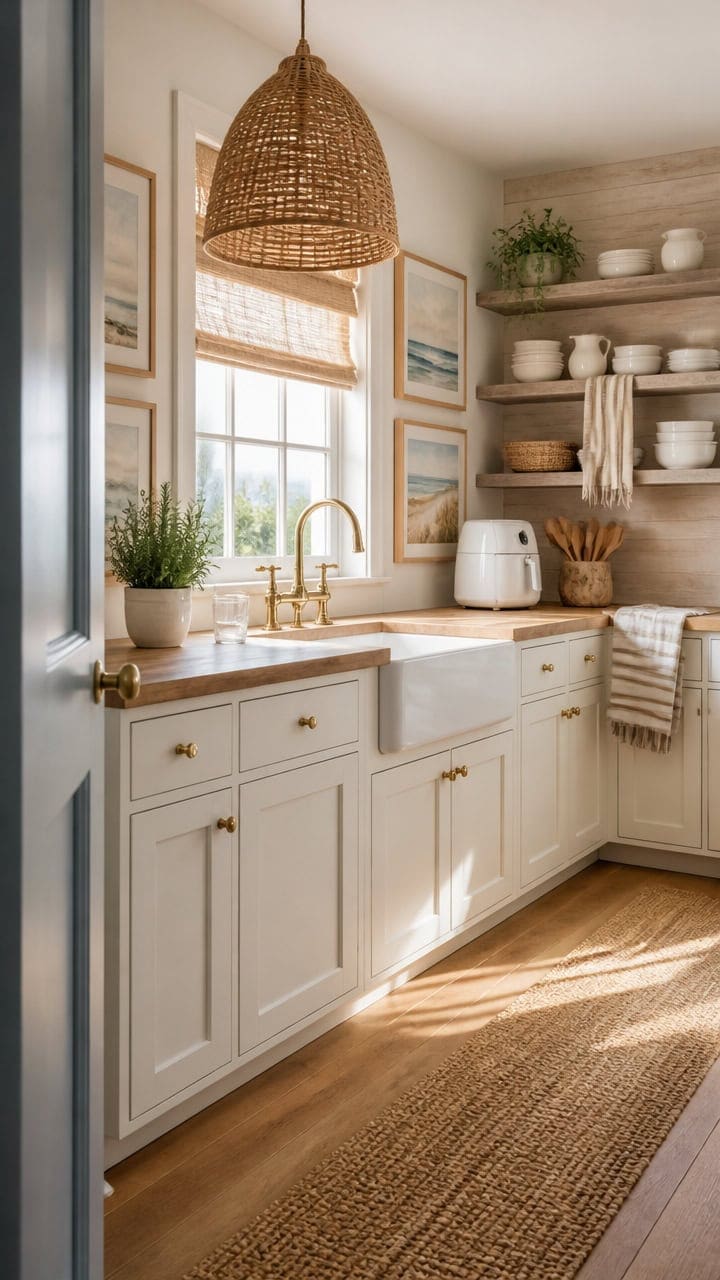
Your walls are the single largest canvas in a beach kitchen, and they set the emotional temperature of everything else. A warm, light-toned wall color pulls sandy cabinets, natural wood, and ocean-toned accents into a single cohesive story instead of leaving them competing for attention. Start here before choosing anything else, because a wrong wall tone is the fastest way to make coastal decor look like a vacation rental rather than a real home.
Go warm, not bright: Soft cream and warm sand tones carry coastal warmth without tipping into cheerful yellow or stark white territory.
Avoid cool grays: Gray-toned whites and cool greiges read as modern-minimal, which works against the relaxed, lived-in feel a beach kitchen needs.
Test in natural light first: Kitchen lighting shifts wall color dramatically — always check paint swatches against morning and afternoon daylight before committing.
Let the wall breathe: Keep upper walls clear of too much decor so the color can actually do its job and fill the room with warmth.
Paint the kitchen walls in “White Heron” (Benjamin Moore / OC-57) – a clean, barely-warm white that gives beach kitchens the bright, airy quality of morning light hitting sea foam.
 Pfaltzgraff Trellis White 16-Piece Stoneware Dinnerware Set, Service for 4, Distressed White Finish, Microwave & Dishwasher Safe Plates and Bowls
View Price
Pfaltzgraff Trellis White 16-Piece Stoneware Dinnerware Set, Service for 4, Distressed White Finish, Microwave & Dishwasher Safe Plates and Bowls
View Price
 Madison Park Cordless Roman Shades, Linen Blend Blinds, 27x64 Natural
View Price
Madison Park Cordless Roman Shades, Linen Blend Blinds, 27x64 Natural
View Price
 Karjearl Boho Pendant Lights, 15.7" 1-Light Rattan Chandelier Hand-Woven Wicker Pendant Light with Water Hyacinth Shade, Coastal Dome Hanging Light for Dining Room Kitchen Island
View Price
Karjearl Boho Pendant Lights, 15.7" 1-Light Rattan Chandelier Hand-Woven Wicker Pendant Light with Water Hyacinth Shade, Coastal Dome Hanging Light for Dining Room Kitchen Island
View Price
 KAF Home Premium Kitchen Towels (18" x 28"), Large 100% Cotton, Flat & Terry Absorbent Dish Towel Set (Beige, 18 x 28-6 Pack)
View Price
KAF Home Premium Kitchen Towels (18" x 28"), Large 100% Cotton, Flat & Terry Absorbent Dish Towel Set (Beige, 18 x 28-6 Pack)
View Price
 bella Fits-anywhere™ Slim 4qt Air Fryer, Non-Toxic Coating, Oatmilk
View Price
bella Fits-anywhere™ Slim 4qt Air Fryer, Non-Toxic Coating, Oatmilk
View Price
 Framed Beach Wall Art Set of 2, Coastal Canvas Prints with Solid Wood Frame & Acrylic Cover, Ocean Seaside Painting, Beach Chair & Sandpiper Bird Picture Wall Decor, Ready to Hang Artwork for Living Room Bedroom Bathroom Office 12x16IN
View Price
Framed Beach Wall Art Set of 2, Coastal Canvas Prints with Solid Wood Frame & Acrylic Cover, Ocean Seaside Painting, Beach Chair & Sandpiper Bird Picture Wall Decor, Ready to Hang Artwork for Living Room Bedroom Bathroom Office 12x16IN
View Price
 Washable Easy Jute Rug 2x7, Indoor Outdoor Runner Rugs, Natural Color Farmhouse Area Rugs for Living Room, Kitchen Rug High Traffic Area, Easy to Clean Solid Boho Woven Design Carpet (2 X 7 Natural)
View Price
Washable Easy Jute Rug 2x7, Indoor Outdoor Runner Rugs, Natural Color Farmhouse Area Rugs for Living Room, Kitchen Rug High Traffic Area, Easy to Clean Solid Boho Woven Design Carpet (2 X 7 Natural)
View Price
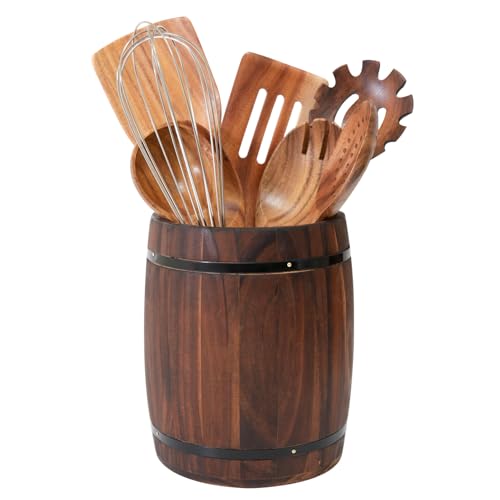 KewinSent Wooden Utensil Holder for Kitchen Counter – Rustic Wine Barrel Design, Large Capacity 7.3x6.3, Farmhouse Utensil Crock for Scoops, Spatula & Cooking Tools Organization, Great Kitchen Gift
View Price
KewinSent Wooden Utensil Holder for Kitchen Counter – Rustic Wine Barrel Design, Large Capacity 7.3x6.3, Farmhouse Utensil Crock for Scoops, Spatula & Cooking Tools Organization, Great Kitchen Gift
View Price
Countertops That Channel Driftwood, Sand, and Sea Glass
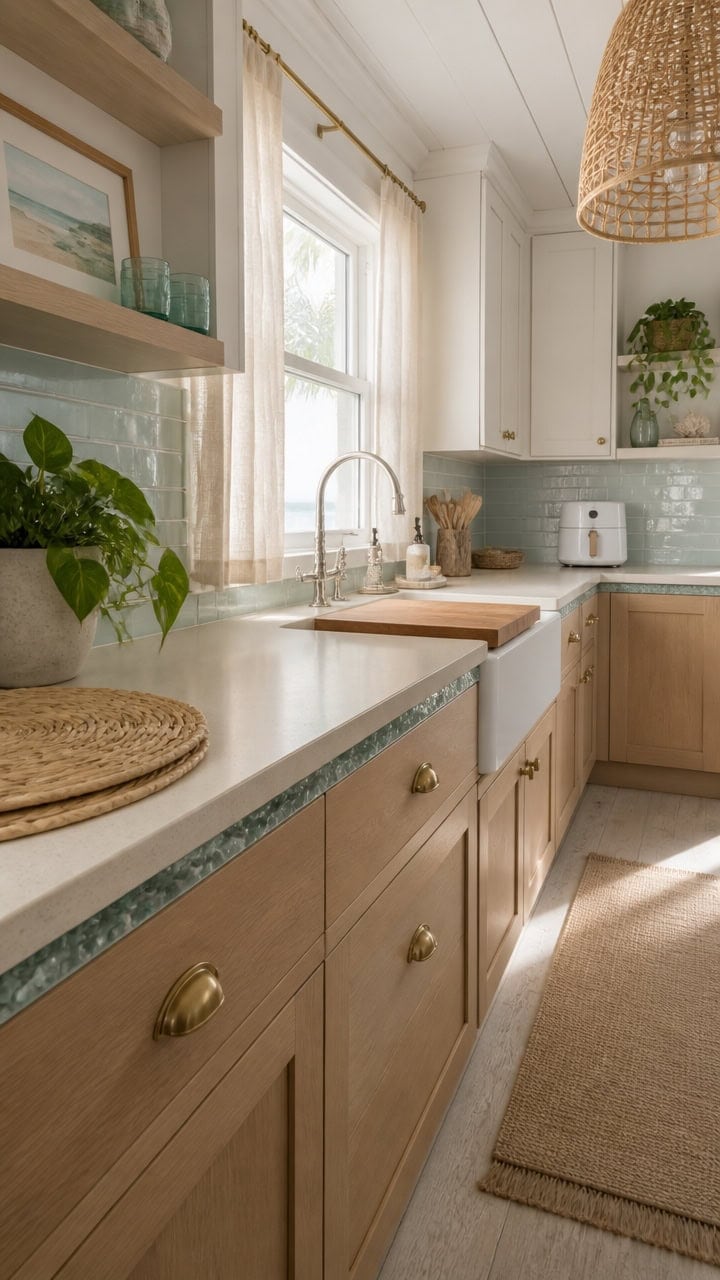
Quartz countertops in a honed warm white or sandy beige deliver the most coastal-natural look without demanding constant maintenance. The matte finish mimics the soft texture of sun-bleached sand in a way that polished stone never does. If quartz isn’t in the budget, butcher block sealed in a light oil finish reads like genuine driftwood and holds its own against patterned tile or busy backsplash choices.
Sandy quartz: Honed warm white or beige quartz with subtle veining mirrors the layered tones of packed shoreline sand.
Driftwood butcher block: Lightly oiled maple or pine develops a weathered warmth that polished surfaces simply cannot fake.
Sea glass inspiration: Frosted glass countertop inserts or green-tinted resin accents create genuine sea glass color without fighting the rest of the room.
Avoid stark contrast: High-gloss black or bright white countertops cut the relaxed, organic mood that beach kitchens depend on.
Paint in “Pale Oak” (Benjamin Moore / OC-20) – a warm sand-blush tone that echoes butcher block and honed quartz without reading brown or dated.
 Lovdeco Carrara Marble Cutting Board 20x16 Inch, Pastry Board For Kitchen, Large White Marble Slab Gift With Non-Slip Feets, 1 Piece
View Price
Lovdeco Carrara Marble Cutting Board 20x16 Inch, Pastry Board For Kitchen, Large White Marble Slab Gift With Non-Slip Feets, 1 Piece
View Price
 Watco Butcher Block Clear Oil & Finish
View Price
Watco Butcher Block Clear Oil & Finish
View Price
 ZMOWIPDL Drinking Glasses Set of 6,13oz Flower Design Green Glass Cups
View Price
ZMOWIPDL Drinking Glasses Set of 6,13oz Flower Design Green Glass Cups
View Price
 8 Pack Rectangular Woven Placemats, Rattan Wicker Table Mats, 17" x 12", Natural Seagrass Place Mats for Dining Table
View Price
8 Pack Rectangular Woven Placemats, Rattan Wicker Table Mats, 17" x 12", Natural Seagrass Place Mats for Dining Table
View Price
 COMFEE' Compact 2.1-Quart Mini Air Fryer for Small Kitchens, White
View Price
COMFEE' Compact 2.1-Quart Mini Air Fryer for Small Kitchens, White
View Price
 Segtenant Utensil Holder, Acacia Wood Kitchen Utensil Holder for Countertop, 360°Rotating Cooking Utensil Crock for Kitchen Counter, 7.2" Large Utensil Organizer for Spatula
View Price
Segtenant Utensil Holder, Acacia Wood Kitchen Utensil Holder for Countertop, 360°Rotating Cooking Utensil Crock for Kitchen Counter, 7.2" Large Utensil Organizer for Spatula
View Price
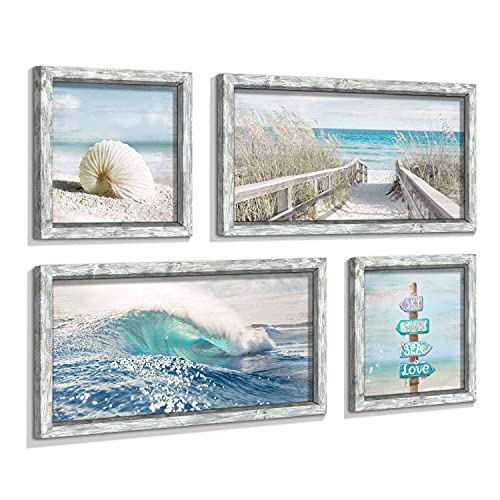 Ocean Wall Art Wooden Framed: Beach Artwork Coastal Prints Set of 4 Seascape Wall Decor for Living Room Overall 36"W x 24"H
View Price
Ocean Wall Art Wooden Framed: Beach Artwork Coastal Prints Set of 4 Seascape Wall Decor for Living Room Overall 36"W x 24"H
View Price
 EARTHALL Woven Runner Rug 2x6 Ft Washable Runners for Hallways Cotton Non Slip Rubber Backed Kitchen Runner Braided Indoor Floor Carpet for Entryway, Hallway, Kitchen, Bedroom, Beige/Ivory
View Price
EARTHALL Woven Runner Rug 2x6 Ft Washable Runners for Hallways Cotton Non Slip Rubber Backed Kitchen Runner Braided Indoor Floor Carpet for Entryway, Hallway, Kitchen, Bedroom, Beige/Ivory
View Price
The Backsplash Is Your Shoreline : Make It Count
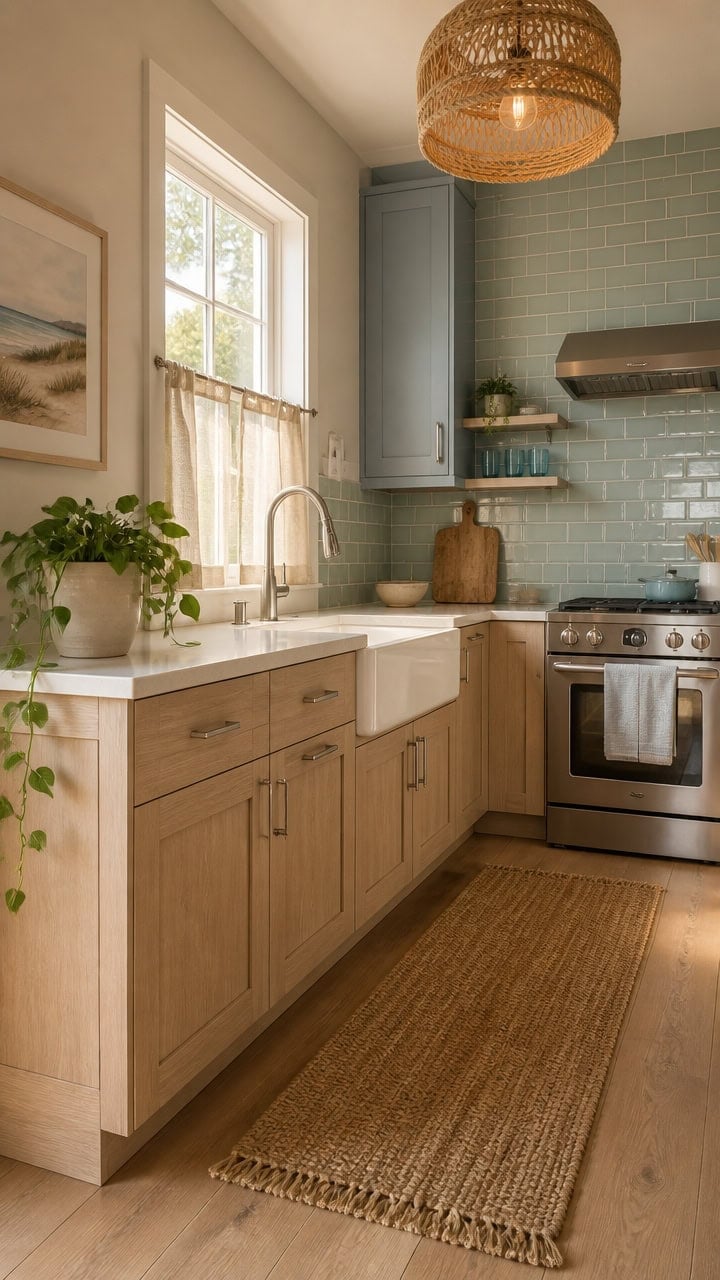
Subway tile in a glossy white or soft seafoam glaze is the most reliable backsplash choice for a beach kitchen because it reflects light the way calm water does near the shore. The grout color carries as much visual weight as the tile itself — warm gray or sandy buff grout softens the look far more than bright white grout, which reads clinical rather than coastal. Run the tile all the way to the underside of your upper cabinets instead of stopping short, because a full-height backsplash gives the shoreline depth that a half-height strip never achieves.
Seafoam subway tile: Pale green or aqua ceramic tile mimics the shallow-water color you see at the edge of a sandy beach.
Grout matters most: Warm gray or sand-toned grout blends tile joints into the overall texture instead of creating a harsh grid.
Peel-and-stick option: Coastal peel-and-stick backsplash panels let renters get the shoreline look without permanent installation.
Full-height commitment: Extending the backsplash to cabinet-bottom height creates a strong visual anchor the way a real shoreline holds the eye.
Paint in “Quiet Moments” (Benjamin Moore / AF-780) – a soft blue-gray that echoes seafoam tile and pulls the waterline color upward into the room.
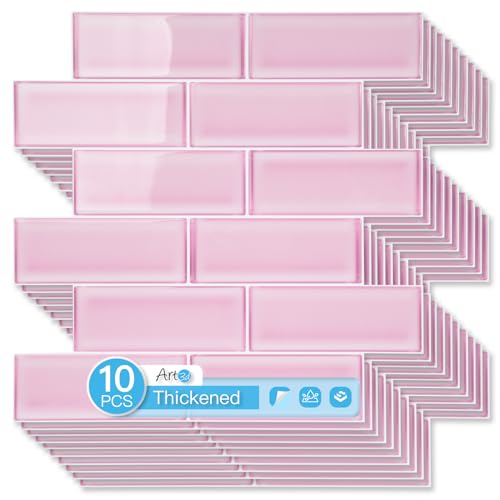 Art3d Seaglass Subway Tile Design Peel and Stick Backsplash, 10-Pack, Pink
View Price
Art3d Seaglass Subway Tile Design Peel and Stick Backsplash, 10-Pack, Pink
View Price
 USCT 3x6 Ceramic Subway Tile Gloss (Shinny) Box of 10 Pieces for Bathroom Wall Shower Kitchen Backsplash (Cobalt Blue)
View Price
USCT 3x6 Ceramic Subway Tile Gloss (Shinny) Box of 10 Pieces for Bathroom Wall Shower Kitchen Backsplash (Cobalt Blue)
View Price
 BOSTIK HYDROMENT Vivid 10lb Powder Tile Grout – Sand Beige H148
View Price
BOSTIK HYDROMENT Vivid 10lb Powder Tile Grout – Sand Beige H148
View Price
 ICOOK Slow Cooker 3.5 Quart USC-351-OG,Dishwasher Safe Crock/Ceramic inner pot and Glass lid,Small Slow Cooker,Oval Shape,White
View Price
ICOOK Slow Cooker 3.5 Quart USC-351-OG,Dishwasher Safe Crock/Ceramic inner pot and Glass lid,Small Slow Cooker,Oval Shape,White
View Price
 Large Acacia Serving Board with Handles, 36 x 12 Inch Rectangular Charcuterie Platter, Natural Wood Server for Meat, Cheese Board, and Party Appetizers, Extra Long 3ft, Light
View Price
Large Acacia Serving Board with Handles, 36 x 12 Inch Rectangular Charcuterie Platter, Natural Wood Server for Meat, Cheese Board, and Party Appetizers, Extra Long 3ft, Light
View Price
 Libbey Blue Ribbon Tumbler & Rocks Drinking Glasses Set of 16, Dimpled Cups
View Price
Libbey Blue Ribbon Tumbler & Rocks Drinking Glasses Set of 16, Dimpled Cups
View Price
 Aryroi Pink Beach Dreamy Coastal Framed Canvas Wall Art Set- 16"x24"x3
View Price
Aryroi Pink Beach Dreamy Coastal Framed Canvas Wall Art Set- 16"x24"x3
View Price
 winolive Faux Jute Rug,2x6 Braided Runner Rug for Hallway,Kitchen,Bathroom.
View Price
winolive Faux Jute Rug,2x6 Braided Runner Rug for Hallway,Kitchen,Bathroom.
View Price
Coastal Kitchen Lighting That Feels Warm, Not Kitschy
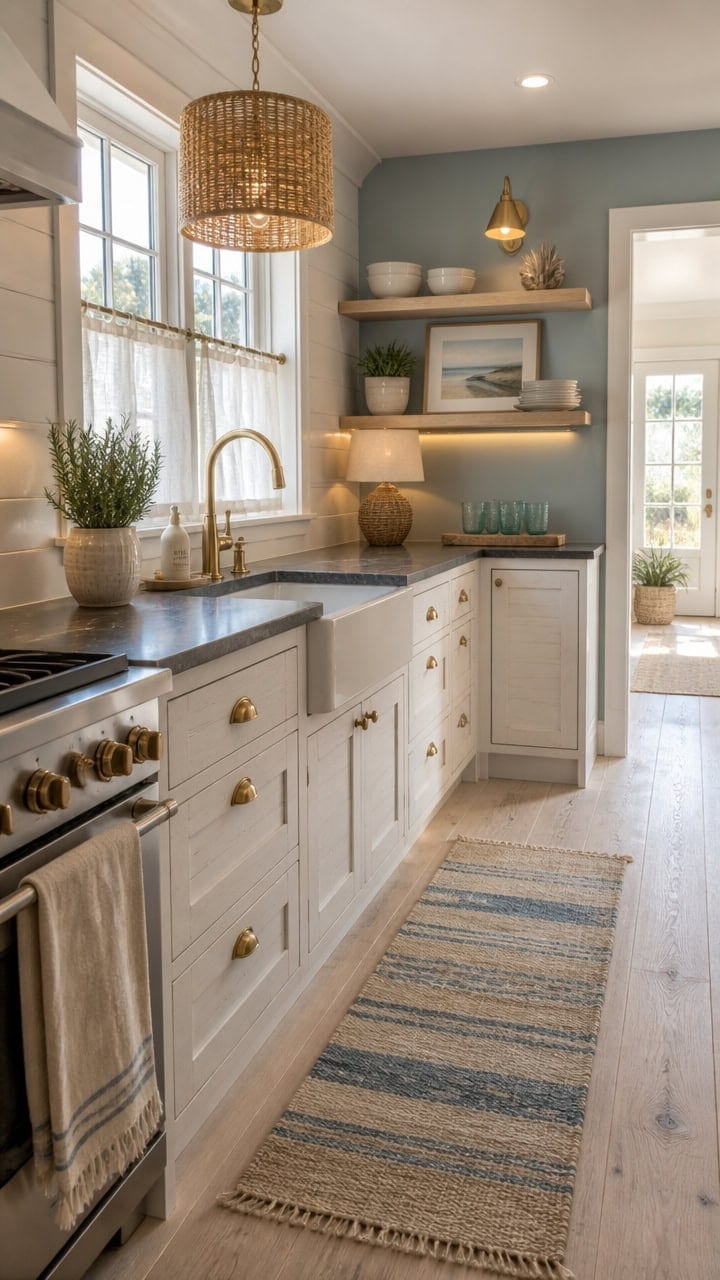
Pendant lights do more visual work in a coastal kitchen than any other fixture because they set the mood before anyone touches a drawer or opens a cabinet. Warm-white bulbs (2700K–3000K) keep the light from reading cold and sterile, which is the fastest way to kill a beach feeling indoors. Layer your overhead lighting with under-cabinet strips so the countertop glows the way sand does in late afternoon sun.
Rattan or wicker shades: Natural fiber pendant shades add organic texture that reads beach cottage without crossing into nautical cliché.
Warm bulb temperature only: Cool daylight bulbs flatten coastal color palettes — always choose soft white or warm white at 2700K to 3000K.
Layer your sources: Combine a pendant over the sink, under-cabinet LEDs, and one small table lamp on the counter to avoid the flat single-overhead look.
Brass or bronze hardware: Warm metal finishes on light fixtures tie into the sandy neutral tones already in the room better than chrome or nickel.
Paint in “White Sand” (Benjamin Moore / OC-10) – a warm sandy off-white that bounces light downward and keeps the ceiling from reading stark against rattan pendant shades.
 ELYONA 16” Large Boho Rattan Chandelier, Modern Japandi Wicker Pendant Light Fixtures, Basket Hand Woven Hanging Lamp for Coastal Kitchen Island Dining Room Living Room Bedroom Foyer (40cm*40cm)
View Price
ELYONA 16” Large Boho Rattan Chandelier, Modern Japandi Wicker Pendant Light Fixtures, Basket Hand Woven Hanging Lamp for Coastal Kitchen Island Dining Room Living Room Bedroom Foyer (40cm*40cm)
View Price
 MYPLUS Under Cabinet Led Lighting, 16.4ft LED Strip Lights Kit with Dimmer Control for Kitchen, Cabinet, Shelf, Counter, Bedroom and Décor, Warm White 3000K, 1050LM
View Price
MYPLUS Under Cabinet Led Lighting, 16.4ft LED Strip Lights Kit with Dimmer Control for Kitchen, Cabinet, Shelf, Counter, Bedroom and Décor, Warm White 3000K, 1050LM
View Price
 TRLIFE Wall Sconce Plug in, Dimmable Wall Sconces Set of 2 Wall Lights with Plug in Cord and Dimmer On/Off Knob Switch, Brushed Brass Swing Arm Wall Light, UL Listed(2 Pack, 2 Bulbs)
View Price
TRLIFE Wall Sconce Plug in, Dimmable Wall Sconces Set of 2 Wall Lights with Plug in Cord and Dimmer On/Off Knob Switch, Brushed Brass Swing Arm Wall Light, UL Listed(2 Pack, 2 Bulbs)
View Price
 MexHandcraft Solid Aqua Blue 14 oz Drinking Glasses (set of 6), Recycled Glass, Lead-free, Toxin-Free (14oz Drinking)
View Price
MexHandcraft Solid Aqua Blue 14 oz Drinking Glasses (set of 6), Recycled Glass, Lead-free, Toxin-Free (14oz Drinking)
View Price
 AshGlen Double Mini Waffle Maker, Ceramic Belgian Waffle Iron, White
View Price
AshGlen Double Mini Waffle Maker, Ceramic Belgian Waffle Iron, White
View Price
 TPAMSWO Coastal Table Lamps Set of 2, Retro Natural Seagrass Rattan Woven 24" Bedside Lamp, for Bedroom Living Room Home Nightstand Table Lamp(with USB C+A 5V 2.1A Charging Ports)
View Price
TPAMSWO Coastal Table Lamps Set of 2, Retro Natural Seagrass Rattan Woven 24" Bedside Lamp, for Bedroom Living Room Home Nightstand Table Lamp(with USB C+A 5V 2.1A Charging Ports)
View Price
 TIDITA 30" Large Acacia Wood Charcuterie Board, Built-in Handles, Raw Edge
View Price
TIDITA 30" Large Acacia Wood Charcuterie Board, Built-in Handles, Raw Edge
View Price
 Framed Coastal Ocean Blue Coral Large Wall Art for Living Room, 16x24 Inch
View Price
Framed Coastal Ocean Blue Coral Large Wall Art for Living Room, 16x24 Inch
View Price
Textiles and Rugs That Bring the Sandy Beach Vibe Indoors
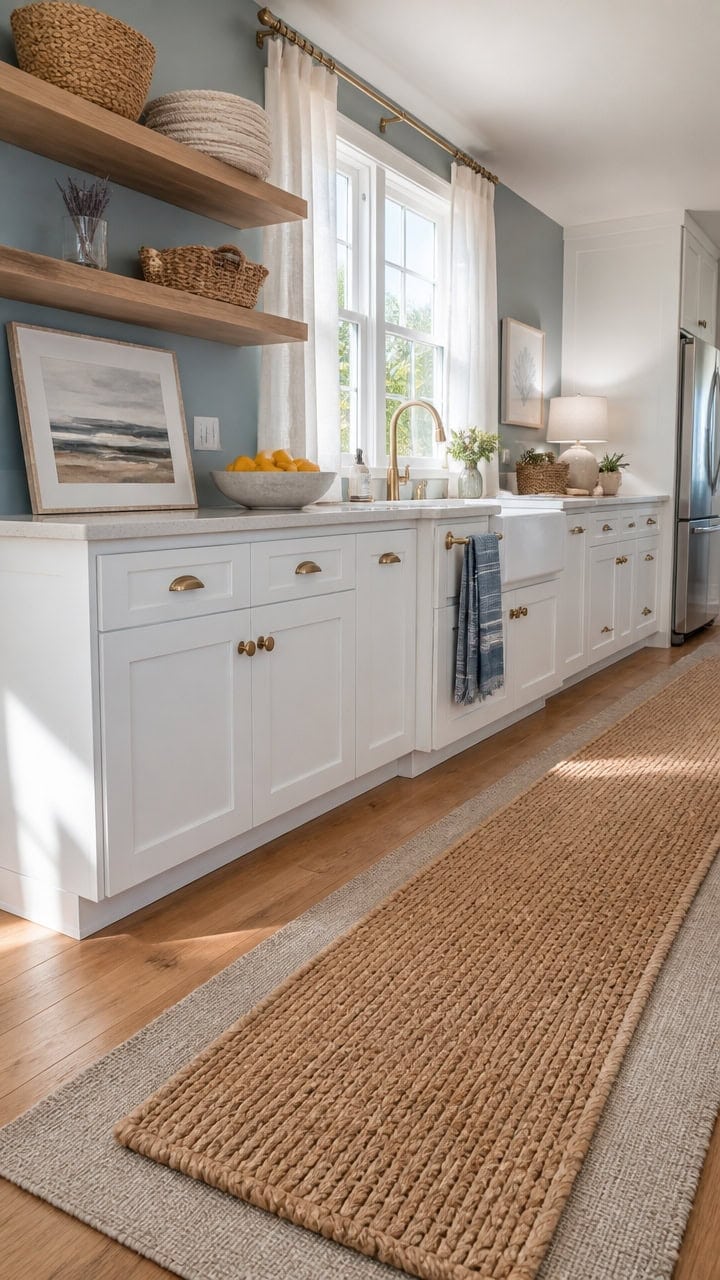
Sandy, textured textiles do most of the heavy lifting when you want a kitchen to feel like it’s one step away from the shoreline. Natural fibers like jute, cotton, and woven seagrass carry the gritty warmth of beach sand in a way that printed patterns alone never can. Layer a washable runner underfoot with linen dish towels and a woven placemat set to build that texture story from floor to counter.
Lead with natural fiber: Jute and seagrass rugs anchor the space with the raw, sandy texture that synthetic fibers never replicate convincingly.
Washable is non-negotiable in a kitchen: Choose cotton or cotton-blend runners so the beach aesthetic stays fresh without sacrificing function near the sink or stove.
Stick to a sand, white, and blue palette: Textiles in bleached white, warm oatmeal, or faded ocean blue reinforce the coastal mood without overwhelming the room’s neutrals.
Layer textures instead of colors: Pair a woven rug with smooth linen towels and a rough-edged seagrass basket to create depth through material contrast rather than color clash.
Paint the ceiling in “White Sand” (Benjamin Moore / OC-10) – a warm sandy off-white that reflects the natural fiber tones of jute rugs and woven textiles below it.
 SAFAVIEH Cape Cod Collection Runner Rug - 2'3" x 6', Natural Brown, Handmade Braided Flat Weave Jute (CAP252A)
View Price
SAFAVIEH Cape Cod Collection Runner Rug - 2'3" x 6', Natural Brown, Handmade Braided Flat Weave Jute (CAP252A)
View Price
 4 Pack Rectangular Woven Placemats, Natural Seagrass Place Mats, 17" x 12", Rattan Wicker Table Mats for Dining Table
View Price
4 Pack Rectangular Woven Placemats, Natural Seagrass Place Mats, 17" x 12", Rattan Wicker Table Mats for Dining Table
View Price
 Urban Villa Kitchen Towels 100% Cotton Dish Towels for Kitchen (Set of 6) 20”x30” Dish Cloths Highly Absorbent Kitchen Linen Set with Hanging Loop Perfect for Drying Dishes Cleaning Towels-Blue White
View Price
Urban Villa Kitchen Towels 100% Cotton Dish Towels for Kitchen (Set of 6) 20”x30” Dish Cloths Highly Absorbent Kitchen Linen Set with Hanging Loop Perfect for Drying Dishes Cleaning Towels-Blue White
View Price
 Homespice Dune Jute Runner Rug for Farmhouse Decor, Cotton Backed 2x6'
View Price
Homespice Dune Jute Runner Rug for Farmhouse Decor, Cotton Backed 2x6'
View Price
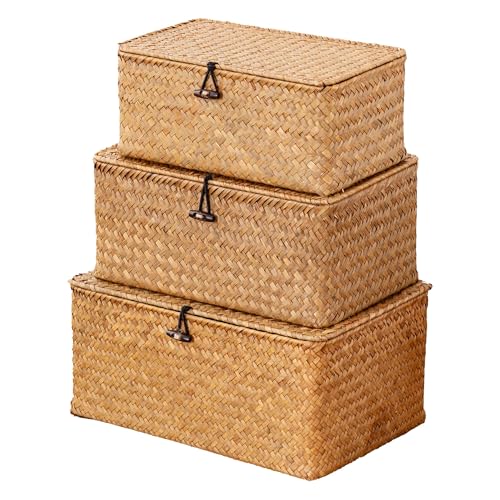 Nonam Wicker Storage Basket with Lid,Seagrass Shelf Basket Set of 3,Nautral
View Price
Nonam Wicker Storage Basket with Lid,Seagrass Shelf Basket Set of 3,Nautral
View Price
 Paris Hilton 6-Quart Manual Slow Cooker, Naturally Nonstick Stoneware Ceramic Insert, Three Settings (Low, High, Warm), Dishwasher Safe Family Size Slow Cooker, White
View Price
Paris Hilton 6-Quart Manual Slow Cooker, Naturally Nonstick Stoneware Ceramic Insert, Three Settings (Low, High, Warm), Dishwasher Safe Family Size Slow Cooker, White
View Price
 BeLuyi Adjustable Bib Apron with 2 Pockets Chef Cooking Kitchen Restaurant Aprons for Women Men (Blue Pinstripe)
View Price
BeLuyi Adjustable Bib Apron with 2 Pockets Chef Cooking Kitchen Restaurant Aprons for Women Men (Blue Pinstripe)
View Price
 MUDECOR Framed Canvas Print Wall Art Set Beach Ocean with Waves and Sky, Neutral Blue and Beige Seascape Illustrations Modern Art Decorative Calm for Living Room, Bedroom, Office - 24"x36"x2 Natural
View Price
MUDECOR Framed Canvas Print Wall Art Set Beach Ocean with Waves and Sky, Neutral Blue and Beige Seascape Illustrations Modern Art Decorative Calm for Living Room, Bedroom, Office - 24"x36"x2 Natural
View Price
Coastal Kitchen Open Shelving That Shows Off Your Palette
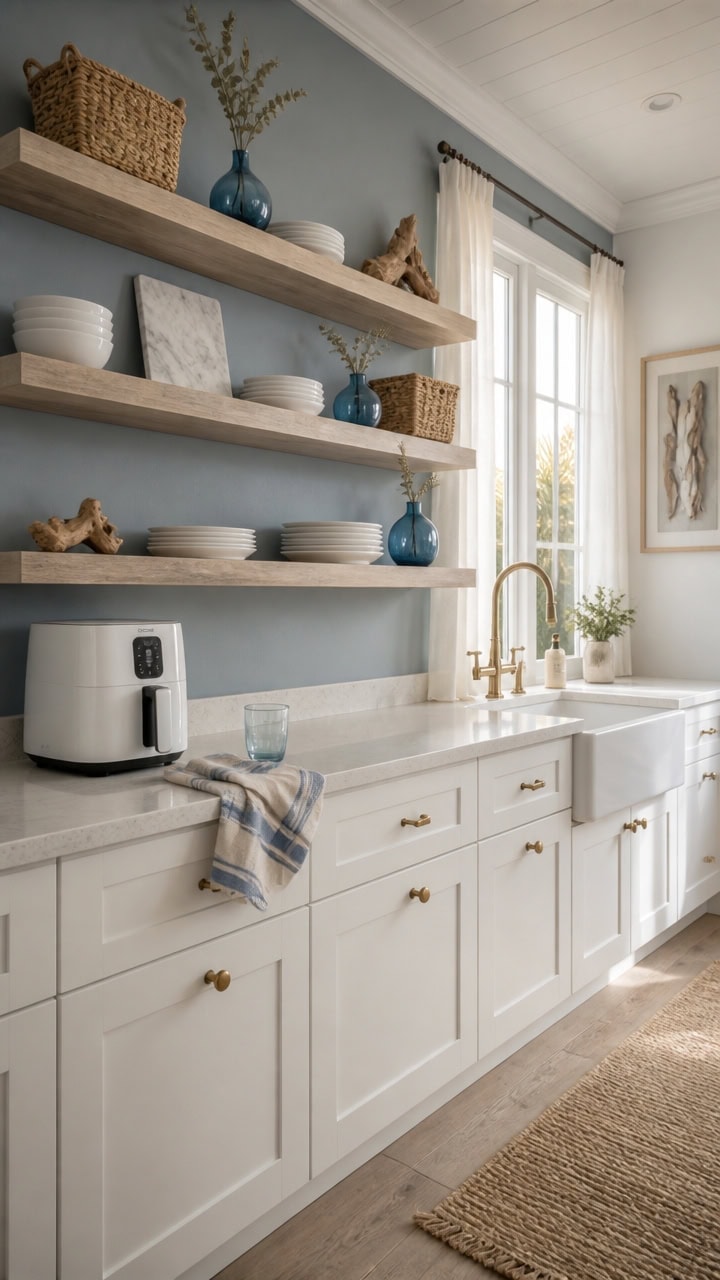
Open shelving works best in a coastal kitchen when you treat each shelf like a small curated vignette rather than a dumping ground for everyday clutter. White dishes, woven baskets, and a few well-placed blue accents create that layered, collected-over-time look that feels personal instead of staged. Limit each shelf to three to five objects so the wall color behind the shelves can breathe and anchor the whole palette.
Group by material, not just color: Stack white ceramic plates next to a woven seagrass basket and a small driftwood piece to build a coastal texture story on every shelf.
Let negative space work for you: Empty shelf space is not wasted — it lets your palette read clearly and prevents the shelves from looking like a gift shop display.
Repeat one color three times: Echo the same shade of ocean blue on at least three shelves through bowls, a small vase, or folded linens so the eye moves naturally across the wall.
Mix heights deliberately: Alternate tall, medium, and low objects on each shelf to create visual rhythm without making the display feel random or accidental.
Paint the wall directly behind open shelving in “Quiet Moments” (Benjamin Moore / AF-780) – a soft blue-gray that makes white dishes and natural woven pieces pop against it without competing for attention.
 Playa Shells 16-Piece Coastal Dinnerware Set Service for 4 – Ceramic Plates, Bowls & Mugs with Beach Shell Art – Great for Everyday Dining, Entertaining, Beach House, or Nautical Décor
View Price
Playa Shells 16-Piece Coastal Dinnerware Set Service for 4 – Ceramic Plates, Bowls & Mugs with Beach Shell Art – Great for Everyday Dining, Entertaining, Beach House, or Nautical Décor
View Price
 EugroVanth Seagrass Storage Basket, Stackable Open Woven Baskets Bins Container for Organizing Shelves Bedroom Living Room, Set of 3, Natural
View Price
EugroVanth Seagrass Storage Basket, Stackable Open Woven Baskets Bins Container for Organizing Shelves Bedroom Living Room, Set of 3, Natural
View Price
 Set of 15 Blue Glass Bud Vases Small Textured Flower Vases
View Price
Set of 15 Blue Glass Bud Vases Small Textured Flower Vases
View Price
 Large Framed Abstract Coastal Blue White Wall Art for Living Room, 24x36 In
View Price
Large Framed Abstract Coastal Blue White Wall Art for Living Room, 24x36 In
View Price
 Dexas White Marble and Acacia Wood Charcuterie Board – 15.75 x 8.5 Serving Platter – Cheese, Meat & Appetizer Tray for Entertaining
View Price
Dexas White Marble and Acacia Wood Charcuterie Board – 15.75 x 8.5 Serving Platter – Cheese, Meat & Appetizer Tray for Entertaining
View Price
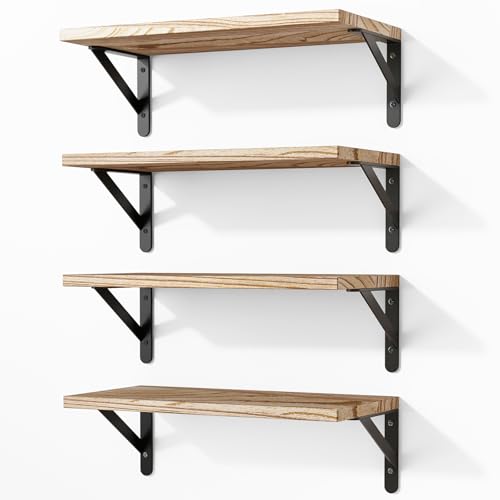 Fixwal Wall Floating Shelves for Decor (Light Brown, Set of 4, 16.5 Inch)
View Price
Fixwal Wall Floating Shelves for Decor (Light Brown, Set of 4, 16.5 Inch)
View Price
 DII French Stripe Dishtowels, Kitchen Collection, 20 x 30 (Set of 3), Nautical Blue
View Price
DII French Stripe Dishtowels, Kitchen Collection, 20 x 30 (Set of 3), Nautical Blue
View Price
Coastal Decor That Actually Looks Curated, Not Kitschy
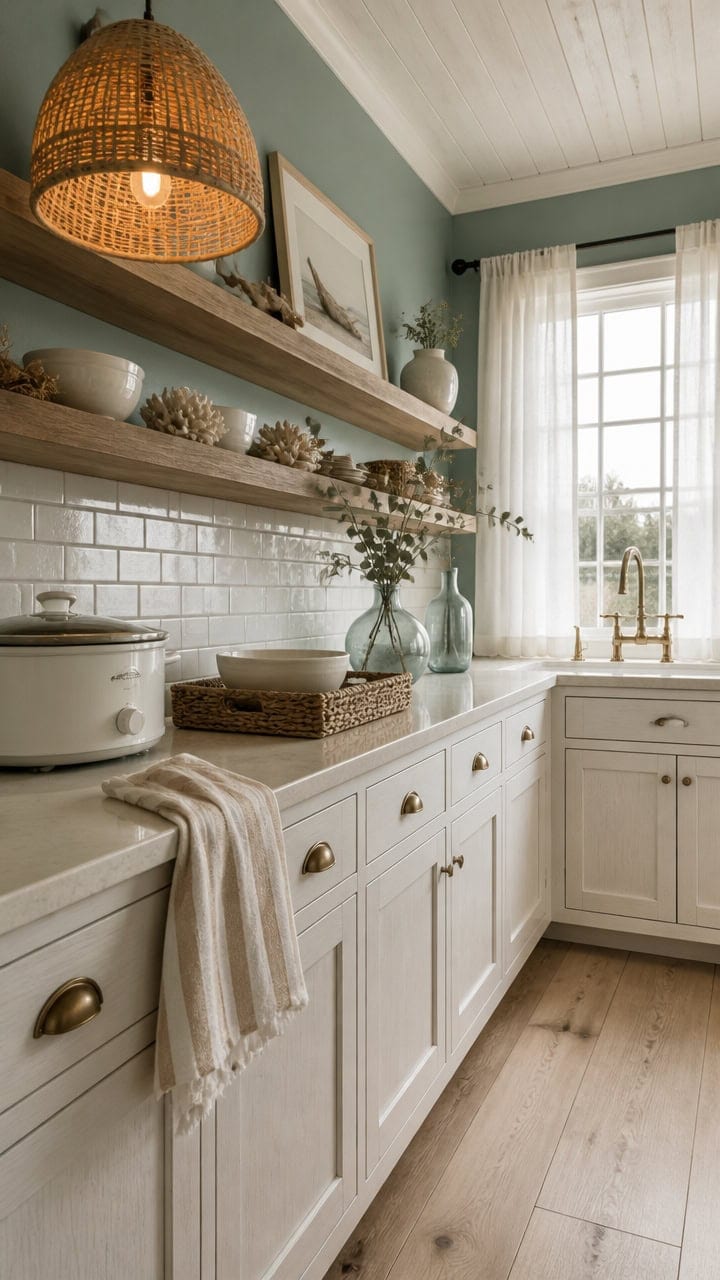
Coastal decor crosses into kitsch the moment every object announces its theme too loudly — a ceramic crab next to a lobster print next to a rope-wrapped everything reads like a souvenir shop, not a home. The pieces that feel curated earn their place by suggesting the coast rather than spelling it out, leaning on texture, tone, and natural materials instead of literal sea creatures. Swap novelty items for weathered wood, soft blues, woven naturals, and worn white surfaces to build a kitchen that feels like it belongs near the water without trying to prove it.
Choose suggestion over statement: Let texture and color do the coastal storytelling instead of objects shaped like anchors, fish, or shells.
Stick to a tight material palette: Driftwood, seagrass, worn ceramic, and sea glass tones cover the full coastal story without any single piece screaming beach house.
Limit literal pieces to one: If you love a starfish or a coral print, use it once and surround it with understated pieces so it reads as an accent, not a pattern.
Edit before you add: Remove one piece every time you add a new one so the display stays clean and the coastal mood comes from restraint, not accumulation.
Paint the wall in “Quiet Tide” (Benjamin Moore / HC-157) – a muted blue-green that evokes shallow coastal water without leaning tropical or juvenile.
 Large Framed Blue Abstract Coastal Ocean Wall Art for Living Room, 24x36 In
View Price
Large Framed Blue Abstract Coastal Ocean Wall Art for Living Room, 24x36 In
View Price
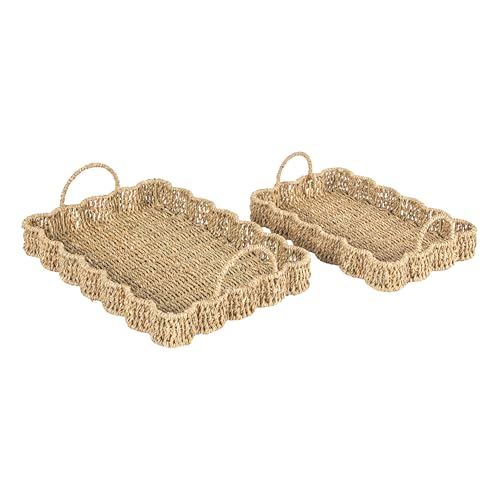 Household Essentials Woven Seagrass Scalloped Rectangular Trays, Set of 2, Natural
View Price
Household Essentials Woven Seagrass Scalloped Rectangular Trays, Set of 2, Natural
View Price
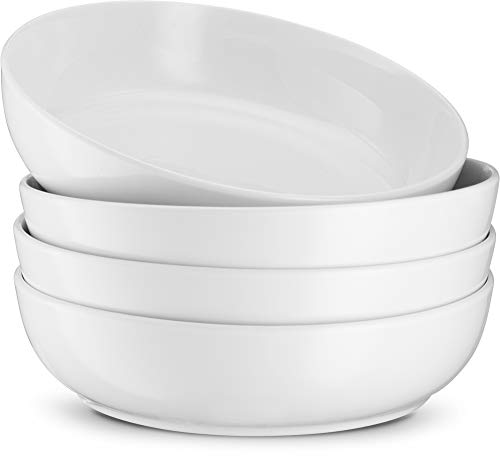 KooK Pasta Bowl, Salad Bowls, Bowls, Serving Bowls, Soup, Ceramic, Large Capacity, Microwave & Dishwasher Safe, Set of 4, 40 Oz, (White)
View Price
KooK Pasta Bowl, Salad Bowls, Bowls, Serving Bowls, Soup, Ceramic, Large Capacity, Microwave & Dishwasher Safe, Set of 4, 40 Oz, (White)
View Price
 GreenLife 6QT Ceramic Nonstick Slow Cooker, Cooktop/Oven Safe, White
View Price
GreenLife 6QT Ceramic Nonstick Slow Cooker, Cooktop/Oven Safe, White
View Price
 Chuangdi Set of 2 Coastal Glass Flower Vase with Boho Rope, Light Blue
View Price
Chuangdi Set of 2 Coastal Glass Flower Vase with Boho Rope, Light Blue
View Price
 LANE LINEN 100% Cotton Dish Towels for Kitchen Absorbent Lint-Free 12 Pack
View Price
LANE LINEN 100% Cotton Dish Towels for Kitchen Absorbent Lint-Free 12 Pack
View Price
 HMVPL Farmhouse Chandelier for Dining Room, 3-Light Boho Rattan Chandelier Light Fixture Ceiling Hanging with Woven Lampshade, Small Wicker Coastal Pendant Light for Kitchen Bedroom Island Hallway
View Price
HMVPL Farmhouse Chandelier for Dining Room, 3-Light Boho Rattan Chandelier Light Fixture Ceiling Hanging with Woven Lampshade, Small Wicker Coastal Pendant Light for Kitchen Bedroom Island Hallway
View Price
 DEWOO White Peel and Stick Backsplash Subway Tile for Kitchen Wall 10-Sheet
View Price
DEWOO White Peel and Stick Backsplash Subway Tile for Kitchen Wall 10-Sheet
View Price
Coastal Kitchen Plants That Actually Look at Home by the Sea
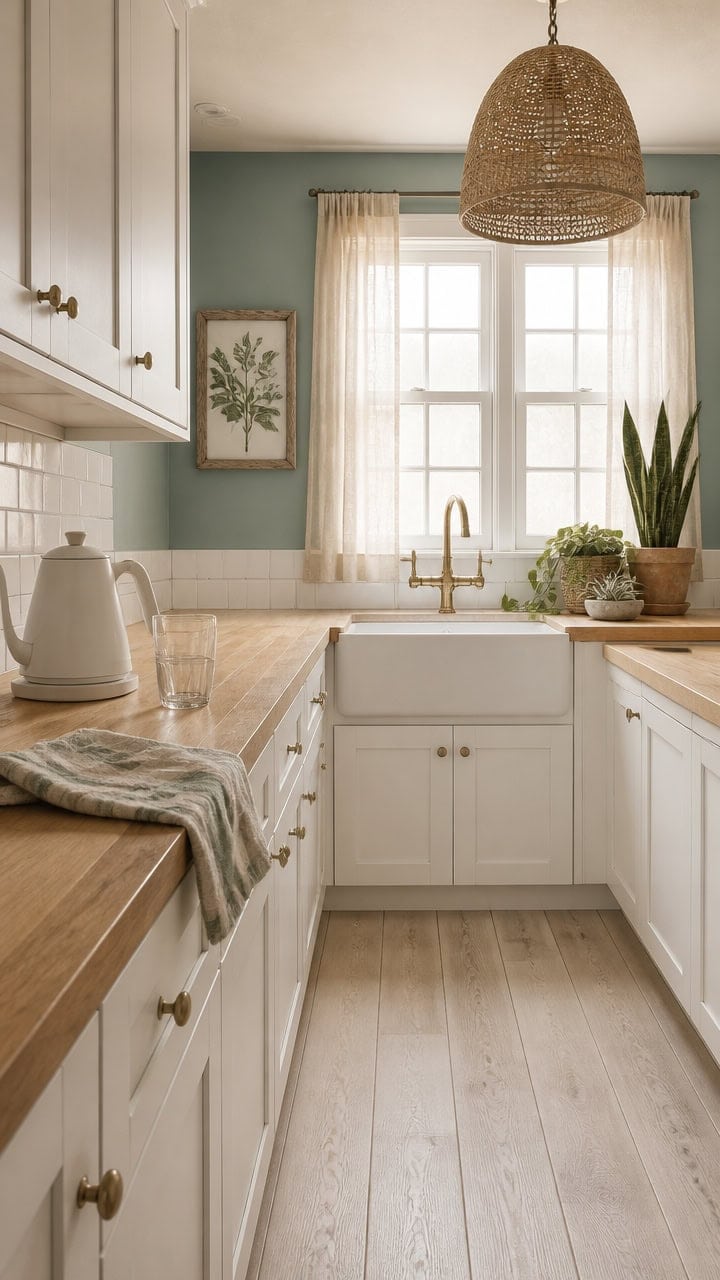
Coastal plants that actually thrive in a kitchen are the ones that evolved near salt air, humidity, and shifting light — not the ones that just look tropical on a shelf. Plants like pothos, snake plants, and air plants handle the temperature swings and occasional neglect that kitchen life delivers. Place them near a window for natural light, or choose low-light varieties for spots farther from the coast-facing glass.
Go for texture over color: Spiky, trailing, or broad-leafed plants read more coastal than anything that blooms in neon pink or orange.
Use natural containers: Terra cotta, woven seagrass baskets, or raw ceramic pots reinforce the coastal palette without adding a single seashell.
Group in odd numbers: Three plants at different heights on a windowsill or open shelf create depth and look intentional, not random.
Match plant size to kitchen scale: A small kitchen benefits from one large statement plant rather than ten tiny ones crowding the counter.
Paint the wall behind your plant display in “Quiet Tide” (Benjamin Moore / HC-157) – a muted blue-green that makes greenery pop without competing with it.
 Blueming Home Decor Large Plant Basket, Woven Seagrass Planter for Indoor Plants
View Price
Blueming Home Decor Large Plant Basket, Woven Seagrass Planter for Indoor Plants
View Price
 Large Terracotta Pots, 8 Inch Clay Planter Pots with Drainage Hole & Saucer (with Stand), Garden Planters for Indoor/Ourdoor Plants, Cactus & Snake Plant
View Price
Large Terracotta Pots, 8 Inch Clay Planter Pots with Drainage Hole & Saucer (with Stand), Garden Planters for Indoor/Ourdoor Plants, Cactus & Snake Plant
View Price
 ANPHSIN 5 Pack Mini Sea Urchin Shell Air Plant Holders, 1.4-3.7in, No Plant
View Price
ANPHSIN 5 Pack Mini Sea Urchin Shell Air Plant Holders, 1.4-3.7in, No Plant
View Price
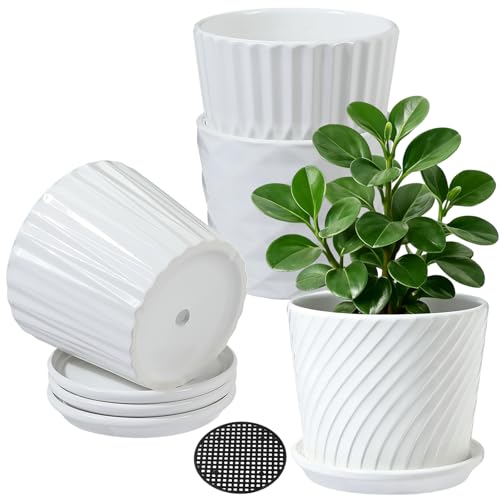 sietpoek 5.5” Ceramic Plant Pots with Drainage and Saucer 4PCs White
View Price
sietpoek 5.5” Ceramic Plant Pots with Drainage and Saucer 4PCs White
View Price
 Mecity Electric Gooseneck Kettle With Keep Warm Function & LCD Display Automatic Shut Off Coffee Kettle Temperature Control Pour Over Kettle 1200 Watt, 0.8L, 120V, Off White
View Price
Mecity Electric Gooseneck Kettle With Keep Warm Function & LCD Display Automatic Shut Off Coffee Kettle Temperature Control Pour Over Kettle 1200 Watt, 0.8L, 120V, Off White
View Price
 Cumia 4 Pcs Farmhouse Cotton Linen Kitchen Towels Sage Green Dish Towels
View Price
Cumia 4 Pcs Farmhouse Cotton Linen Kitchen Towels Sage Green Dish Towels
View Price
How Do You Pull Off Coastal Style in a Small Kitchen?
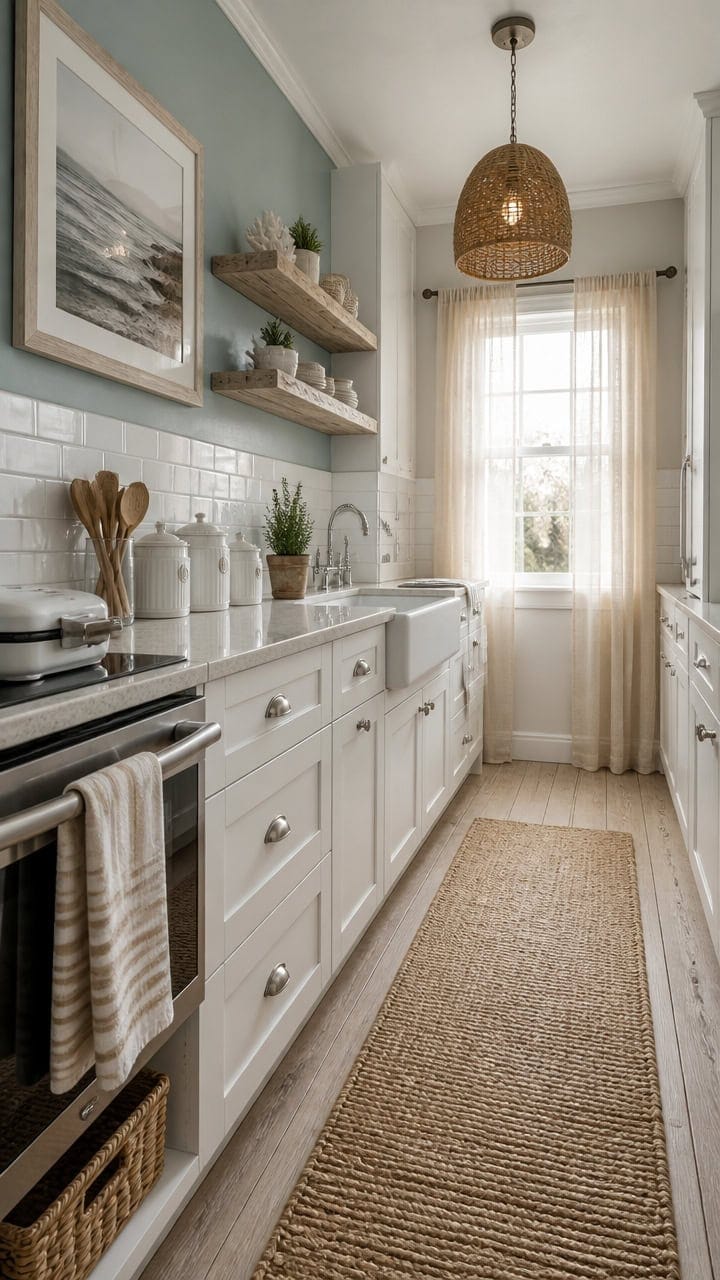
Small kitchens pull off coastal style best when you commit to a light, airy palette and keep surfaces clear enough to let the theme breathe. A tight space actually works in your favor because every detail registers — one weathered wood cutting board or a single rattan pendant does more visual work than a room full of it would. The rule is restraint: pick two or three coastal materials and repeat them rather than cramming in every shell, rope, and sea glass accent you own.
Use vertical space: Hang a single large coastal print or pendant light high to draw the eye up and make the ceiling feel taller.
Stick to three materials max: Rattan, matte white, and natural linen together read coastal without competing for attention in a compact room.
Let white do the heavy lifting: White walls, white dinnerware, and white canisters create the open, sunlit feeling that small coastal kitchens depend on.
Avoid pattern overload: One striped dish towel or one patterned rug is enough — mixing too many prints shrinks a small kitchen visually.
Paint the wall behind your open shelving in “Quiet Tide” (Benjamin Moore / HC-157) – a soft blue-green that adds coastal depth without closing in a small kitchen.
 AyshwillDec Mini Hemp Rope Woven Pendant Light Woven Light Fixture Boho Chandelier Light Fixture Wicker Pendant Light Rattan Light Pendant Dome Wicker Chandelier for Bedroom Kitchen Island(Bulb Incl.)
View Price
AyshwillDec Mini Hemp Rope Woven Pendant Light Woven Light Fixture Boho Chandelier Light Fixture Wicker Pendant Light Rattan Light Pendant Dome Wicker Chandelier for Bedroom Kitchen Island(Bulb Incl.)
View Price
 10 Strawberry Street Embossed Ceramic Kitchen Canister Set, Set of 3, Stamp White
View Price
10 Strawberry Street Embossed Ceramic Kitchen Canister Set, Set of 3, Stamp White
View Price
 bella Fits-Anywhere™ Flip-n-Store Non-Toxic, Belgian Waffle Maker, Oatmilk
View Price
bella Fits-Anywhere™ Flip-n-Store Non-Toxic, Belgian Waffle Maker, Oatmilk
View Price
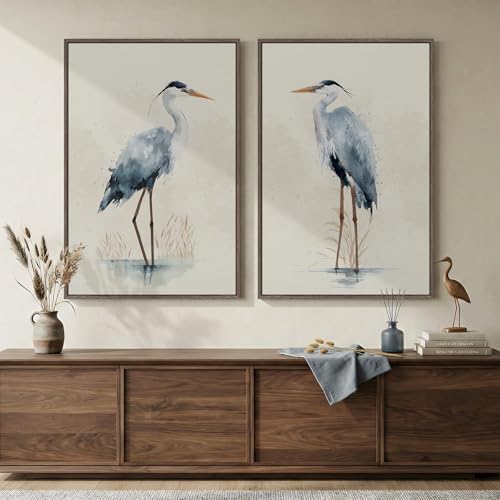 Large Framed Vintage Neutral Blue Heron Bird Wall Art, 2 Piece 24x36 In
View Price
Large Framed Vintage Neutral Blue Heron Bird Wall Art, 2 Piece 24x36 In
View Price
 Cackleberry Home Navy Blue and White Ticking Stripe Woven Cotton Kitchen Towels 18 x 28 Inches, Set of 3
View Price
Cackleberry Home Navy Blue and White Ticking Stripe Woven Cotton Kitchen Towels 18 x 28 Inches, Set of 3
View Price
 12ft Natural Jute Hallway Runner Rug Non Slip Washable, Rubber Backed Long Indoor Entryway Runner, Absorbent Kitchen Carpet Sink Rug, Camel
View Price
12ft Natural Jute Hallway Runner Rug Non Slip Washable, Rubber Backed Long Indoor Entryway Runner, Absorbent Kitchen Carpet Sink Rug, Camel
View Price
 Enameled Cast Iron Dutch Oven - Umite Chef 5QT Pot with Lid & Cotton Potholders - Heavy-Duty Cookware for Bread Baking, Braising, Stews, Roasting(Cream White)
View Price
Enameled Cast Iron Dutch Oven - Umite Chef 5QT Pot with Lid & Cotton Potholders - Heavy-Duty Cookware for Bread Baking, Braising, Stews, Roasting(Cream White)
View Price
Coastal Kitchen Aesthetic Mistakes That Kill the Vibe
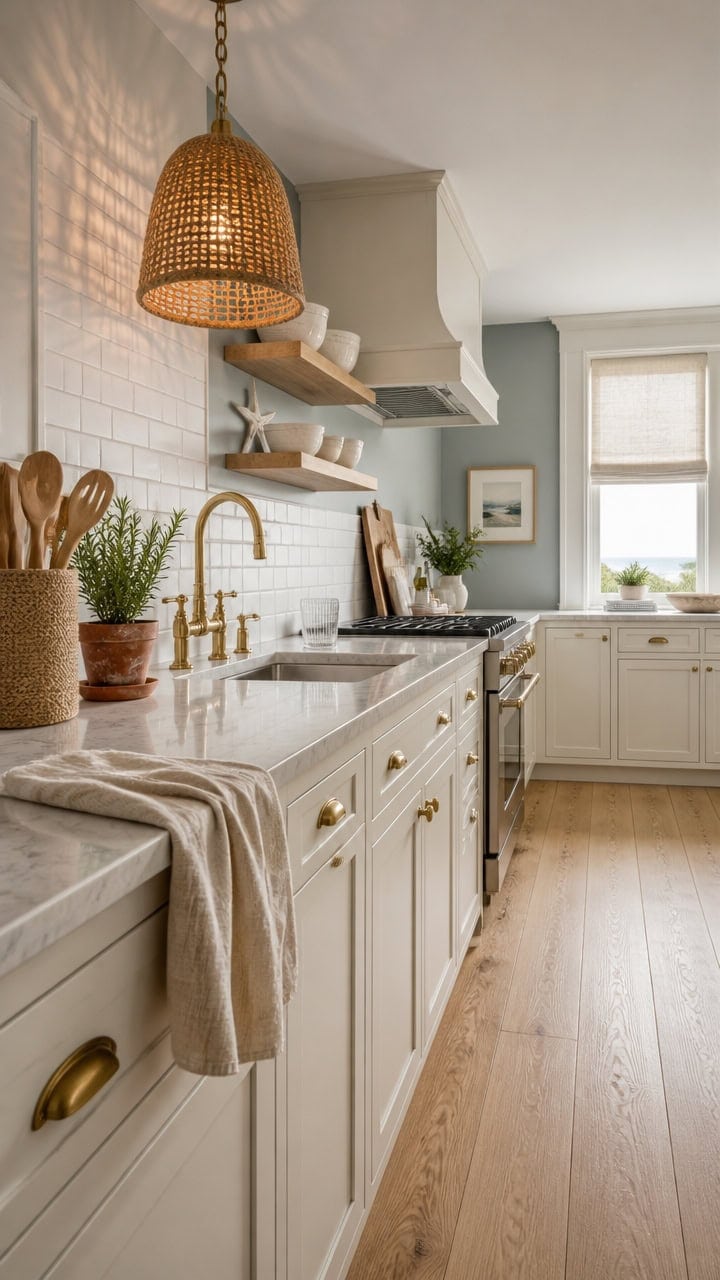
Coastal kitchens fail most often because of accumulation — too many themed objects competing for attention until the space reads more like a souvenir shop than a home. Every item added after the right amount tips the balance from curated to cluttered, and cluttered is the single fastest way to kill the relaxed feeling coastal style depends on. Audit your countertops and shelves the way you’d edit an outfit — if you’d question it, pull it out.
Shell overload: One or two shells styled with restraint read organic; a basket of mixed shells reads like a gift shop display.
Wrong blue: Bright turquoise or electric navy feels tropical or nautical — coastal calm needs muted, sandy blues with gray undertones.
Shiny finishes: Chrome, high-gloss lacquer, and polished metals clash with the weathered, sun-bleached textures that anchor coastal character.
Fake driftwood: Plastic or resin pieces styled to look natural always read as artificial — stick to real wood, real rattan, or real linen.
Paint the wall behind your range or open shelves in “Quiet Moments” (Benjamin Moore / 1624) – a hazy, sun-washed blue that softens without overwhelming the kitchen’s natural light.
 AyshwillDec 3 Pack Wicker Pendant Light Natural Woven Pendant Light Boho Chandelier Light Fixture Dome Rustic Farmhouse Pendant Lights Rattan Light Fixture for Dining Room Kitchen Island (Bulb Incl.)
View Price
AyshwillDec 3 Pack Wicker Pendant Light Natural Woven Pendant Light Boho Chandelier Light Fixture Dome Rustic Farmhouse Pendant Lights Rattan Light Fixture for Dining Room Kitchen Island (Bulb Incl.)
View Price
 Gibson Home Oslo 16-Piece Porcelain Ceramic Chip & Scratch Resistant Dishes, Microwave & Dishwasher Safe, Plates and Bowls Dinnerware Set, White w/Blue Rim
View Price
Gibson Home Oslo 16-Piece Porcelain Ceramic Chip & Scratch Resistant Dishes, Microwave & Dishwasher Safe, Plates and Bowls Dinnerware Set, White w/Blue Rim
View Price
 KAF Home Assorted Flat Kitchen Towels - Set of 10, 18 x 28 Inch (Beige)
View Price
KAF Home Assorted Flat Kitchen Towels - Set of 10, 18 x 28 Inch (Beige)
View Price
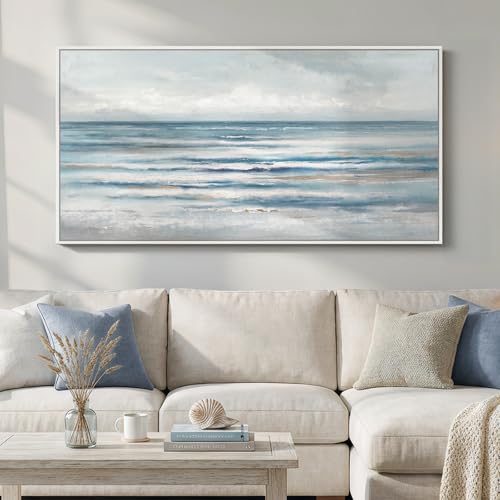 Large Framed Coastal Ocean Abstract Wall Art for Living Room, 60x30 Inch
View Price
Large Framed Coastal Ocean Abstract Wall Art for Living Room, 60x30 Inch
View Price
 PEMAR Large L-Sized Hand Woven Utensil Caddy Carrier, Natural Jute Wicker Condiment Holder for Table, Kitchen Set Counter Top Silverware Organizer, Rustic Storage for Forks, Spoons, Seagrass
View Price
PEMAR Large L-Sized Hand Woven Utensil Caddy Carrier, Natural Jute Wicker Condiment Holder for Table, Kitchen Set Counter Top Silverware Organizer, Rustic Storage for Forks, Spoons, Seagrass
View Price
 Martha Stewart Gatwick 12” Enameled Cast Iron Skillet, PFAS-Free, Linen White Exterior with Matte Black Enamel Interior, Rust Resistant, Oven Safe
View Price
Martha Stewart Gatwick 12” Enameled Cast Iron Skillet, PFAS-Free, Linen White Exterior with Matte Black Enamel Interior, Rust Resistant, Oven Safe
View Price
 STICKGOO Peel and Stick Wall Tile Self-Adhesive Backsplash Thicker Design
View Price
STICKGOO Peel and Stick Wall Tile Self-Adhesive Backsplash Thicker Design
View Price
Budget-Friendly Swaps That Make a Big Coastal Impact
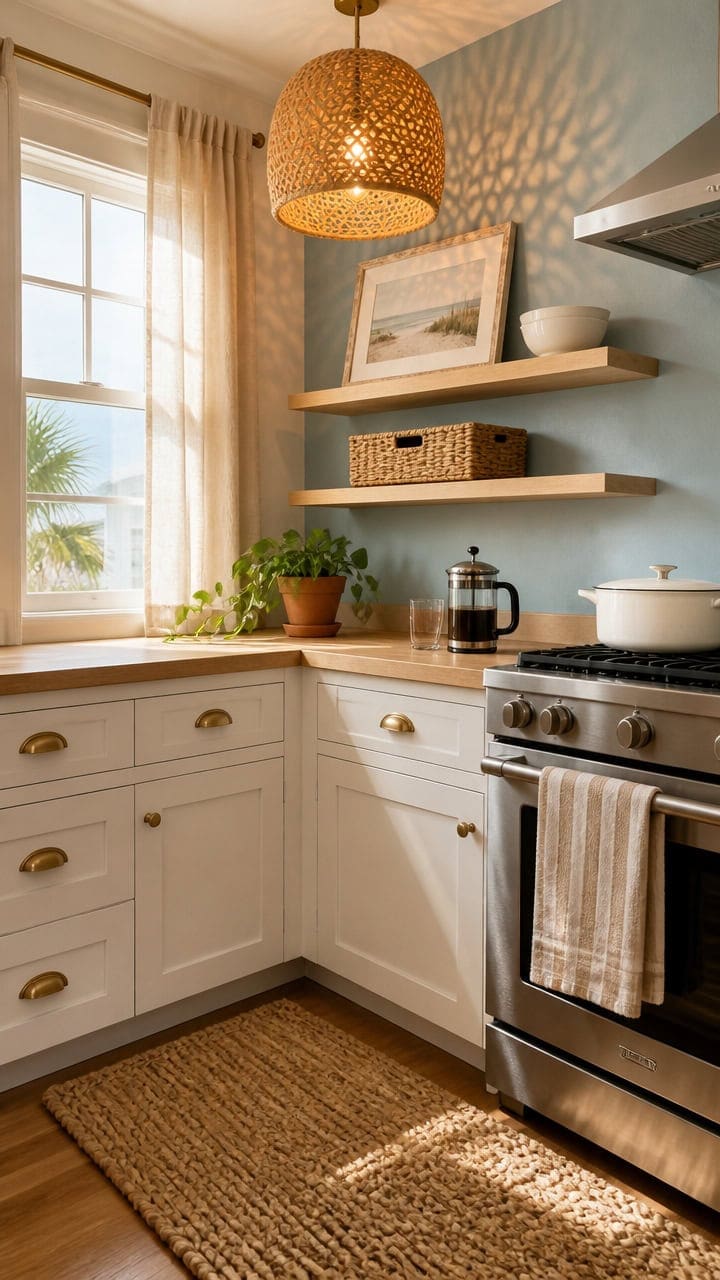
Swapping out a few key pieces costs less than a full refresh and often lands harder on the overall look. Coastal style is built on texture and tone, not price tags — a $12 linen dish towel in the right sandy stripe does more work than an expensive decorative piece in the wrong material. Start with what you touch and see every day, then build outward from there.
Swap the light: Replace a dated pendant with a natural rattan shade — it’s the single highest-impact, lowest-cost move in a coastal kitchen.
Rethink your textiles: Dish towels, oven mitts, and a kitchen runner in sandy stripes or washed linen add texture without touching the walls or cabinets.
Reframe the shelves: Pull out dark or shiny decor and replace it with one or two pieces in bleached wood, white ceramic, or natural jute to shift the whole shelf’s mood.
Edit before you add: Removing three items often reads more coastal than buying five new ones — restraint is free.
Paint the wall behind your open shelves or range in “Quiet Moments” (Benjamin Moore / 1624) – a hazy, sun-washed blue that reads calm and airy without overpowering natural light.
 Hand-Woven Rattan Pendant Lights Kitchen Island wiht 12 Inch Wickel Shade
View Price
Hand-Woven Rattan Pendant Lights Kitchen Island wiht 12 Inch Wickel Shade
View Price
 HASENSE White Ribbed Ceramic Serving Bowls Set of 3
View Price
HASENSE White Ribbed Ceramic Serving Bowls Set of 3
View Price
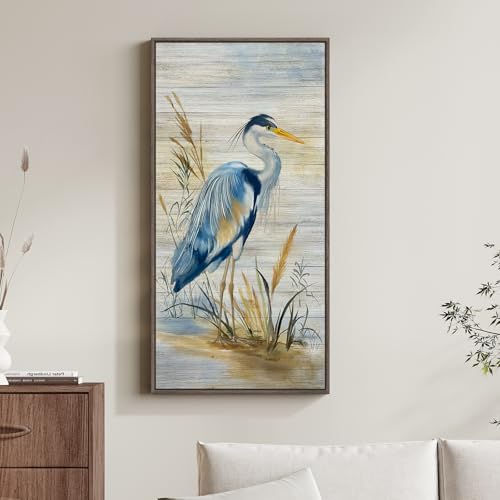 Framed Vertical Coastal Blue Heron Wall Art for Living Room, 20x40 Inch
View Price
Framed Vertical Coastal Blue Heron Wall Art for Living Room, 20x40 Inch
View Price
 7ft Braided Jute Kitchen Runner Rugs Non Slip, Rubber Backed Absorbent Kitchen Carpets Mat Washable, Natural Rug Runner for Hallway Entryway, Grey
View Price
7ft Braided Jute Kitchen Runner Rugs Non Slip, Rubber Backed Absorbent Kitchen Carpets Mat Washable, Natural Rug Runner for Hallway Entryway, Grey
View Price
 Utopia Kitchen Borosilicate Glass French Press Coffee Maker 34 Oz, Black
View Price
Utopia Kitchen Borosilicate Glass French Press Coffee Maker 34 Oz, Black
View Price
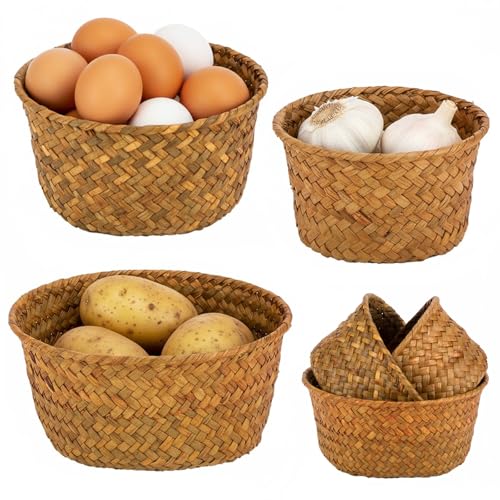 3 Set Small Seagrass Storage Baskets, Natural Woven for Farmhouse Kitchen
View Price
3 Set Small Seagrass Storage Baskets, Natural Woven for Farmhouse Kitchen
View Price
 Lodge Essential Enamel Cast Iron Dutch Oven, 6 Quart, Oyster White
View Price
Lodge Essential Enamel Cast Iron Dutch Oven, 6 Quart, Oyster White
View Price
The Best Coastal Kitchen Finds and Where to Buy Them
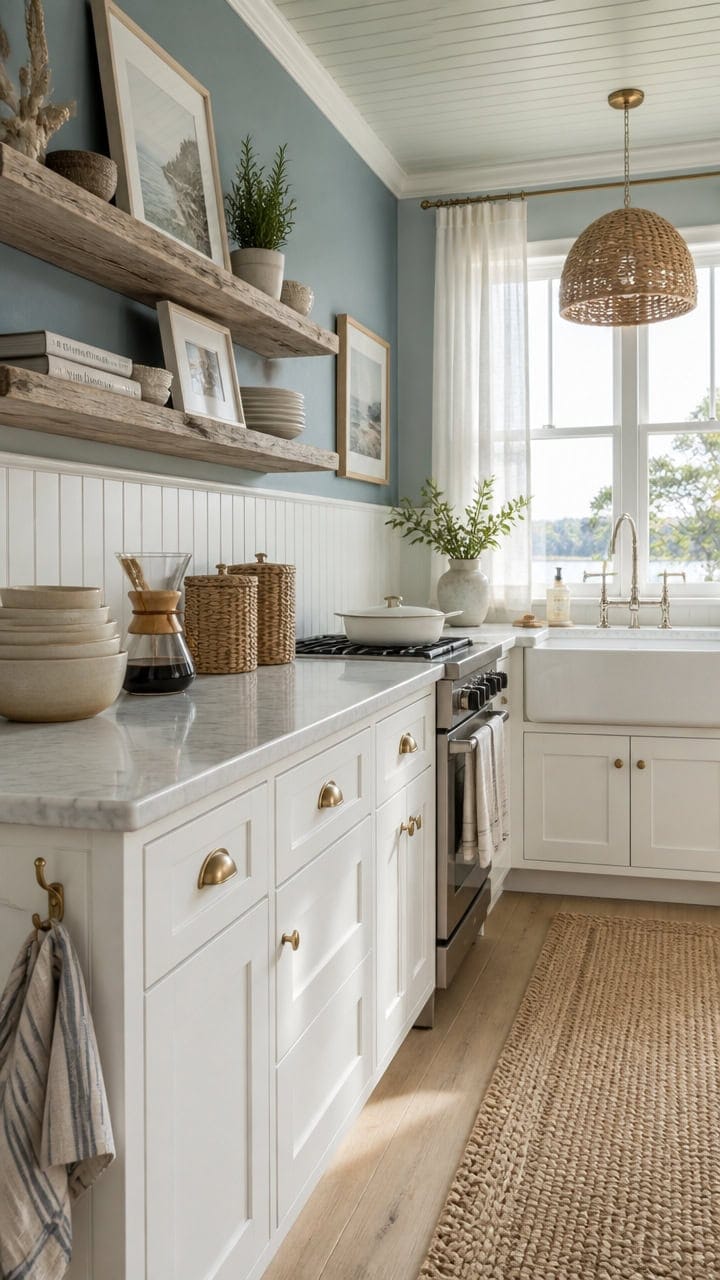
Coastal kitchen shopping works best when you treat each purchase as a building block — textiles anchor color, ceramics add softness, and one well-chosen appliance ties the countertop together. The right retailer for each category matters because coastal pieces live or die on actual texture, and photos on mass-market sites can flatten that detail. Shop natural materials — rattan, seagrass, linen, unfinished wood — from sources that show close-up texture shots before you commit.
Lead with texture first: Prioritize seagrass, rattan, and woven linen before glossy or plastic-finished pieces — texture is what makes coastal feel real.
Buy ceramics in sets: A matched set of white or sandy-toned bowls reads more intentional than individual pieces gathered from different sources.
Source lighting separately: Pendant shades in natural wicker or rattan are harder to find in big-box stores — search specialty lighting and home goods sites for the best range.
Check washability on textiles: Kitchen runners and dish towels take daily abuse, so confirm machine-wash before buying — coastal style should be livable, not precious.
Paint the wall behind your open shelves or range in “Quiet Moments” (Benjamin Moore / 1624) – a hazy, sun-washed blue that makes the whole wall read like a calm shoreline horizon.
 Arturesthome Woven Pendant Light, Modern Boho Hanging Lamp with Handwoven Rattan Shade, Farmhouse Coastal Pendant Light Fixtures for Kitchen Island, Dining Room, Bar, Foyer Hallway D 13.7in
View Price
Arturesthome Woven Pendant Light, Modern Boho Hanging Lamp with Handwoven Rattan Shade, Farmhouse Coastal Pendant Light Fixtures for Kitchen Island, Dining Room, Bar, Foyer Hallway D 13.7in
View Price
 KooK Ceramic Nesting Bowls, Embossed, Oven Safe, Set of 4, Ivory
View Price
KooK Ceramic Nesting Bowls, Embossed, Oven Safe, Set of 4, Ivory
View Price
 Bodum 34oz Pour Over Coffee Maker, High-Heat Borosilicate Glass with Reusable Stainless Steel Filter and Cork Grip - Made in Portugal
View Price
Bodum 34oz Pour Over Coffee Maker, High-Heat Borosilicate Glass with Reusable Stainless Steel Filter and Cork Grip - Made in Portugal
View Price
 Kitchen Canisters Set of 3, Metal Flour Sugar Storage Containers with Airtight Lids-Canisters Sets for Kitchen with Customizable Chalkboard Labels & Marker Pen-Spice, Coffee Storage Jars(Dark Blue)
View Price
Kitchen Canisters Set of 3, Metal Flour Sugar Storage Containers with Airtight Lids-Canisters Sets for Kitchen with Customizable Chalkboard Labels & Marker Pen-Spice, Coffee Storage Jars(Dark Blue)
View Price
 Hisencn Enameled Cast Iron Skillet,Ceramic Cast Iron Frying Pan Sets,White
View Price
Hisencn Enameled Cast Iron Skillet,Ceramic Cast Iron Frying Pan Sets,White
View Price
How to Keep Your Coastal Kitchen Looking Fresh Year-Round
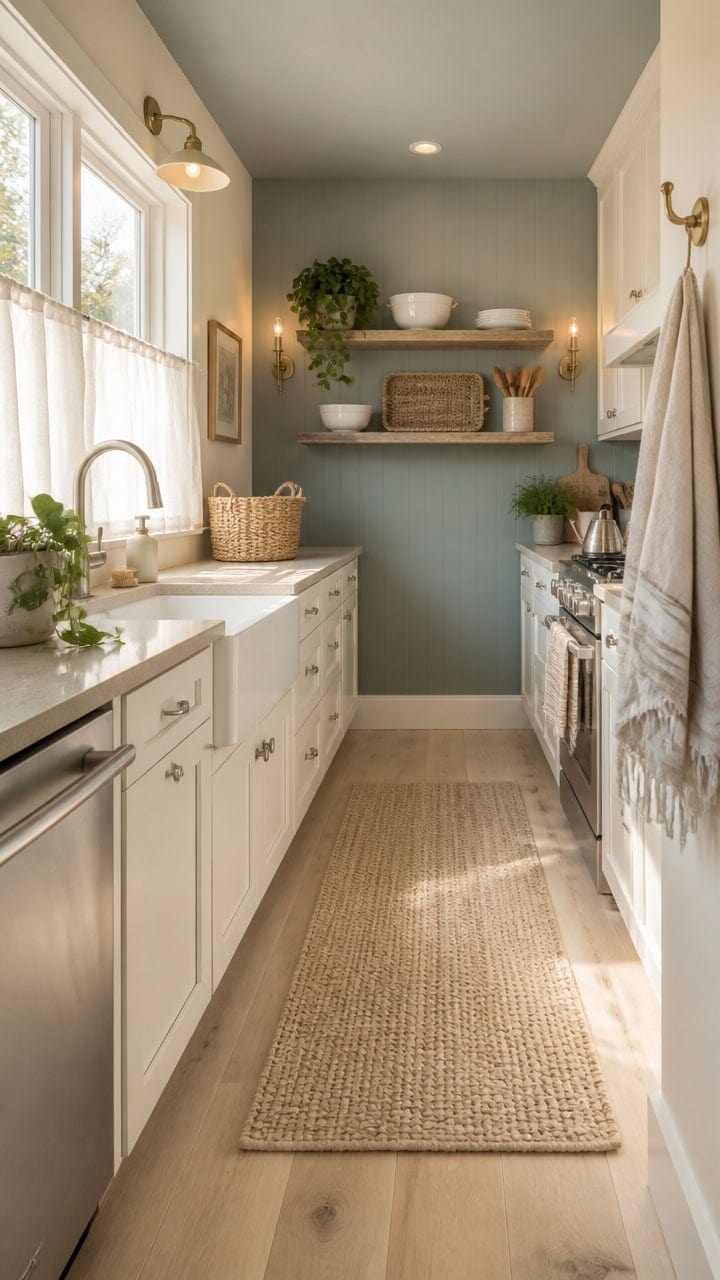
Rotating a few seasonal accents is the most effective way to keep a coastal kitchen from feeling stale without redecorating from scratch. Natural materials like seagrass, linen, and raw wood age beautifully and hold up across seasons, so they work as permanent anchors while smaller pieces shift around them. Swap textiles and tabletop accessories every few months to keep the space feeling intentional rather than frozen in one summer moment.
Anchor with naturals: Keep rattan, seagrass, and bare wood as year-round constants so seasonal swaps feel cohesive, not random.
Rotate textiles seasonally: Switch dish towels and runners from breezy white linen in warm months to oatmeal or sand tones in cooler months for a subtle seasonal shift.
Add living texture: A small potted herb or trailing green plant on the countertop keeps the coastal feel alive without relying on seasonal decor.
Edit ruthlessly twice a year: Pull out anything that has gone dusty, faded, or chipped — coastal style loses its freshness faster than any other aesthetic when pieces age poorly.
Paint the wall behind your open shelves in “Quiet Moments” (Benjamin Moore / 1624) – a hazy sun-washed blue that anchors the room’s coastal palette through every season.
6 Set Small Seagrass Storage Baskets, Natural Woven for Farmhouse Kitchen
View Price
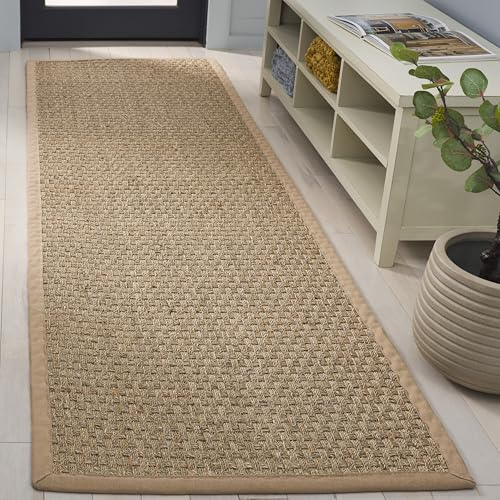 SAFAVIEH Natural Fiber Collection Runner Rug - 2'6" x 6', Natural & Beige, Seagrass, Basketweave Pattern with Border (NF114A)
View Price
SAFAVIEH Natural Fiber Collection Runner Rug - 2'6" x 6', Natural & Beige, Seagrass, Basketweave Pattern with Border (NF114A)
View Price
 MALACASA Large Serving Bowls, 114 OZ(10") Ceramic Salad Bowls Set of 2
View Price
MALACASA Large Serving Bowls, 114 OZ(10") Ceramic Salad Bowls Set of 2
View Price
 Briful Fake Plant Indoor, 17.7" Green White Faux Trailing Plant in White Plastic Pot Fake Cascading Greenery Plant for Shelf Bathroom Kitchen Office Desk Cabinet Tabletop Home Decor
View Price
Briful Fake Plant Indoor, 17.7" Green White Faux Trailing Plant in White Plastic Pot Fake Cascading Greenery Plant for Shelf Bathroom Kitchen Office Desk Cabinet Tabletop Home Decor
View Price
 Barnyard Designs Ceramic Kitchen Utensil Holder Countertop 6.75″ (White)
View Price
Barnyard Designs Ceramic Kitchen Utensil Holder Countertop 6.75″ (White)
View Price
 Bodum 27oz Bistro Gooseneck Electric Water Kettle, Pour Over Coffee & Tea, Stainless Steel, Matte Black
View Price
Bodum 27oz Bistro Gooseneck Electric Water Kettle, Pour Over Coffee & Tea, Stainless Steel, Matte Black
View Price
 KAF Home Natural Rustic Farmhouse Slubbed Kitchen Towel | 100% Cotton Dish Towel, 18 x 28 Inches | Soft and Absorbent (Navy, Set of 4)
View Price
KAF Home Natural Rustic Farmhouse Slubbed Kitchen Towel | 100% Cotton Dish Towel, 18 x 28 Inches | Soft and Absorbent (Navy, Set of 4)
View Price